Hyperbaric Chamber Rules in India: CDSCO Class C, Licences and Advertising Law
Researched and scored by Alex Evans. Last reviewed August 2026. Corrections are dated and public. See corrections
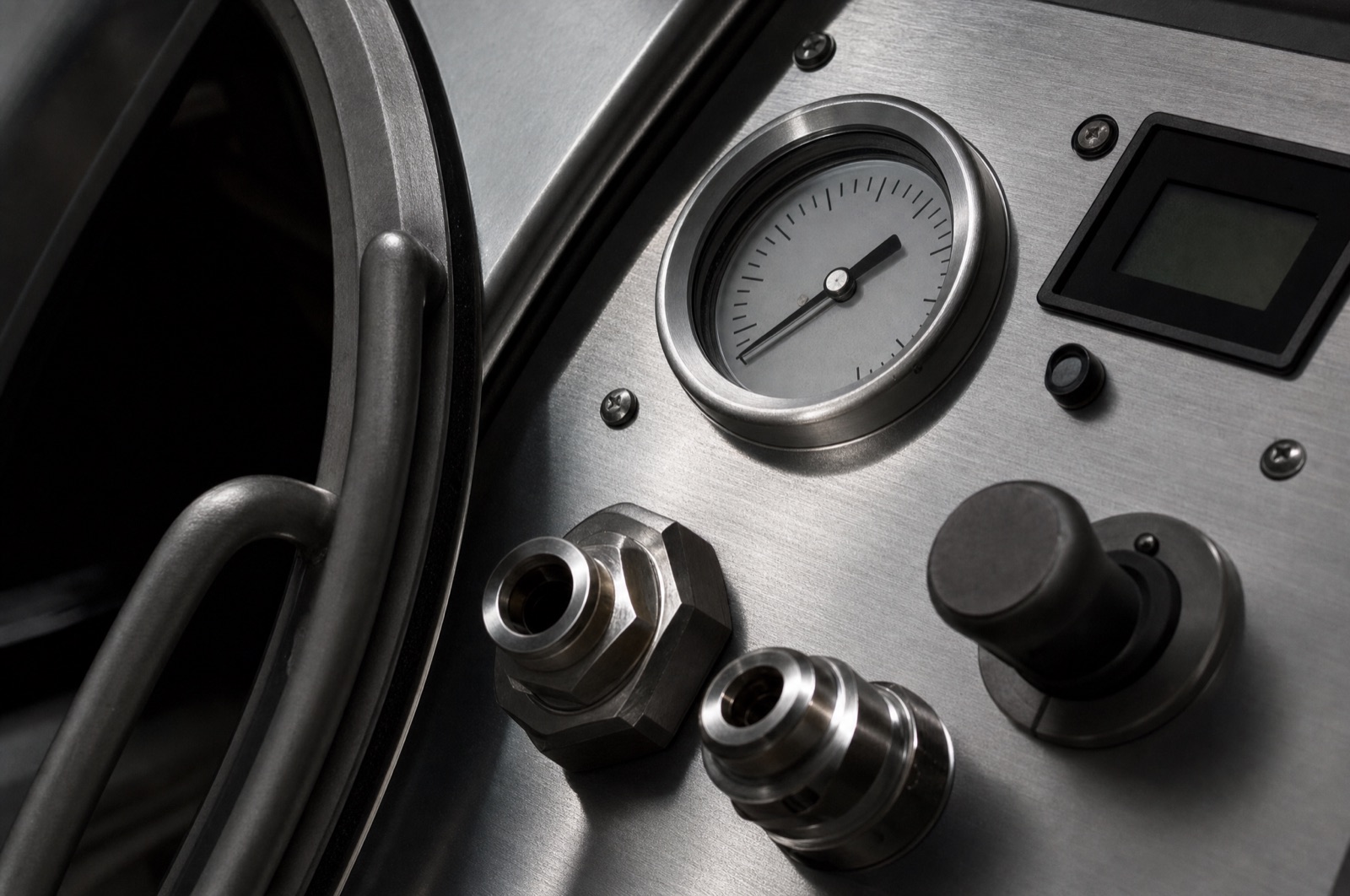
[ Pressure gauge ] Reference imagery; final photography in production
Hyperbaric chambers are legal in India, and the law treats them as medical devices. The national regulator, the Central Drugs Standard Control Organisation (CDSCO), lists the hyperbaric chamber as Class C, the second highest of four risk classes. A maker needs a central manufacturing licence, an importer needs an import licence, and anyone who sells or stocks one needs a state registration certificate. Ads are covered by a 1954 law on drug advertising, by the ASCI self regulatory code and by guidelines under the Consumer Protection Act, 2019. This page covers each one for hospital units and for home or wellness chambers. It uses CDSCO notices, the gazette text of two 2020 notifications, the Medical Devices Rules, the CDSCO FAQ, the 1954 Act, the ASCI code book, a law firm note and two news reports on public hospital units. We do not say whether any treatment works.
Legal, and regulated as a medical device
The base law is the Drugs and Cosmetics Act, 1940. Devices are regulated under the Medical Devices Rules, 2017, which the CDSCO respiratory classification notice says were notified by G.S.R. 78(E) of 31 January 2017 and took effect on 1 January 2018.
The CDSCO medical devices FAQ (document CDSCO/FAQ/MD/01/2024) answers the first question directly. It says all medical devices are regulated under the Medical Devices Rules, 2017, and that all of them are under the licensing regime, except Class A devices that are non-sterile and non-measuring. A licence is required to import or make a device. The FAQ carries a notice that its replies are for public awareness and not for legal use, so the rules themselves govern.
The FAQ splits the work between two levels of government. The Central Licensing Authority is the Drugs Controller General (India), based at FDA Bhawan in New Delhi. It handles the import of every class of device, the manufacture of Class C and Class D devices, and the risk classification of devices. State Licensing Authorities handle the manufacture of Class A and Class B devices, and the sale, stock, exhibition and distribution of devices of every class. For a Class C chamber, that means the central regulator controls making and importing, and the state regulator controls selling.
Where the hyperbaric chamber sits in the risk list
India sorts devices into four classes. The FAQ gives them as low risk Class A, low moderate risk Class B, moderate high risk Class C and high risk Class D, set by Part I of the First Schedule of the rules. Only the Central Licensing Authority may classify a device, and it publishes its lists on the CDSCO website.
The hyperbaric chamber appears in the respiratory list. The notice is File No. 29/Misc./03/2020-DC (197), dated 6 August 2021 and signed by Dr V. G. Somani, Drugs Controller General (India). Its Appendix A lists 51 respiratory devices. Entry 21 reads Hyperbaric chamber, with the intended use to administer 100% oxygen at pressure greater than ambient, and the risk class C.
The notice attaches two conditions to its list. The intended use given for each device is general guidance, and a device may have a specific intended use set by its maker. The list is also dynamic and may be revised. CDSCO's medical device and diagnostics page now also links a merged risk classification list dated 1 January 2025 and a draft update dated 6 January 2025. Both files were too large for us to open, so we cannot say whether either changes the chamber's class.
Two other FAQ answers matter for an imported chamber. If India's class differs from the class in IMDRF countries, the licensing authority may apply the higher class. If a device is missing from the lists, the applicant can ask the Central Licensing Authority to classify it. For how the US files the same device, see FDA cleared vs FDA registered, and for Europe, see CE marking for hyperbaric chambers.
Licences to make, import and sell a chamber
The consolidated Medical Devices Rules, 2017 on the CDSCO site, amended up to G.S.R. 777(E) of 14 October 2022, name the forms. All applications go through an online portal.
- Making a Class C device: apply to the Central Licensing Authority in Form MD-7. Rule 25 says the authority grants a licence in Form MD-9, or a loan licence in Form MD-10, within 45 days of receiving the inspection report. The FAQ says Medical Device Officers inspect a Class C site within 60 days of the application.
- Importing any class: an authorised agent applies in Form MD-14. Rule 36 says the authority grants a licence in Form MD-15, or rejects the application, within nine months. The agent must already hold a manufacturing licence, a wholesale licence or a registration certificate in Form MD-42.
- Selling, stocking or distributing: rule 87A says the seller applies in Form MD-41 to the State Licensing Authority. The FAQ says the state may issue the registration certificate in Form MD-42 within ten days.
The FAQ says import licences, manufacturing licences and registration certificates stay valid until suspended or cancelled, as long as the holder pays a retention fee every five years. An overseas maker can appoint more than one Indian agent for the same product. A change in the overseas maker's site, or in the constitution of the licence holder, needs a fresh import licence.
How India brought every device under licence
Until 2020 India regulated only listed device types. Two notifications of 11 February 2020 widened the net. The first, S.O. 648(E), brought all devices intended for use in people or animals within the definition of drugs under section 3(b)(iv) of the 1940 Act, from 1 April 2020. It covers instruments, apparatus, appliances, software and accessories intended by the maker for six purposes:
- diagnosis, prevention, monitoring, treatment or alleviation of any disease or disorder;
- diagnosis, monitoring, treatment, alleviation or assistance for any injury or disability;
- investigation, replacement, modification or support of the anatomy or of a physiological process;
- supporting or sustaining life;
- disinfection of medical devices;
- control of conception.
The second, G.S.R. 102(E), added Chapter IIIA to the rules from 1 April 2020. Makers and importers of newly covered devices had to register them on CDSCO's online system, with an ISO 13485 certificate and, for imports, a free sale certificate from the country of origin. Registration was voluntary for 18 months and then mandatory. The same notification exempted these devices from the rest of the rules while registered. It set that exemption to end after 30 months for Class A and Class B, and after 42 months for Class C and Class D. Counting from 1 April 2020, 42 months runs to October 2023. We did not read a later notice confirming that date.
The CDSCO FAQ describes where this ended up. A registration number issued under G.S.R. 102(E) is no longer valid as approval to make or import a device. All devices, other than non-sterile, non-measuring Class A ones, now need a licence. The CDSCO Medical Devices Rules page lists both notifications and the later amendments.
When a wellness chamber counts as a medical device
In India, the maker's intended purpose decides. S.O. 648(E) covers a device intended by its maker for one of the six purposes above. The third purpose, support or modification of a physiological process, is broad. A soft chamber sold with wording about oxygen in the body or recovery may fall inside it.
The CDSCO list does not settle the question for mild chambers. Its entry describes a chamber that gives 100% oxygen above ambient pressure. Many soft chambers run on air at lower pressures, and the notice says a device may have its own intended use set by its maker. We found no CDSCO ruling, alert or classification request on soft or mild chambers. A seller in doubt can ask the Central Licensing Authority to classify the device, per the FAQ. For the pressure and gas differences between the two kinds of chamber, see mild vs medical hyperbaric.
Advertising: the Drugs and Magic Remedies Act
The Drugs and Magic Remedies (Objectionable Advertisements) Act, 1954 controls ads that link a drug to a disease. We read the copy hosted by the High Court of Tripura, because the India Code site refused our requests.
Section 2 defines drug widely. Beyond medicines, it includes any article, other than food, intended to affect or influence in any way the structure or any organic function of the body. Advertisement includes any notice, label or document, and any announcement made by light, sound or smoke. We found no court ruling or government order that applies the Act to a hyperbaric chamber. On the plain text, a chamber marketed as acting on the body could fall inside the definition.
- Section 3 bars ads that refer to a drug in terms that suggest its use for any disease, disorder or condition in the Schedule. The Schedule has 54 entries. They include cancer, diabetes, heart diseases, high or low blood pressure, gangrene, paralysis and diseases and disorders of the brain.
- Section 4 bars ads for a drug that give a false impression of its true character, make a false claim, or are otherwise false or misleading in any material particular.
- Section 7 sets the penalty: up to six months in prison, a fine, or both, on a first conviction, and up to one year, a fine, or both, on a later one.
The copy we read shows amendments made in 1963 and an extension order of 1988. We did not check for later changes.
Advertising: the ASCI code and consumer protection
The Advertising Standards Council of India runs a self regulatory code. Its code book includes an addendum dated 6 March 2025. Chapter I.1 says ads must be truthful, that claims about objectively ascertainable fact must be capable of substantiation, and that advertisers must produce that substantiation when ASCI asks. Its rules for a clinic or chamber seller include:
- Celebrities, a term that covers doctors with large followings or fees, must do due diligence on the claims they endorse. They may not appear in ads for a product or treatment that the 1954 Act prohibits from being advertised.
- Under Addendum II, an influencer who makes prevention, treatment or cure claims for a health product or service must hold relevant qualifications, such as a medical degree or nursing certification, and state them up front in the post.
The Central Consumer Protection Authority adds a statutory layer. The law firm Khaitan and Co, in a note on the 2022 guidelines, says the authority notified its Guidelines for Prevention of Misleading Advertisements and Endorsements on 9 June 2022, under section 18 of the Consumer Protection Act, 2019. Per the note, an ad must not exaggerate scientific validity or a product's capability, must not imply a claim is universally accepted when scientific opinion is divided, and must have substantiation for objective claims. Endorsers must do due diligence and disclose any material connection. Khaitan says the guidelines set no penalties of their own, and that read with the Act the authority can impose fines of INR 10 lakh to INR 50 lakh. We could not load the notification itself from the Department of Consumer Affairs site.
Standards, pressure and oxygen supply
The CDSCO FAQ sets the standards order. If a BIS standard exists for a device, meeting it is mandatory. If not, ISO or IEC standards apply. If none exist, the device must meet a pharmacopoeial standard or a validated maker's standard. The FAQ also says the Essential Principles for safety and performance apply to all risk classes. We did not find a BIS standard for hyperbaric chambers. Many chamber makers cite ASME PVHO-1, the US standard for pressure vessels for human occupancy; see our ASME PVHO-1 guide. We found no Indian rule that names it.
Oxygen supply devices have their own classes in the same respiratory notice. An oxygen concentrator, which concentrates oxygen from room air for a patient, is Class B. A bulk oxygen concentration system that feeds a hospital gas supply is Class A. A chamber setup that pairs a soft chamber with a concentrator may therefore touch two device entries. For how concentrators are used with chambers, see oxygen concentrators for hyperbaric chambers.
India also regulates pressure vessels that hold compressed gas through the Petroleum and Explosives Safety Organisation (PESO), under the Static and Mobile Pressure Vessels (Unfired) Rules, 2016. The PESO site did not load for us, so we could not read the scope of those rules or check whether a chamber, or the oxygen storage that serves it, falls inside them.
Public hospital units
We found no hospital rate or department page we could load from a central government unit. Two state government units are on record in news reports. DT Next reported on 17 July 2026 that Tamil Nadu's health minister opened a hyperbaric oxygen therapy unit at the Tamil Nadu Government Multi Super Speciality Hospital at Omandurar Estate. The report says treatment there will be free, and quotes the minister calling it the third government hospital in the state with the equipment, after Kilpauk and Coimbatore. It says the Rotary Club of Madras donated the unit with support from the Timken Foundation and Timken India.
The Hans India reported on 26 April 2022 that a hyperbaric oxygen chamber had opened at Victoria Hospital, Bengaluru, at BMCRI. It called the unit a first among the state's government hospitals and said the state was considering offering treatment there free. We did not find a later report confirming that.
We searched for a hyperbaric line in the CGHS rate lists and in the Ayushman Bharat PM-JAY health benefit packages and found none. For how US payers code the treatment, see hyperbaric insurance and CPT codes.
Hospital unit and wellness chamber side by side
| Question | Hospital unit | Home or wellness chamber |
|---|---|---|
| Banned? | No | No ban found |
| Medical device? | Yes; Class C in the CDSCO respiratory list | Depends on the maker's intended purpose; no CDSCO ruling found |
| Making it in India | Central licence, Form MD-7 then MD-9 | Same, if it is a medical device |
| Importing it | Central licence, Form MD-14 then MD-15 | Same, if it is a medical device |
| Selling or stocking it | State registration, Form MD-41 then MD-42 | Same, if it is a medical device |
| Breathing gas in the CDSCO entry | 100% oxygen above ambient pressure | Not set by any rule we found |
| Standard | BIS if one exists, else ISO or IEC | Same rule; no BIS chamber standard found |
| Ads naming Schedule diseases | Barred for drugs under the 1954 Act | Same, if the chamber counts as a drug under section 2 |
| Other ad rules | ASCI code, CCPA guidelines | Same |
| Public payment | Free at the Omandurar unit, per DT Next | The buyer or client pays |
Sources: CDSCO respiratory classification notice of 6 August 2021; CDSCO medical devices FAQ 2024; Medical Devices Rules, 2017 as consolidated by CDSCO; S.O. 648(E) and G.S.R. 102(E) of 11 February 2020; Drugs and Magic Remedies Act, 1954; ASCI code book; Khaitan and Co note on the CCPA guidelines; DT Next report of 17 July 2026. All linked above, read 30 October 2026.
For the same question in other countries, see hyperbaric chamber rules in Australia, Canada and the UK, chamber rules in the UAE and chamber rules in New Zealand. For fire and other hazards, see hyperbaric chamber safety. For the chambers we track and what we can verify about each, see the scorecard.
What we have not verified
We could not open CDSCO's merged risk classification list of 1 January 2025 or its draft update of 6 January 2025, so a later change to the chamber's Class C listing is possible. We did not read a CDSCO notice confirming the date the Class C exemption under G.S.R. 102(E) ended; October 2023 is our own count from the notification. The PESO site did not load, so we cannot say whether the pressure vessel rules apply to chambers or to their oxygen storage. The India Code, Department of Consumer Affairs and PIB sites refused our requests, so the 1954 Act comes from a High Court copy that shows amendments up to 1963 and a 1988 extension order and the CCPA guidelines come from a law firm summary. We did not check whether any state Clinical Establishments law sets rules for a clinic that runs a chamber, or whether any rule limits who may give oxygen in a wellness setting. We could not load the DRDO page on a chamber built for the Navy, or the hyperbaric department page of the BHU trauma centre. We found no CDSCO alert or recall on hyperbaric chambers, no ASCI or CCPA decision naming a chamber seller, and no CGHS or PM-JAY rate for the treatment.
Frequently asked
Are hyperbaric chambers legal in India?
Yes. We found no ban. CDSCO, the national device regulator, lists the hyperbaric chamber as a Class C medical device in its respiratory classification notice of 6 August 2021. The CDSCO medical devices FAQ of 2024 says all medical devices are regulated under the Medical Devices Rules, 2017, and that a licence is needed to import or make them.
What risk class is a hyperbaric chamber in India?
Class C, which the Medical Devices Rules call moderate high risk. The CDSCO notice File No. 29/Misc./03/2020-DC (197), dated 6 August 2021 and signed by the Drugs Controller General (India), lists it at serial 21. It gives the intended use as administering 100% oxygen at pressure greater than ambient. The notice says the list is dynamic and subject to revision.
Who licenses a hyperbaric chamber in India?
It depends on the activity. Per the CDSCO FAQ, the Central Licensing Authority, which is the Drugs Controller General (India), licenses the import of all classes and the manufacture of Class C and Class D devices. The Medical Devices Rules name Form MD-7 for a Class C manufacturing application and Form MD-9 for the licence, and Form MD-14 and Form MD-15 for import. State Licensing Authorities handle sale, stock and distribution through Form MD-41 and Form MD-42.
Is a mild or soft hyperbaric chamber a medical device in India?
It depends on what the maker says it is for. Notification S.O. 648(E) of 11 February 2020 covers any device intended by its maker for listed purposes, including modification or support of a physiological process. The CDSCO list gives a general intended use built around 100% oxygen, and says a device may have its own intended use set by its maker. We found no CDSCO ruling on soft or mild chambers.
Can a clinic in India advertise hyperbaric treatment for a disease?
The Drugs and Magic Remedies (Objectionable Advertisements) Act, 1954 bars ads that refer to a drug in terms that suggest its use for any disease in its Schedule, which includes diabetes, cancer and heart diseases. The Act defines drug to include any article, other than food, intended to affect the structure or any organic function of the body. We found no ruling that applies this to a chamber. The ASCI code also says claims must be capable of substantiation.
Do government hospitals in India offer hyperbaric oxygen therapy?
Some do. DT Next reported in July 2026 that the Tamil Nadu Government Multi Super Speciality Hospital at Omandurar Estate opened a unit, that treatment there will be free, and that it is the third government hospital in the state with one, after Kilpauk and Coimbatore. The Hans India reported in April 2022 that Victoria Hospital in Bengaluru had opened a chamber at BMCRI. We found no CGHS or Ayushman Bharat rate for the treatment.

Alex tests the machines himself, in clinics and studios on three continents. Every score comes from the same 27 public criteria, and no manufacturer has a say in them.
Six questions, and we'll match chamber, options, and install to your space and budget.