Used Hyperbaric Chambers: The Inspection Checklist
Researched and scored by Alex Evans. Last reviewed August 2026. Corrections are dated and public. See corrections
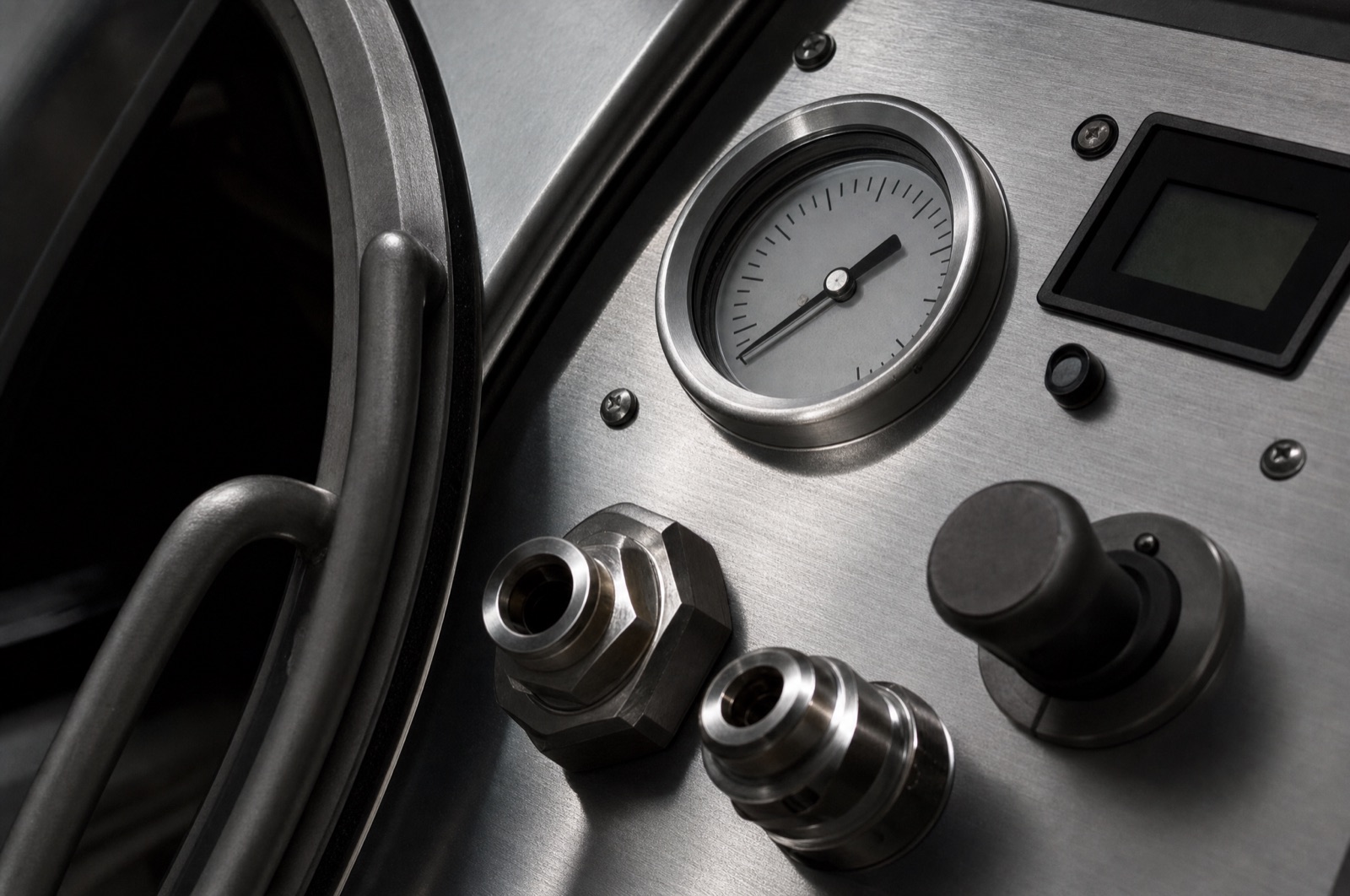
[ Pressure gauge ] Reference imagery; final photography in production
Why a used chamber is a different purchase
A second-hand chamber is still a regulated medical device. The FDA classifies a hyperbaric chamber under 21 CFR 868.5470 as a Class II device. When we queried the FDA's classification data through openFDA on 22 October 2026, product code CBF carried the life-sustain or life-support flag. Selling it on does not change any of that. OxyHealth makes the same point on its used chamber page, saying the Class II classification does not lapse when a chamber changes hands.
What changes is the evidence. OxyHealth says a private sale carries more uncertainty and usually comes without a documented service history. Its advice is to ask for records of inspections, repairs and part replacements, to learn who did the work, and to have the chamber inspected before use.
The FDA put chamber maintenance on the record in August 2025. Its letter to health care providers on safe use of hyperbaric oxygen therapy devices says the agency knows of recent fires with these devices that caused serious injuries and deaths, and that the root cause is not known. Among its recommendations is to follow the manufacturer's cleaning procedures, maintenance intervals and safety checks for each device. With a used chamber, you need to find out whether anyone did. Our safety guide covers the wider fire and oxygen picture.
The checklist
Work through this table with the seller before money changes hands. Each row names the source behind it. Where a row says to ask the maker, the seller cannot answer it for you.
| Item | What to ask or look for | Why | Source |
|---|---|---|---|
| Model and serial | Photo of the data plate; confirm the serial with the maker | Ties the unit to its clearance, recalls and service history | OxyHealth used chamber page |
| 510(k) clearance | The K-number; check it names this model | Cleared chambers are found under product code CBF | FDA letter, August 2025 |
| Recalls | Search by product code, 510(k) number and firm | Recalls are listed from November 2002 | FDA recall database |
| Manual and schedule | The operator's manual with its maintenance section | The FDA asks users to follow the maker's intervals and checks | FDA letter; FDA remanufacturing guidance |
| Service records | Inspections, repairs, parts replaced, and who did each | Private sales usually lack a documented history | OxyHealth used chamber page |
| Home repairs | Any glue, patches or bolts on the shell or window | One maker may refuse to repair a chamber with adhesives on it | OxyHealth repair and exchange policy |
| Age | Date of manufacture or purchase | One maker says chambers 10 or more years old may be non-repairable | OxyHealth repair and exchange policy |
| Soft shell zipper | Teeth, pull tabs, docks, straps; any splitting | The zipper holds the pressure seal | Summit to Sea Grand Dive manual |
| Relief valves | That they release at the set pressure | One manual says to stop and call if they do not | Summit to Sea Grand Dive manual |
| Acrylic window | Fabrication date, cycle count, inspection records; crazing, cracks, scratches | Windows have a design life and an inspection regime | ASME PVHO-2 page; Perry Baromedical advisory |
| Compressor filters | Intake filter age; output filter indicator color | Filters have published replacement rules | Summit to Sea Grand Dive manual |
| Fittings and hoses | Cracks or damage | The manual says to check them regularly | Summit to Sea Grand Dive manual |
| Concentrator | Hour meter reading, model, serial, purity test | Service manuals set purity checks with a calibrated analyzer | Philips EverFlo service manual |
| Warranty | Whether any term passes to you, in writing | Some terms cover only the original purchaser | Inogen warranty; FTC warranties page |
| Listing | Where and how it is offered | Some marketplaces bar prescription devices | eBay and Craigslist policies |
Sources read 22 October 2026 and linked in the sections below. A row is a question to ask, not a pass mark. We have not set acceptance limits for any item.
Model, serial number and clearance
Start with the data plate. Photograph the model and serial number and ask the original maker to confirm the serial, as OxyHealth recommends. A confirmed serial lets you match the chamber to a clearance, a recall and a service file.
Next, the clearance. The August 2025 FDA letter says hyperbaric devices are cleared through the 510(k) process and can be found by searching for product code CBF in the 510(k) database. Our openFDA query on 22 October 2026 returned 69 records under that code. A clearance names specific models and indications for use, so check the model on the letter against the one in front of you. The FDA's page on registered and certified devices says the FDA does not issue device registration certificates, so a framed certificate proves nothing about clearance. The terms are set out in our FDA cleared vs registered guide.
For a soft shell, read the indications closely. The 2023 NFPA committee ballot cited later on this page records a committee member writing that the FDA 510(k) for these chambers is for treating acute mountain sickness with air, and that the models in that submission were not cleared for any other treatment or for oxygen use. A seller who describes a used soft shell in other terms is describing something the clearance does not cover.
Recalls and FDA notices
The FDA keeps a medical device recalls database. It holds recalls classified since November 2002, searchable by product name, product code, 510(k) number, recall class and recalling firm. The date shown is when the FDA classified the recall, which may be later than when it began.
We ran the same search through openFDA for product code CBF on 22 October 2026. It returned three records. Two, from 2008, describe a field upgrade to correct a software bug in a chamber control module. The third, from 2014, says the firm was distributing a chamber without an approved 510(k). A chamber with no recall is not thereby cleared or safe. Search by the maker's name and the K-number too, because a record may sit under another code.
If a recall turns up, ask the maker to confirm the remedy was carried out on this serial.
Soft shells: zipper, seams, windows and valves
On a soft chamber the shell is the pressure boundary, and the zipper is part of it. The Summit to Sea warranty page lists the zipper, windows, seams, valves and hoses as covered components, which is a fair map of what to inspect. Our hard vs soft shell guide explains how the two designs differ.
The Summit to Sea Grand Dive manual gives an example of published care. It says the buckled belts reduce stress on the zipper and extend its life. The outside zipper needs no maintenance beyond a wipe with a damp cloth. The inside airtight zipper's docks need Tzip silicone lubricant when the zipper becomes hard to seat. So ask whether the straps are all present, open and close both zippers fully, and look for teeth or pulls that are bent, worn or missing.
The same manual describes two relief valves, a blue one factory set to release air at 1.3 ATA and a yellow one set slightly higher. It says that if the relief valve does not release air at full pressure, the user should stop and call the distributor. Ask to see a valve release. The manual also says both compressors must run during a session, so check that every compressor listed for the model is in the sale.
Look for repairs: glue, patches, bolts or straps on a soft shell. The OxyHealth repair and exchange policy says it does not use glues or adhesives in any repair, and that chambers contaminated with adhesives or non-OxyHealth materials may be refused. So a home repair can close off factory repair, at least with that maker. Ask other makers the same question before you buy.
Hard shells: acrylic windows and the vessel
Hard chambers raise a different question: the age of the acrylic. ASME's PVHO-2 page says the standard provides technical criteria for the user to establish the serviceability of a PVHO acrylic window, so that the user or the jurisdictional authority can determine when a window requires replacement. The page lists a 2025 edition and says the standard has been placed on stabilized maintenance. The build side is covered in our ASME PVHO-1 guide.
We have not read the paid PVHO text. Two public documents describe what it asks. A Perry Baromedical product advisory from 2014 says acrylic windows reach a 10-year design life at 10 years or 10,000 cycles, whichever comes first. It says inspection requirements then become much more stringent, and that a satisfactory review can keep a chamber in service one more year at a time, up to a possible 20 years or 20,000 cycles. It also says an inspecting firm must red tag a chamber whose acrylic fails and cannot be repaired. A 2023 Wound Education Partners article says design life runs from the date of fabrication. It says a PVHO out of service for 18 months or longer needs a maintenance inspection, and that inspections cover crazing, cracks, discoloration, blisters, scratches and pits.
Those documents describe clinical chambers built to PVHO-1; whether a home hard shell was built to it is a question for the maker. For any acrylic window, ask for the fabrication date, an estimate of cycles, and the last inspection report.
Cleaning history matters too. Perry's approved acrylic cleaning page warns against cleaners with high concentrations of alcohol and says they are known to start crazing of the acrylic cylinder. It also bans dry cloths and abrasive cleaners on the window. Ask the seller what was used to clean it.
Compressor, filters and hoses
The Grand Dive manual says the compressor's intake filter carries a recommendation to replace it once a year based on 24-hour daily use, and that at average use its life is expected to be five years. The black output filter shows a green ball that turns red when it needs changing. Those figures belong to that product; follow the manual for the model you are buying.
The same manual says to check fittings and hoses regularly for cracks or damage and to call the distributor for a replacement part if you find any. Ask whether any hose or fitting came from another source, and ask to watch the chamber reach working pressure on its gauge. Our delivery and installation guide covers moving a chamber and the space it needs once you get it home.
The oxygen concentrator
A concentrator in the sale is a separate device with its own maker, manual and rules, as our concentrator guide explains. That guide records the FDA position that concentrators are sold only with a prescription.
The Philips EverFlo service and technical reference manual shows what a service check looks like for one common home unit. It describes an hour meter driven by the device software. Its oxygen test sets the flow to 5 L/min and checks the reading against a spec of more than 90% or more than 87%, depending on model number, with a calibrated oxygen analyzer. It says the device typically takes 10 minutes to reach its purity specification, and that only trained and qualified personnel should repair it, using authorized parts. So ask for the hour meter reading and the model number, and ask whether a technician has tested the purity.
Inogen's G5 particle filter page says to wash and dry the filters weekly, more often in dusty settings, and to replace a filter that is misshapen or has a damaged screen. Other units have other schedules.
Service records, repairs and refurbishing
Words like refurbished and reconditioned have a defined meaning in FDA guidance, even when a listing uses them loosely. The FDA's May 2024 guidance, Remanufacturing of Medical Devices, defines servicing as repair or routine maintenance that returns a device to the safety and performance specifications set by the original maker. It defines remanufacturing as any act that significantly changes a device's performance or safety specifications, or its intended use, and treats a remanufacturer as a manufacturer. Recondition, refurbish and rebuild mean restoring a device to the original maker's specifications comparable to when new. The FDA says it looks at what an entity does, whatever it calls itself.
The same guidance says the maker's labeling of a reusable device should include the recommended maintenance activities and schedule, troubleshooting steps and acceptance criteria, and a description of error codes and alarms. If a seller cannot supply that manual, request it from the maker before you buy.
The repair history affects what help you can get later. The OxyHealth policy allows a maximum of two repairs per chamber over its lifetime, lets each component be replaced only once, and says chambers 10 or more years old may be non-repairable based on their condition. A used chamber may already have used part of that allowance. Ask any reseller of a refurbished unit who did the work, what was replaced, and for the paperwork.
For a clinic, the stakes are formal. A 2023 NFPA committee ballot on chamber rules records a committee member writing that NFPA 99 chapter 14 requires chambers to be fabricated to PVHO-1 and to be housed, maintained and operated under that chapter.
Warranty and the terms of sale
Assume no warranty passes until a document says it does. The Inogen warranty statement we read is granted only to the original purchaser, is non-transferable, and needs the original receipt and proof of identity. The Summit to Sea warranty runs two years from delivery and the page we read does not say whether it transfers. OxyHealth tells second owners to ask the maker what coverage, if any, applies to them. Our warranty guide explains full and limited warranties and the transfer rules.
The FTC's warranties page says implied warranties from state law cover almost everything you buy, unless the seller gives written notice of no warranty or marks the product "as is" where state law allows that. It says implied warranties last as long as four years in some states. It also advises getting any spoken promise in writing, because a business might later refuse to perform a service it only promised out loud.
Our price index tracks list prices for new chambers. The guide to selling a used hyperbaric chamber covers the other side of the deal.
Where the chamber is listed
Marketplace rules tell you something about the listing. eBay's medical devices policy says any medical device that requires a prescription cannot be sold on eBay. Its examples include oxygen concentrators, compressors and conservers that require a prescription. For devices that can be listed, it says the item description must state if the device has been opened or used, that used items must be properly cleaned, and that they must not be altered in ways that change performance or safety specifications. The page does not mention chambers.
Craigslist's prohibited items list includes "prescription drugs, medical devices". For how the brands we track score on what we can verify, see the scorecard.
What we have not verified
We have not inspected a used chamber for this page, and the checklist sets no pass or fail limits. The maintenance figures come from one soft chamber manual, one concentrator service manual and one concentrator filter page; other models publish their own, and we have not compared them. We have not read ASME PVHO-1 or PVHO-2 or NFPA 99 directly, and the window design life figures come from a 2014 manufacturer advisory and a 2023 article that describe the standards. We do not know whether those figures apply to any home hard shell. We did not find a published lifetime for a soft chamber zipper, seam or window, or a published service interval for a chamber compressor beyond the filter rules above. We have not checked how any maker treats a second owner in practice, or how state law treats a private chamber sale. The openFDA recall and 510(k) counts reflect our queries on 22 October 2026 and will change. We could not open the FDA's consumer update on hyperbaric oxygen therapy during this research. If you hold a manual or service record that settles one of these points, send it and we will check it.
Frequently asked
Does the warranty transfer when I buy a used hyperbaric chamber?
Only if the written terms say so. The Summit to Sea warranty page we read does not say whether its two-year term passes to a later owner. The Inogen concentrator warranty is granted only to the original purchaser and is non-transferable. OxyHealth's page on used chambers tells second owners to ask the maker what coverage, if any, applies to them. Get that answer in writing before you pay.
How do I check whether a used chamber was ever FDA cleared?
Ask the seller for the exact model name and the 510(k) number, then look it up. The FDA says cleared hyperbaric devices can be found by searching for product code CBF in its 510(k) database. Check that the clearance names the same model you are looking at and read the indications for use. The FDA does not issue registration certificates, so a certificate is not evidence of clearance.
How old is too old for an acrylic chamber window?
Ask the maker and an inspector, not the seller. A Perry Baromedical advisory says acrylic windows reach a 10-year design life at 10 years or 10,000 cycles, whichever comes first, and that inspections become stricter after that. A 2023 article from Wound Education Partners says the design life runs from the date of fabrication. ASME PVHO-2 sets out how a user decides when a window needs replacement.
Can I buy a used oxygen concentrator with a chamber?
A concentrator is a prescription device, and some marketplaces ban it. eBay's US policy says medical devices that require a prescription cannot be sold there and names oxygen concentrators. Craigslist prohibits medical devices. If a concentrator comes with the chamber, ask for its hour meter reading, its model and serial number, and whether it has been serviced, and talk to your physician about the prescription.
What does certified refurbished mean on a used chamber?
It has no single legal meaning on a listing. The FDA's 2024 remanufacturing guidance defines refurbishing as restoring a device to the original maker's specifications comparable to when new. OxyHealth says its own refurbished chambers are inspected, serviced and certified by factory-trained technicians. Ask who did the work, what was replaced, and for the paperwork that shows it.

Alex tests the machines himself, in clinics and studios on three continents. Every score comes from the same 27 public criteria, and no manufacturer has a say in them.
Six questions, and we'll match chamber, options, and install to your space and budget.