CE Marking on Hyperbaric Chambers: What the EU Mark Covers
Researched and scored by Alex Evans. Last reviewed August 2026. Corrections are dated and public. See corrections
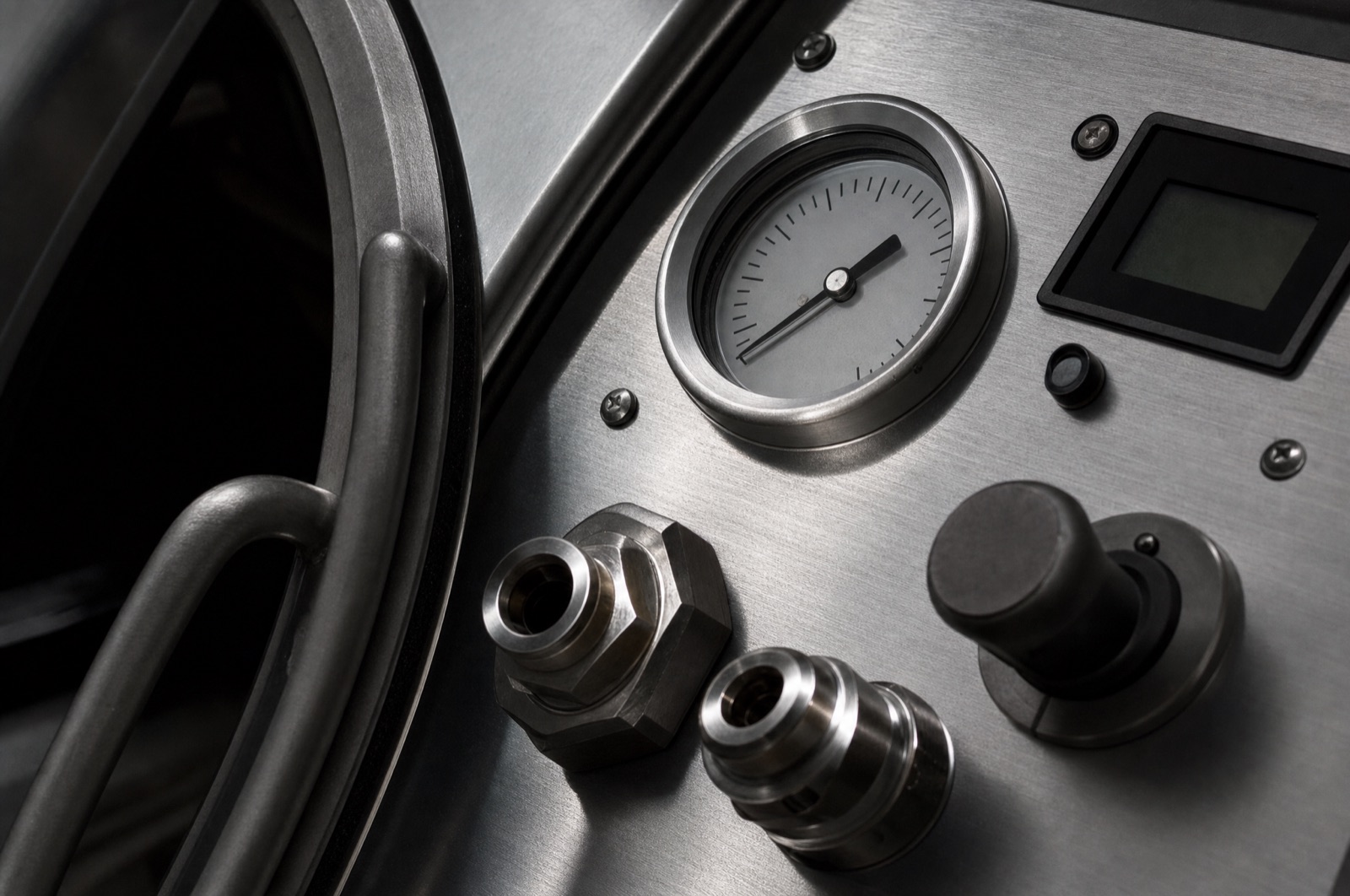
[ Chamber gauge ] Reference imagery; final photography in production
What CE marking is
CE marking is a manufacturer's claim. The European Commission's CE marking page says the mark signifies that products sold in the European Economic Area (EEA) have been assessed to meet EU safety, health and environmental requirements. The same page says the manufacturer is responsible for carrying out the conformity assessment, setting up the technical file, issuing the EU declaration of conformity and affixing the mark. It also says the mark does not indicate that a product has been approved as safe by the EU or by another authority, and does not indicate where the product was made.
The Commission's 2022 Blue Guide on EU product rules puts it in sharper terms. It calls the CE marking a key indicator, but not proof, of a product's compliance with EU law. It says CE marking is not a marketing tool and not a mark of origin, so a CE marked product may have been produced anywhere in the world. Its FAQ asks whether all CE marked products are tested and approved by authorities, and answers no: the assessment of conformity is the sole responsibility of the manufacturer.
On a hyperbaric chamber listing, that changes how to read the logo. CE is not a grade and not a safety rating. It tells you the maker says it followed a set of EU rules. Which rules, which risk class, and whether an outside body checked the work are separate questions, and the answers sit in documents the maker should be able to send you.
The EU Medical Device Regulation and its classes
Medical devices in the EU fall under Regulation (EU) 2017/745 on medical devices, usually called the MDR. It is dated 5 April 2017 and, per its Article 123, applies from 26 May 2020. Article 122 repealed the older Medical Device Directive, 93/42/EEC, and says references to the repealed directives are to be read as references to the MDR.
Article 51 divides devices into four classes, I, IIa, IIb and III, taking into account the intended purpose of the device and its inherent risks. The rules that decide the class are in Annex VIII. Class decides the route to the CE mark. Article 52 sets it out:
- Class I: the manufacturer issues the EU declaration of conformity after drawing up the technical documentation. A notified body is involved only for sterile devices, devices with a measuring function and reusable surgical instruments.
- Class IIa: a notified body assesses the quality management system and the technical documentation of at least one representative device per category.
- Class IIb: a notified body assesses the quality management system and the technical documentation of at least one representative device per generic device group, or the maker uses type examination plus product verification.
- Class III: a notified body assessment under Annex IX, covering the quality management system and the technical documentation, or type examination plus product verification.
Article 19 says the EU declaration of conformity states that the MDR requirements have been fulfilled for the device it covers, and that the manufacturer must keep it updated. Annex IV lists what it must contain. Two items are useful to a buyer: the risk class of the device under Annex VIII, and, where applicable, the name and identification number of the notified body. Article 10(8) says the maker must keep the technical documentation and the declaration available to authorities for at least 10 years after the last device it covers is placed on the market.
Where a hyperbaric chamber sits
The MDR does not name hyperbaric chambers. We searched the full text for the word and found no hit. We also searched the EU manual on borderline and classification of medical devices, the version 5 edition dated April 2026, which records how member state authorities have agreed to classify specific products. It has no entry for hyperbaric chambers. We have not found an official EU or notified body document that assigns a chamber to a class.
What we did find is how manufacturers have registered chambers. On 9 October 2026 we searched EUDAMED, the EU database on medical devices, for device records with "hyperbaric" in the trade name. It returned 23 records. The 21 records for whole chambers or chamber systems, both monoplace and multiplace, are all registered as Class IIb. The other two are connector kits sold for use with a chamber, registered as Class I. None of the 23 trade names describes a soft or fabric chamber. A record is the manufacturer's entry, so this tells you what makers declared, not what a regulator decided.
The records do not say which Annex VIII rule each maker applied. Two rules are plausible candidates, and we flag them without claiming either is the one used. Rule 9 puts active therapeutic devices intended to administer or exchange energy in Class IIa, or Class IIb when they may do so in a potentially hazardous way. Rule 12 puts active devices intended to administer substances to the body in Class IIa, or Class IIb when done in a potentially hazardous way. Section 3.5 of Annex VIII says that when several rules apply, the strictest one, giving the higher class, applies. The class on a specific chamber's declaration of conformity is the one to rely on. For the difference between one-seat and multi-seat vessels, see monoplace vs multiplace.
Notified bodies and the four-digit number
A notified body is, in the Commission's words on its notified bodies page, an organisation designated by an EU country to assess the conformity of certain products before they are placed on the market. Each one gets an identification number and is listed with the tasks it has been notified for. The EU's Your Europe business portal says that when a notified body is involved, its 4-digit ID number must appear next to the CE marking.
The MDR says the same in Article 20(5). Where applicable, the CE marking shall be followed by the identification number of the notified body responsible for the conformity assessment. The number must also appear in any promotional material that says the device meets the requirements for CE marking. That second sentence matters for online listings. Article 20 also says the mark goes on the device or its sterile packaging, in the instructions for use and on any sales packaging, and Annex V sets a minimum height of 5 mm.
The Blue Guide adds a nuance. The number follows the CE marking when the notified body is involved in the production control phase. A body involved only at the design stage does not put its number next to the mark. For a chamber declared Class IIb, Article 52(4) sends the maker through a notified body assessment of its quality management system, so you would expect a number. A CE mark on a whole chamber with no number at all is a reason to ask which class the maker declared.
To look up a number, use NANDO, the Commission's New Approach Notified and Designated Organisations database. The Commission's page gives its old address at ec.europa.eu/growth/tools-databases/nando. When we tried an old NANDO link on 9 October 2026 it redirected to the Single Market Compliance Space, which is where the Your Europe portal now points for NANDO searches. The Czech standards office notes that NANDO has been merged into that portal. There you can search by legislation and open each body's details, including its number and the tasks it is notified for. Check two things: that the body exists, and that it is notified under Regulation (EU) 2017/745.
The Pressure Equipment Directive
A chamber is a pressure vessel as well as a medical device, which raises a second EU law. Directive 2014/68/EU, the Pressure Equipment Directive (PED), applies under Article 1(1) to the design, manufacture and conformity assessment of pressure equipment with a maximum allowable pressure PS greater than 0.5 bar. Article 2 defines pressure as gauge pressure, relative to the atmosphere, and PS as the maximum pressure the equipment is designed for, as specified by the manufacturer.
Article 1(2)(f) carves out some equipment. It excludes equipment classified as no higher than category I under the PED and covered by one of six other directives, one of which is the old medical device directive, 93/42/EEC. Read with Article 122 of the MDR, that reference now points to the MDR. The exclusion is limited to category I, the lowest PED hazard category. Recital 9 of the PED explains the logic: other directives are considered adequate where the risk due to pressure remains small. The Commission's PED guidelines apply the same reasoning in Guideline A-52, on pressure cookers. We found no guideline in that document that deals with hyperbaric chambers or medical devices.
For scale: 0.5 bar is about 7.3 psi. Our pressure guide puts a 1.5 ATA chamber at roughly 7.4 psi above sea-level air and a 1.3 ATA chamber at roughly 4.4 psi. But the PED threshold is about the design pressure the maker specifies, not the session pressure, so a chamber run at 1.3 ATA could still have a PS above 0.5 bar. Whether a given medical chamber needs PED conformity on top of the MDR depends on its PED category, which we cannot work out from public data. Article 20(6) of the MDR and Article 19(2) say that where several EU acts apply, the CE marking covers all of them and a single declaration of conformity lists them. So the declaration is where to look.
EN 14931 and multiplace chambers
Europe has a standard written for clinic chambers. The Swedish Institute for Standards lists SS-EN 14931:2006 with the title Pressure vessels for human occupancy (PVHO), Multi-place pressure chamber systems for hyperbaric therapy, Performance, safety requirements and testing. Its status is valid and it runs to 40 pages. The BSI listing gives the scope: performance and safety requirements and test methods for multi-place chambers designed for pressures above ambient and used in medical installations for therapeutic purposes.
The scope is multi-place and medical. A single-person home capsule is outside its stated scope. A multiplace chamber maker may cite EN 14931 in its technical documentation or its paperwork to buyers, so it is worth asking whether it was used. We have not confirmed whether EN 14931 is a harmonised standard cited in the Official Journal, which would give a presumption of conformity. For the US engineering standard that covers both single and multi-seat vessels, see our ASME PVHO-1 guide.
EUDAMED, the EU device database
EUDAMED is the European database on medical devices set up under Article 33 of the MDR. The Commission's EUDAMED overview lists six modules: actor registration, UDI and device registration, notified bodies and certificates, clinical investigations and performance studies, vigilance and post-market surveillance, and market surveillance. It says four modules, actor registration, device registration, notified bodies and certificates, and market surveillance, became mandatory on 28 May 2026, after Commission Decision (EU) 2025/2371 was published on 27 November 2025.
The public can search it. A device record shows the trade name, the manufacturer and its single registration number, the risk class and the market status. For a buyer, that is a second check on the declaration of conformity: the class and manufacturer in the record should match the paperwork. A chamber that is missing from EUDAMED is not proof of anything on its own. Our search was by trade name, and a chamber registered under a model name without the word hyperbaric would not have shown up.
CE marking, FDA 510(k) and ASME PVHO-1
The three marks come from different bodies and answer different questions. Our FDA cleared vs FDA registered guide covers the US side in depth.
| Point | CE marking (MDR) | FDA 510(k) clearance | ASME PVHO-1 |
|---|---|---|---|
| What it is | Manufacturer's declaration of conformity with EU law | FDA order finding the device substantially equivalent to a legally marketed one | Engineering standard for vessels holding a person above 2 psi |
| Market | European Economic Area | United States | No market of its own; required through codes such as NFPA 99 |
| Who decides | The manufacturer, with a notified body for Class IIa and above | The FDA | ASME writes it; the maker builds, tests and marks to it |
| Hyperbaric chamber class | Class IIb in every whole-chamber EUDAMED record we found | Class II under 21 CFR 868.5470 | Not a classification system |
| Number to ask for | Four-digit notified body number | K-number | Nameplate and test records |
| Where to check | Declaration of conformity, NANDO, EUDAMED | FDA 510(k) database | Seller's documents; no public registry we know of |
Sources: Regulation (EU) 2017/745; European Commission CE marking page; Your Europe CE marking page; EUDAMED device search, 9 October 2026; FDA premarket notification 510(k) page; 21 CFR 868.5470; ASME PVHO-1 product page.
The FDA's 510(k) page says the clearance order is a letter finding the device substantially equivalent, and that the FDA does not typically inspect the facility before clearance. 21 CFR 868.5470 classifies hyperbaric chambers as Class II. ASME's PVHO-1 page describes the standard as covering design, fabrication, inspection, testing, marking and stamping of vessels above a 2 psi differential. A chamber can hold any one of these, all three, or none. Holding one says nothing about the others.
How to check a CE claim
Ask in writing and keep the answers. These checks take minutes once you have the documents.
- Ask for the EU declaration of conformity for the exact model. The Blue Guide says the declaration must be made available to authorities on request and lists product types that must ship with one; medical devices are not on that list, so you may have to ask.
- Read the risk class on the declaration. Annex IV of the MDR requires it. Note whether it says Class I, IIa, IIb or III.
- Check which laws it names. A declaration under Regulation (EU) 2017/745 is a medical device claim. Note whether it also names Directive 2014/68/EU. Ask separately whether a standard such as EN 14931 was applied.
- Find the notified body name and number on the declaration, and compare the number with the one next to the CE mark on the chamber and in the listing.
- Look the number up in NANDO. Confirm the body exists and is notified under Regulation (EU) 2017/745.
- Ask for the notified body certificate reference, which Annex IV also lists, and the certificate's expiry date.
- Search EUDAMED for the manufacturer and model. Compare the risk class and manufacturer name with the declaration.
- Check the intended purpose on the declaration. It is part of the identification Annex IV requires, and it sets what the CE claim covers.
Brand-by-brand claims about CE marking and FDA clearance, and how far we have checked each, are in the certification database. A complete set of answers is not a reason to buy. It tells you the paperwork exists. For how the chambers we track compare on what we can verify, see the scorecard.
Misused marks and voluntary certificates
The EU recognises that the mark gets misused. The Your Europe page warns that some organisations offer "voluntary certificates" that are not valid for CE marking. It says they are not legally recognised and may be issued without product testing, be used in areas beyond the issuing body's legal competence, or mislead customers and regulators. A certificate of compliance from a body that is not a notified body, or not notified under the MDR, does not stand in for a notified body certificate.
On enforcement, the Blue Guide says member states must ensure the CE marking regime is applied correctly, act on improper use of the mark, and provide penalties for infringements, which may include criminal sanctions for serious cases. It adds that national measures against abuse or misuse of the marking may include withdrawal, recall and penalties. Article 19(6) of the PED and Article 20(2) of the MDR, which applies the general CE principles of Regulation (EC) No 765/2008, carry the same principle into the two laws a chamber may fall under. If a number does not check out in NANDO, the national authorities who enforce the marking in the country of sale are the ones to tell. For the wider risks a chamber carries, see our hyperbaric chamber safety guide.
What we have not verified
We have not found an official EU, competent authority or notified body document that classifies hyperbaric chambers under the MDR. The Class IIb finding comes from manufacturers' own EUDAMED records, searched by trade name on 9 October 2026, and we do not know which Annex VIII rule they applied. We do not know how soft or fabric chambers are classified in the EU, because none appeared in our search. We have not confirmed whether medical hyperbaric chambers need PED conformity in addition to the MDR, or how their PED category is worked out. We have not read EN 14931 itself, and we have not confirmed whether it is a harmonised standard. We have not checked the transition rules that let some devices certified under the old Directive 93/42/EEC stay on the market. We make no claim that any brand meets or fails these rules. If you hold a document that settles one of these points, send it and we will check it.
Frequently asked
Does CE marking mean a hyperbaric chamber is approved in Europe?
No. The European Commission says a CE marking does not indicate that a product has been approved as safe by the EU or by another authority. It is the manufacturer's declaration that the product meets the EU rules that apply to it. For most medical devices above the lowest class, a notified body takes part in the assessment, which is why the number next to the mark matters.
What class is a hyperbaric chamber under the EU MDR?
We found no official EU document that classifies hyperbaric chambers by name. In EUDAMED, the EU device database, every record we found for a whole chamber or chamber system, 21 of them on 9 October 2026, is registered as Class IIb. Two connector kits for chambers are registered as Class I. The class a manufacturer chose should also appear on its EU declaration of conformity.
What is the four-digit number next to the CE mark?
It is the identification number of the notified body that took part in the conformity assessment. The EU's Your Europe business portal says the 4-digit ID number must appear next to the CE marking when a notified body is involved. You can look the number up in NANDO, the Commission's database of notified bodies, to see who the body is and which laws it is notified for.
Does the Pressure Equipment Directive apply to hyperbaric chambers?
Possibly, alongside the MDR. Directive 2014/68/EU covers pressure equipment with a maximum allowable pressure above 0.5 bar gauge. It excludes equipment covered by the old medical device directive only when that equipment is no higher than category I under the PED. We have not found an EU document that applies this to hyperbaric chambers, so ask the manufacturer which acts its declaration of conformity covers.
Is a CE marked chamber also FDA cleared?
Not necessarily. CE marking is an EU system and FDA clearance is a US decision on a 510(k) submission. One does not imply the other. Ask for the EU declaration of conformity and the notified body number for the EU claim, and for the K-number for the US claim, and check each in its own database.

Alex tests the machines himself, in clinics and studios on three continents. Every score comes from the same 27 public criteria, and no manufacturer has a say in them.
Five questions, and we'll match chamber, options, and install to your space and budget.