ASME PVHO-1 Explained: The Hard Chamber Standard
Researched and scored by Alex Evans. Last reviewed August 2026. Corrections are dated and public. See corrections
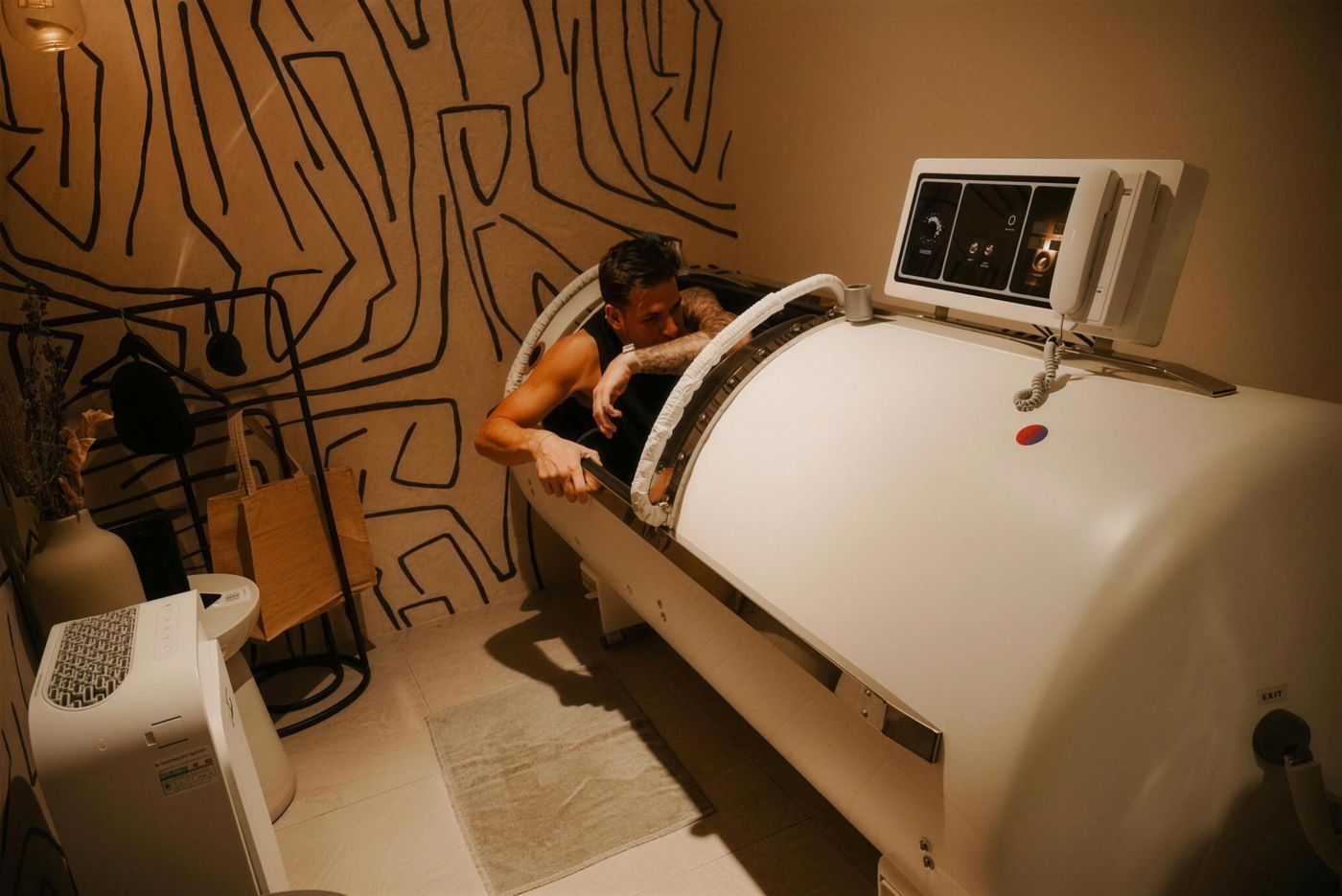
[ Hard chambers ] Reference imagery; final photography in production
What ASME and PVHO-1 are
ASME is the American Society of Mechanical Engineers, a standards body that writes engineering codes. PVHO-1 is its Safety Standard for Pressure Vessels for Human Occupancy. PVHO is shorthand for any pressure vessel with a person inside it. A hyperbaric chamber is one. So is a diving bell, a submersible, and a recompression chamber on a dive boat.
The current edition on ASME's site is 2023. The full text is not free: ASME sells it, and its product page lists PDF options from $215 to $310. We have not bought it. Everything on this page about scope comes from the summary ASME publishes on that page, the matching summary in the FDA's standards database, and what code bodies and fire officials have written about it in public documents. Where those sources stop, we say so.
For a buyer, the useful mental model is simple. PVHO-1 is a rulebook for building and proving a pressure vessel. It is not a product rating, a seal of approval from a government agency, or a statement about what a session does for anyone. It answers one kind of question: was this vessel designed, made and tested to a published engineering standard, and can the maker show it?
What PVHO-1 covers
ASME's summary says the standard provides requirements for the design, fabrication, inspection, testing, marking and stamping of pressure vessels for human occupancy with an internal or external pressure differential above 2 psi. It also covers the design, fabrication, inspection, testing, cleaning and certification of the piping systems that serve those vessels. That second part matters for chambers, because the air and oxygen lines are part of what keeps the occupant safe.
The FDA's recognized standards entry for PVHO-1-2023 repeats that scope and spells out the list. It names submersibles, diving bells, personnel transfer capsules, decompression chambers, recompression chambers, hyperbaric chambers, high altitude chambers and medical hyperbaric oxygenation facilities as PVHOs. It excludes nuclear reactor containments, pressurized airplane and aerospace vehicle cabins, and caissons. Home and clinic hyperbaric chambers are not on the exclusion list.
Read the verbs in that scope again: design, fabrication, inspection, testing, marking, stamping, certification. Those are the things a buyer can ask to see evidence of. Marking and stamping are the reason a compliant vessel is expected to carry a physical mark, which is what the Des Moines fire department relied on when it inspected a hard chamber (more on that below). We have not seen the clause-level detail of what the mark must contain, because that sits in the paid text.
What 2 psi means for home chambers
The threshold in the scope is a pressure differential of 2 psi. The UHMS, in its position statement on low-pressure fabric chambers, converts that to 2 psig above ambient, or about 1.14 atmospheres absolute. Anything run above that line with a person inside is within the scope ASME publishes.
Home chambers sit above it. Soft shells run near 1.3 ATA and hard shells near 1.5 ATA, as our pressure guide lays out. At sea level, one atmosphere is about 14.7 psi, so 1.3 ATA is roughly 4.4 psi above ambient and 1.5 ATA is roughly 7.4 psi above ambient. Both clear the 2 psi line with room to spare. Medical chambers run higher still: the UHMS definition of hyperbaric oxygen calls for not less than 2.0 ATA.
The practical point is that "mild" pressure does not take a chamber out of scope. Several members of the NFPA committee on hyperbaric facilities made exactly that point in writing in 2023, when a proposal argued that mild-pressure chambers fall outside ASME PVHO. One quoted the PVHO-1 scope clause and noted that if the differential can exceed 2 psi, PVHO applies.
PVHO-2 and acrylic windows
PVHO-1 has a companion. ASME's PVHO-2 page, now titled Post-Construction Requirements with a 2025 edition, says it provides technical criteria and guidelines for the operation and maintenance of PVHOs and PVHO systems that were designed, constructed, tested and certified to PVHO-1. Earlier editions carried the title In-Service Guidelines. ASME sells it too; the page lists PDF options from $70 to $115.
The same page says PVHO-2 gives the user technical criteria to establish the serviceability of a PVHO acrylic window under its specific service conditions, so that the user or the jurisdictional authority can decide when a window needs replacing. That makes acrylic a maintenance question as much as a purchase one. If you are looking at a used chamber or one with acrylic windows, ask how the seller tracks window condition and age against it. ASME's public PVHO-1 summary does not mention windows, so we cannot tell you from public sources what PVHO-1 itself requires of them.
Who requires PVHO-1
ASME writes the standard. Other bodies make it mandatory by pointing to it.
The Undersea and Hyperbaric Medical Society (UHMS) writes it into its definition of hyperbaric oxygen therapy: the whole body inside a hard-sided chamber that meets ASME PVHO-1 and NFPA 99, at not less than 2.0 ATA, breathing physician-prescribed oxygen. The same page says mild hyperbaric exposures are those below 1.5 ATA and that they are often delivered outside medical facilities without adherence to fire safety and chamber construction standards.
NFPA 99, the National Fire Protection Association's Health Care Facilities Code, is the fire and safety code for hyperbaric facilities. Its Chapter 14 covers chambers. We have not read NFPA 99 itself, but two public documents state what it requires. In the 2023 committee ballot on proposed TIA 1735, a member of the NFPA committee wrote that Chapter 14 requires hyperbaric chambers to be fabricated to ASME PVHO-1, and housed, maintained and operated per that chapter. Another wrote that Chapter 14 applies to any chamber used at 0 to 100 psi. The UHMS fabric chamber statement says the same thing in short form: under NFPA 101 and NFPA 99, chamber construction is required to meet ASME PVHO-1.
Fire codes are how this reaches a building. The Des Moines Fire Department's May 2024 appeal letter explains the chain: the International Fire Code requires NFPA 99 for hyperbaric facilities, and NFPA 99 requires ASME PVHO-1 as the construction standard for hyperbaric chambers. The committee ballot adds that NFPA 101, the Life Safety Code, requires any occupancy containing a hyperbaric chamber to comply with NFPA 99. Which editions apply, and how strictly, depends on what your city or state has adopted. That is a question for your local fire marshal, and for a clinic it belongs in the planning stage, as our clinic guide covers.
Soft chambers and PVHO-1
The UHMS position statement describes low-pressure fabric chambers as operating at less than 1.4 ATA, holding an FDA 510(k) clearance for acute mountain sickness only, and designed to be compressed with air only. It says they are not designed to be used with supplemental oxygen and not designed to be pressurized above 1.4 atmospheres. The statement was created in January 2017 and revised in July 2018.
Whether a fabric chamber can meet PVHO-1 is a narrower question than whether most do. In the 2023 NFPA ballot, a proposal tried to carve mild-pressure soft chambers out into a separate category. It drew 0 votes in favor, 17 against and 1 abstention. Several of the members voting against wrote that PVHO-1 offers a code case route for non-standard designs, and that at least one maker of a flexible chamber had used it to meet PVHO-1. So fabric construction is not automatically out of compliance. Compliance has to be shown, chamber by chamber, with paperwork.
The Des Moines letter shows what happens when it is not. During an inspection at a business, the fire department found two chambers. One was a hard-sided chamber with a metallic placard indicating ASME PVHO-1 compliance, supplied from oxygen tanks; after some additional work it was found acceptable. The other was a soft-sided chamber with its own oxygen concentrator. No documentation could be provided showing it met PVHO-1, the department issued a stop work order, and it was required to be removed from the building. The fire engineer recommended that the appeal board deny the appeal. For the wider comparison between the two types, see hard shell vs soft shell.
PVHO-1 is not FDA clearance
These are two different kinds of document from two different kinds of body, and sellers sometimes present one as if it covered the other.
FDA clearance is a federal marketing decision. Under the FDA's 510(k) rules, a company shows that its device is substantially equivalent to one already legally on the US market, and the FDA issues a letter that clears it for commercial distribution for stated uses. The FDA says it does not typically inspect the facility before clearing a 510(k). Hyperbaric chambers are Class II devices under 21 CFR 868.5470, product code CBF. Our page on FDA cleared vs FDA registered covers that process in full.
The two do meet. The FDA keeps a database of recognized consensus standards, and it lists ASME PVHO-1-2023 under recognition number 1-181, entered 7 October 2024, as a complete standard tied to product code CBF, the hyperbaric chamber code. The entry says the FDA will accept declarations of conformity to the older 2019 edition, in support of premarket submissions, until 26 December 2026. In plain terms, a chamber maker can tell the FDA in a 510(k) that its chamber conforms to PVHO-1. Whether a given clearance relied on that is in the submission, not in the brand's marketing.
A clearance does not prove PVHO-1 compliance on its own. The Des Moines fire engineer was offered an FDA clearance as an alternative to PVHO-1 for the soft chamber, and wrote that without information comparing the scope and passing criteria of the two, he could not confirm it was equivalent in terms of fire safety. Going the other way, a PVHO-1 mark does not tell you what uses the FDA cleared the device for, or whether it was cleared at all.
Which document tells you what
Four marks and documents show up on chamber listings. Each answers a different question.
| Document or mark | Who issues it | What it covers | What it does not tell you |
|---|---|---|---|
| ASME PVHO-1 compliance | ASME writes the standard; the maker builds, tests and marks the vessel to it | Design, fabrication, inspection, testing, marking and stamping of a vessel above 2 psi, plus its piping | Whether the FDA cleared the device, for what uses, or whether your fire authority will accept the installation |
| NFPA 99 (Chapter 14) | National Fire Protection Association; enforced through locally adopted fire and life safety codes | The facility: housing, fire safety, operation and maintenance, and per committee members, fabrication to PVHO-1 | Anything about a chamber on its own; it applies to the installation, and local adoption varies |
| FDA 510(k) clearance | US Food and Drug Administration | Substantial equivalence to a legally marketed device, for the indications in the clearance | Whether the vessel meets PVHO-1, unless the submission declared it; uses outside the cleared indications |
| CE marking | The manufacturer declares conformity for sale in the European Economic Area | The maker's claim that the product meets the EU legal requirements that apply to it | US clearance; the European Commission says it does not mean an authority approved the product as safe |
Sources: ASME PVHO-1 product page; FDA recognized consensus standard 1-181; NFPA 99 TIA 1735 final ballot results (2023); Des Moines Fire Department appeal letter (2024); FDA 510(k) premarket notification page; European Commission CE marking page.
Brand-by-brand claims about FDA clearance and CE marking, and how far we have verified each, are tracked in the certification database. We do not track PVHO-1 claims there yet, because we have not found a public registry that lets an outsider check them.
What to ask a seller
Ask in writing, and keep the answers. A seller who builds to PVHO-1 should be able to answer most of these without a long wait.
- Is this exact model designed, built and tested to ASME PVHO-1? Which edition?
- Can you send the compliance documentation, not a brochure line, for the unit I am buying?
- Does the vessel carry a PVHO-1 nameplate or placard, and can you send a photo of it on this unit?
- What are the design pressure and the maximum operating pressure on that nameplate?
- Can I see the pressure test record for this serial number, with the date and who witnessed it?
- Who certified the vessel, and how can I contact them to confirm?
- If the design is non-standard, was a code case used, and what is its number?
- Does the piping system come under the same documentation?
- For acrylic windows or bodies: how old is the acrylic, and how is its serviceability tracked under PVHO-2?
- Separately: what is the 510(k) number, and what uses does it cover?
- Has a fire authority accepted this model in an installation like mine, and will you put me in touch with one?
None of these questions is a verdict on any brand, and a good answer to all of them is not a reason to buy. They tell you whether the paperwork exists. For how the chambers we track compare on the things we can verify, the scorecard has the scored list.
What we have not verified
We have not read the paid text of PVHO-1, PVHO-2 or NFPA 99. What we say about NFPA 99 comes from its own committee's published ballot comments, the UHMS statement and a fire department letter, all quoting or paraphrasing the code. We have not found a public database where a buyer can look up whether a specific chamber is PVHO-1 compliant, so the documents from the seller are the evidence. We make no claim that any brand meets or fails PVHO-1. If you have a document that settles one of these questions, send it and we will check it.
Frequently asked
What does ASME PVHO-1 stand for?
ASME is the American Society of Mechanical Engineers. PVHO stands for pressure vessels for human occupancy. PVHO-1 is the Safety Standard for Pressure Vessels for Human Occupancy, which ASME describes as covering the design, fabrication, inspection, testing, marking and stamping of vessels that hold a person at a pressure differential above 2 psi.
Does a home hyperbaric chamber fall under PVHO-1?
By the scope ASME publishes, any vessel that encloses a person at more than 2 psi of differential pressure is a PVHO. The UHMS puts 2 psi at about 1.14 atmospheres absolute. Home chambers run near 1.3 ATA for soft shells and 1.5 ATA for hard shells, both above that line. Whether a given chamber was actually built and certified to the standard is a separate question that only its documents can answer.
Is a PVHO-1 chamber the same as an FDA-cleared chamber?
No. PVHO-1 is an engineering standard from ASME covering how the vessel is designed, built and tested. FDA clearance is a 510(k) decision that a device is substantially equivalent to one already legally on the US market, for stated uses. The FDA lists PVHO-1-2023 as a recognized consensus standard for hyperbaric chambers, so a manufacturer can declare conformity to it in a submission, but one does not stand in for the other.
Can a soft-shell chamber meet PVHO-1?
Members of the NFPA committee on hyperbaric facilities wrote in a 2023 ballot that PVHO-1 has a code case route for non-standard designs, and that at least one maker of a flexible chamber has used it. That means fabric construction does not rule compliance out. It also means compliance has to be shown with documents for the specific chamber, which is what the Des Moines fire department asked for and did not receive.
Can I read PVHO-1 for free?
No. ASME sells the standard. Its product page lists the 2023 edition as a PDF at $215 to $310 depending on the option. ASME publishes a short scope summary for free, which is what this page works from.

Alex tests the machines himself, in clinics and studios on three continents. Every score comes from the same 27 public criteria, and no manufacturer has a say in them.
Five questions, and we'll match chamber, options, and install to your space and budget.