Hard Shell vs Soft Shell Hyperbaric Chambers: The Honest Comparison
Researched and scored by Alex Evans. Last reviewed August 2026. Corrections are dated and public. See corrections
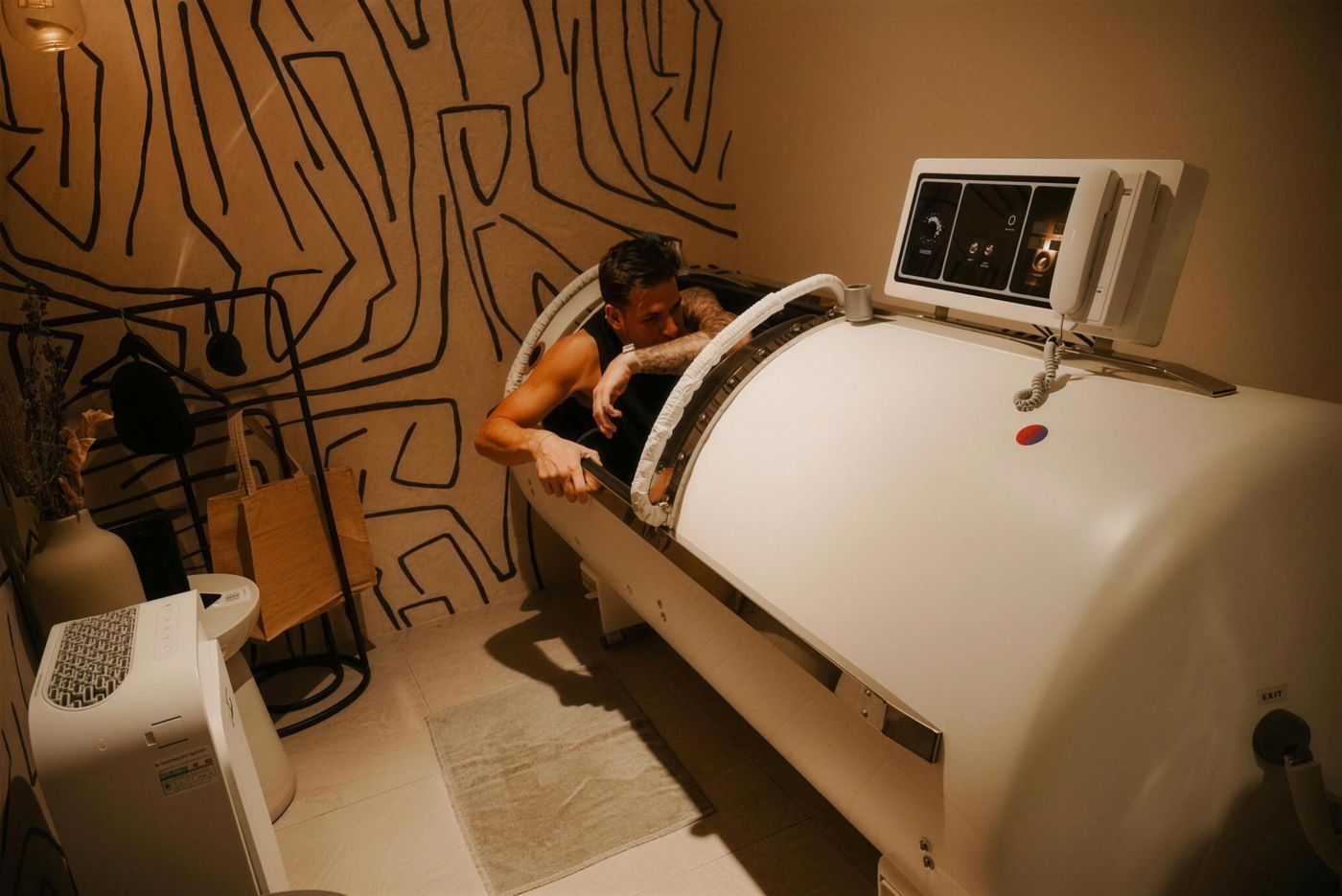
[ Hard-shell chambers ] Reference imagery; final photography in production
The physics, in one paragraph
Pressure scales force. At 1.3 ATA a chamber holds roughly 3 tons of outward force per square meter of surface; at 1.5 ATA it is closer to 5. Fabric handles this by being flexible and staying at low pressure. Aluminum handles it by being a cylinder, because a cylinder spreads load evenly, which is why every serious chamber you have ever seen is a tube. Shapes that photograph well and pressurize badly exist, and we score them accordingly.
What the FDA clearance actually covers
Here is the part most vendor sites bury: soft-shell chambers are FDA-cleared for one thing, acute mountain sickness. Not recovery, not wellness, not any of the conditions medical HBOT treats at higher pressure in clinical settings. Selling a soft shell is legal and fine. Implying it does what a clinical chamber does is not fine, and it is the single most common dishonesty in this market. We flag it brand by brand in our reviews.
Side by side
| Soft shell | Hard shell | |
|---|---|---|
| Typical pressure | 1.3 ATA | 1.5 to 3.0 ATA |
| Price range | $5,000 to $25,000 | $55,000 to $230,000+ |
| FDA status | Cleared for altitude sickness only | Varies by model; medical units carry clinical clearances |
| Weight | 30 to 60 kg, folds away | 175 kg and up, permanent placement |
| Oxygen delivery | Room air only. Concentrators are sold bundled, but the FDA has not cleared these bags for use with one (why) | Integrated systems with monitoring |
| Lifespan | Zippers and seams wear | Decades with service |
Which one should you buy
Buy a soft shell if budget is the constraint, you accept 1.3 ATA for what it is, and you want the option to fold the thing under a bed. Buy a hard shell if you are building around higher-pressure protocols, you want the chamber to outlive your car, or paying clients will sit in it. A clinic running soft shells is telling its customers something, and the customers eventually notice.
Our scored ranking of both types lives in the hyperbaric verdict.
The certification paper trail, decoded
The phrases on sales pages sound interchangeable and are not. "FDA cleared" means a 510(k) exists for a specific device and a specific use, and for every soft shell on the market that use is acute mountain sickness. "FDA registered" means the factory filed a form; nothing was reviewed, and we treat it as marketing. "CE marked" is a European conformity declaration that varies enormously in rigor depending on who issued the technical file. Our brand-by-brand findings sit in the Certification Database, and the pattern after checking is consistent: the louder the certification language, the thinner the paperwork behind it.
What the FDA records show for each shell
Hard and soft chambers sit in the same FDA classification. 21 CFR 868.5470 makes any hyperbaric chamber a Class II device under product code CBF, and each model then needs its own clearance. What differs is what those clearances say. The UHMS position statement on low-pressure fabric chambers describes them as cleared for acute mountain sickness only, built to be compressed with air only, not designed for supplemental oxygen and not designed to go above 1.4 ATA. The FDA consumer update on hyperbaric oxygen therapy says the zippered bags it cleared provide pressure, do not attach to oxygen tanks, and are not cleared for use with oxygen tanks or concentrators. The hard monoplace summary we read, K140559 for the Sechrist 3300H/HR and 3600H/HR, describes chambers built to give 100% oxygen at up to 3 ATA.
| FDA record | Shell | What the record says |
|---|---|---|
| 21 CFR 868.5470 | Both | Class II, product code CBF; clearance is per model |
| K220290, Revitalair 430+ | Soft, portable | Prescription Use marked |
| K171899, Revitalair 430F | Soft, portable | Prescription Use marked; 1.3 ATA |
| K072757, Summit to Sea Dive series | Soft, portable | Prescription Use marked |
| K101262, Flexi-Lite | Soft, portable | Prescription Use marked |
| K140559, Sechrist 3300H/HR and 3600H/HR | Hard, monoplace | Prescription Use marked; 100% oxygen up to 3 ATA |
| K240569, FINK chambers | Hard, multiplace | Prescription Use marked |
FDA 510(k) records as listed, with links, in our prescription guide and mild vs medical guide. These are the records we opened, not the full CBF list.
The table makes one point the sales pages skip. A soft chamber and a hard chamber are not split by the FDA into a consumer product and a medical one. Both are Class II devices, and every record above carries the prescription mark. Our FDA cleared vs registered guide explains how to look a model up yourself.
Which safety standards reach each shell
The pressure vessel standard does not stop at hard shells. ASME PVHO-1 covers vessels that hold a person at more than 2 psi of differential pressure, which the UHMS converts to about 1.14 ATA. At sea level, 1.3 ATA is roughly 4.4 psi above ambient and 1.5 ATA is roughly 7.4 psi, so both shells clear the line. In a 2023 NFPA ballot, a proposal to carve mild-pressure soft chambers out into a separate category drew 0 votes in favor and 17 against. Several members voting against wrote that PVHO-1 has a code case route for non-standard designs and that at least one maker of a flexible chamber had used it.
Paperwork is where the shells part ways in practice. A letter from the Des Moines fire department describes an inspection that found two chambers in one business. The hard chamber carried a metallic placard indicating PVHO-1 compliance and was found acceptable after some additional work. The soft chamber, which had its own oxygen concentrator, came with no documentation showing it met PVHO-1; the department issued a stop work order and required it to be removed. The details are in our ASME PVHO-1 guide.
The fire code treats the two shells alike. NFPA 99 classes a chamber by who is inside, and a capsule built for one person is Class B whether the shell is hard or soft. The Minnesota State Fire Marshal has said mild chambers at 2 to 4.5 psi, and the facilities that run them, must comply with NFPA 99 Chapter 14. Our NFPA 99 guide covers what that chapter asks of a building, and the safety guide covers what goes wrong and how engineering prevents it.
Where each one earns its keep
A soft shell is the right purchase more often than hard-shell owners admit. It wins when the budget stops under $25,000, when the space is rented, when the chamber must fold away between sessions, or when 1.3 ATA genuinely covers the protocol you came for. The hard shell wins the moment any of those flip: a protocol built on 1.5 ATA, a permanent room, a decade horizon where zipper fatigue becomes the deciding cost, or a clinic charging strangers money, where the certification paper trail is the business model and not a detail.
The decision in four questions
Strip the marketing and the choice is four questions. What pressure does your protocol actually require, in writing? What is the total budget including the options list, not the sticker? Is the location permanent or temporary? And who uses it: your household, or paying clients? Household use at 1.3 ATA on a limited budget points soft. Everything else points to a tested aluminum cylinder, and the scorecard ranks those by the evidence.
Frequently asked
Are soft-shell hyperbaric chambers safe?
Reputable soft shells operated within their rated pressure are widely used. The honest concern is not explosion, it is expectation: a 1.3 ATA fabric chamber is a different product than a 1.5 ATA hard shell, and marketing that blurs the two is the problem.
Is 1.3 ATA enough to do anything?
It depends entirely on what you want. 1.3 ATA is the pressure soft shells were cleared around, and it is where mild HBOT research sits. Protocols built on higher pressures cannot be replicated in a soft shell, no matter what the sales page implies.
Why are hard shells so much more expensive?
The shell is a tested pressure vessel with rigid geometry, mechanical seals, and certified components. The fabric chamber avoids nearly all of that engineering, which is exactly why it costs less and tops out lower.
Can a soft-shell chamber be upgraded to higher pressure later?
No. The pressure ceiling is the construction. Fabric, zippers, and bonded seams define what the vessel can ever hold, and no accessory changes that. Buying soft now and wanting hard-shell pressure later means buying twice.
Do hard shells need special electrical work?
The home capsules we score run on household power at about 2 kWh peak draw. Multi-seat chambers want dedicated circuits and about 3.5 kWh. Either way the install conversation is about placement and cooling more than wiring.
Does the ASME PVHO-1 pressure vessel standard apply to soft chambers?
By the scope ASME publishes, any vessel that holds a person at more than 2 psi of differential pressure is a PVHO, and the UHMS puts that line at about 1.14 ATA. Soft shells near 1.3 ATA sit above it. Members of the NFPA hyperbaric committee wrote in 2023 that a flexible chamber can meet PVHO-1 through a code case, so fabric is not ruled out, but compliance has to be shown with paperwork, chamber by chamber.
Do soft chambers need a prescription?
Every soft chamber 510(k) record we opened, including the Revitalair 430+, Revitalair 430F, the Summit to Sea Dive series and Flexi-Lite, is marked Prescription Use. So are the hard monoplace and multiplace records we opened. Our prescription guide lists each record and what we could not check.

Alex tests the machines himself, in clinics and studios on three continents. Every score comes from the same 27 public criteria, and no manufacturer has a say in them.
Six questions, and we'll match chamber, options, and install to your space and budget.