Hyperbaric Chamber Benefits: What the Research Actually Says
Researched and scored by Alex Evans. Last reviewed August 2026. Corrections are dated and public. See corrections
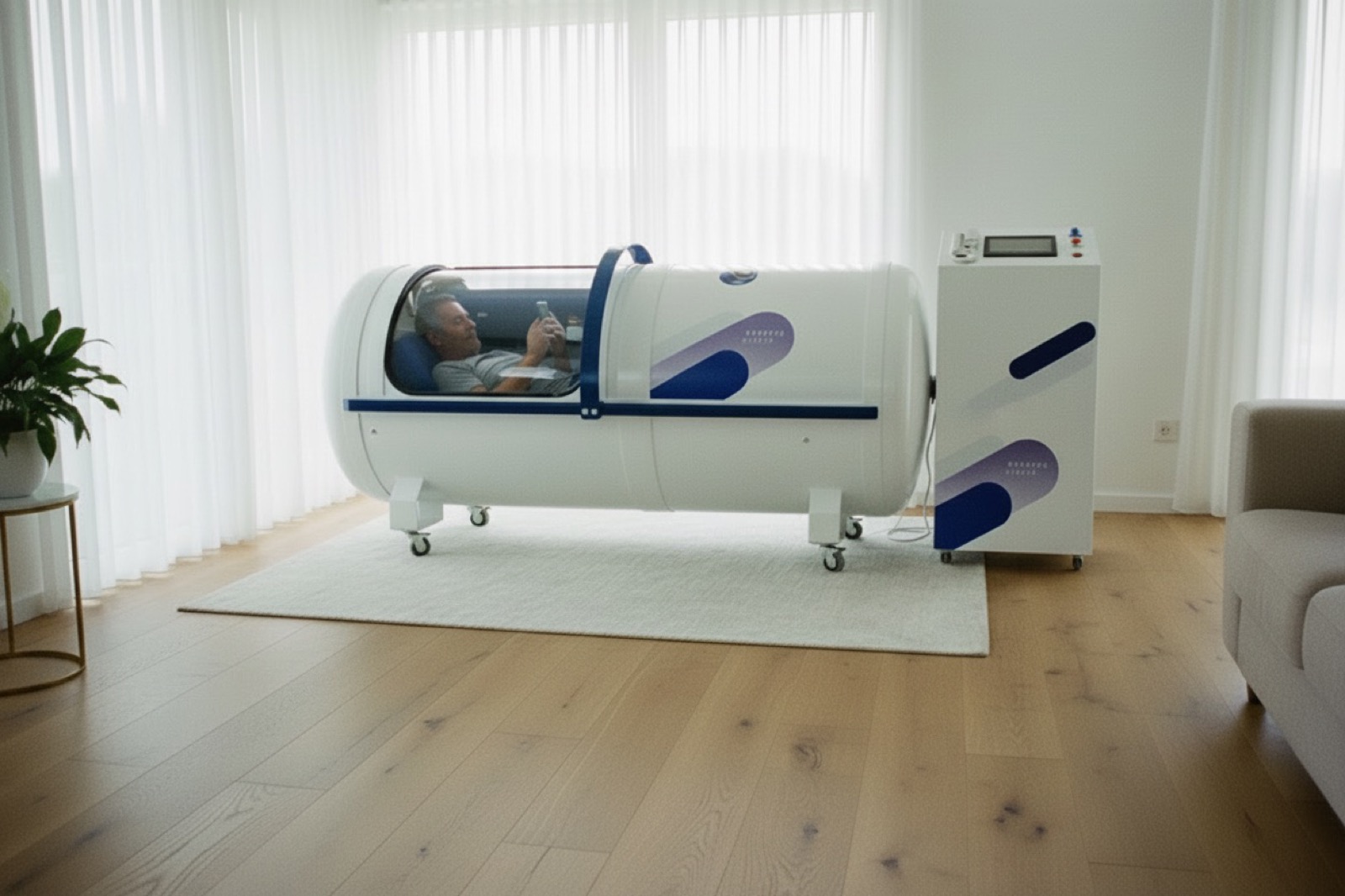
[ Wellness room install ] Reference imagery; final photography in production
What HBOT is cleared to treat
Start with the settled part. Hyperbaric oxygen therapy at clinical pressures, delivered in medical facilities under physician supervision, is an established treatment with a defined list of cleared indications: decompression sickness, carbon monoxide poisoning, certain non-healing wounds, and a handful of others. That medicine is real, it happens at 2.0 ATA and above, and it is not what a home chamber does.
Decompression, recompression and compression chambers
Many people looking for this page call the equipment a decompression chamber, a recompression chamber or a compression chamber. In practice these mostly mean a hyperbaric chamber. Recompression is the diving term: a diver with decompression sickness is put back under pressure in a chamber, which is why decompression sickness sits on the cleared list above. Decompression chamber is the everyday name for that same vessel, taken from the illness rather than the treatment. Compression chamber is not a defined term in the diving and hyperbaric sources we checked. The vessel type is the same; the pressure, the setting and who runs it are not. Our guide to decompression vs hyperbaric chambers sets out each name with its source. If what you want to know is whether a chamber is cleared for anything, read what FDA cleared means first. Searches for isolation chamber benefits are usually about a different machine, the salt-water float tank; our hyperbaric chamber vs isolation tank page separates the two.
What wellness users are actually buying
Home and studio chambers run milder pressures, 1.3 to 1.5 ATA, and the people who buy them are mostly after recovery, sleep, and general performance. Those are reasonable things to want. The honest framing is that a home chamber is a wellness purchase built on promising but young science, not a medical device that treats disease, and any seller who pitches it as the latter is breaking the rules and telling you who they are.
What the research does and does not show
Research on milder protocols is active, and some published work reports effects on recovery and related outcomes. The studies tend to be small, protocols vary widely, and results are mixed, which is what early science looks like. We are building a sourced research index for this page as part of our data program, with each study linked and its pressure, sample size, and findings stated plainly. Until a claim has a citation next to it here, treat it as unproven.
What we will not do is publish a list of conditions a chamber might help, because that is how equipment marketing launders treatment claims. If you are considering hyperbaric therapy for a medical condition, that decision belongs with a physician, ideally one familiar with hyperbaric medicine.
Who should not use a chamber
Some conditions rule out chamber use entirely, an untreated collapsed lung being the textbook example, and others, like recent ear surgery or certain medications, need a physician's sign-off first. Ear pressure is the most common complaint in practice, which is why equalization features score points in our reviews. None of this is a reason to fear chambers. It is a reason to screen like the pressure is real, because it is. How ear clearing works during a session, step by step, is in what a hyperbaric session feels like.
How to read claims like a skeptic
Three checks sort most marketing. Does the claim state a pressure, and does the research behind it use that same pressure? Does it cite a study you can click, with humans in it? And does the seller distinguish cleared medical indications from wellness use? Sites that fail all three are common in this market, and the pattern is reliable enough that we built it into our scoring criteria. Honesty about evidence turns out to be a decent proxy for honesty about everything else.
Applied to hardware, that test is what the scorecard records, brand by brand, and what the Certification Database keeps separate: what a company claims against what we could verify.
The three evidence tiers
Every claim you will meet in this market fits one of three tiers, and keeping them separate is most of the literacy this purchase needs. Tier one: FDA-cleared medical indications, treated in clinical settings under physician supervision, the terrain of hospital HBOT and not of home wellness equipment. Tier two: active research, where published trials exist, results are mixed or early, and honest language says investigated rather than proven. Tier three: marketing extrapolation, where a finding from tier one or two gets stretched over a product that runs different pressures for different durations on different people. Our reviews flag tier-three language brand by brand, because it is the most reliable dishonesty signal in the category.
Reading a study like a buyer
Four checks turn a citation from decoration into information. Match the pressure: a 2.4 ATA clinical study says little about a 1.3 ATA soft shell. Match the dose: count sessions and minutes, then price that protocol at your chamber or clinic. Check the subjects: post-surgical patients and healthy adults are different populations. And check who paid for the study. None of this requires a medical degree; it requires ten minutes and the willingness to be disappointed by a sales page.
What a sensible protocol looks like
The pattern across published work is consistent enough to plan around: an hour at target pressure, most days of the week, for a defined block, then reassessment. That shape is why owning the machine changes the economics so sharply. At clinic prices a 40-session block runs $3,000 to $6,000; in an owned capsule the marginal session costs cents of electricity. The worth-it analysis runs that break-even in full. The trade-offs that have nothing to do with health, such as space, noise, upkeep and resale, are in the pros and cons of owning a hyperbaric chamber.
Frequently asked
Is hyperbaric oxygen therapy FDA approved?
Medical HBOT delivered in clinical facilities is cleared for a specific list of conditions, decompression sickness and carbon monoxide poisoning among them. Home wellness chambers are a different product category: soft shells are cleared only for altitude sickness, and no home chamber is cleared to treat disease.
Does mild hyperbaric therapy actually do anything?
Users report benefits for recovery and sleep, and researchers are studying mild protocols, but the evidence base at 1.3 to 1.5 ATA is early and mixed. We keep a sourced summary on this page and update it as studies publish. Anyone who tells you the science is settled, in either direction, is selling something.
How many sessions do people do?
Published protocols in research settings commonly run 20 to 40 sessions. Home users typically settle into a few sessions a week. What is right for you is a conversation with your physician, not with an equipment site.
How many hyperbaric sessions does a typical protocol run?
Published protocols cluster around 60 to 90 minute sessions, five days a week, in blocks of 20 to 40 sessions. That cadence is exactly why the buy-versus-visit math matters: a full block at clinic prices costs $1,500 to $6,000 per person.
Does more pressure mean more benefit?
Not as a rule. Published protocols pair specific pressures with specific endpoints, and higher pressure mainly widens which protocols are available while raising the supervision a session deserves. Chasing maximum ATA without a protocol is spending, not treatment.
Is there an FDA-cleared hyperbaric chamber for home use?
Some soft chambers sold for home use hold FDA 510(k) clearances, but the soft-shell clearances we have read cover acute mountain sickness only. FDA cleared means the FDA reviewed a 510(k) for that device and found it substantially equivalent to one already on the US market, for a stated list of uses. FDA registered only means the company filed its establishment registration, which the FDA says does not denote clearance. Ask for the 510(k) number and the uses it lists. Our FDA cleared vs FDA registered guide shows how to check one.
What are the pros and cons of owning a hyperbaric chamber?
This page covers what the research does and does not show. Ownership is a separate question. Owning skips the booking and the drive and one unit can serve a household, but a hard-shell capsule lands near $64,000 installed, weighs 175 to 195 kg, resells thinly and runs at home without the trained staff a clinic has. Our pros and cons guide works through cost, space, noise and upkeep.
Is an isolation chamber the same as a hyperbaric chamber?
No. An isolation or float tank is a shallow pool of Epsom salt water kept near skin temperature in a dark, quiet pod, and none of the float sources we read describe pressurizing it. A hyperbaric chamber is a sealed vessel that raises air pressure above sea level, near 1.3 or 1.5 ATA for home units, and the FDA regulates it as a Class II device. Our chamber vs isolation tank guide compares the two.

Alex tests the machines himself, in clinics and studios on three continents. Every score comes from the same 27 public criteria, and no manufacturer has a say in them.
Six questions, and we'll match chamber, options, and install to your space and budget.