Hyperbaric Chamber Warranties: What the Terms Usually Cover
Researched and scored by Alex Evans. Last reviewed August 2026. Corrections are dated and public. See corrections
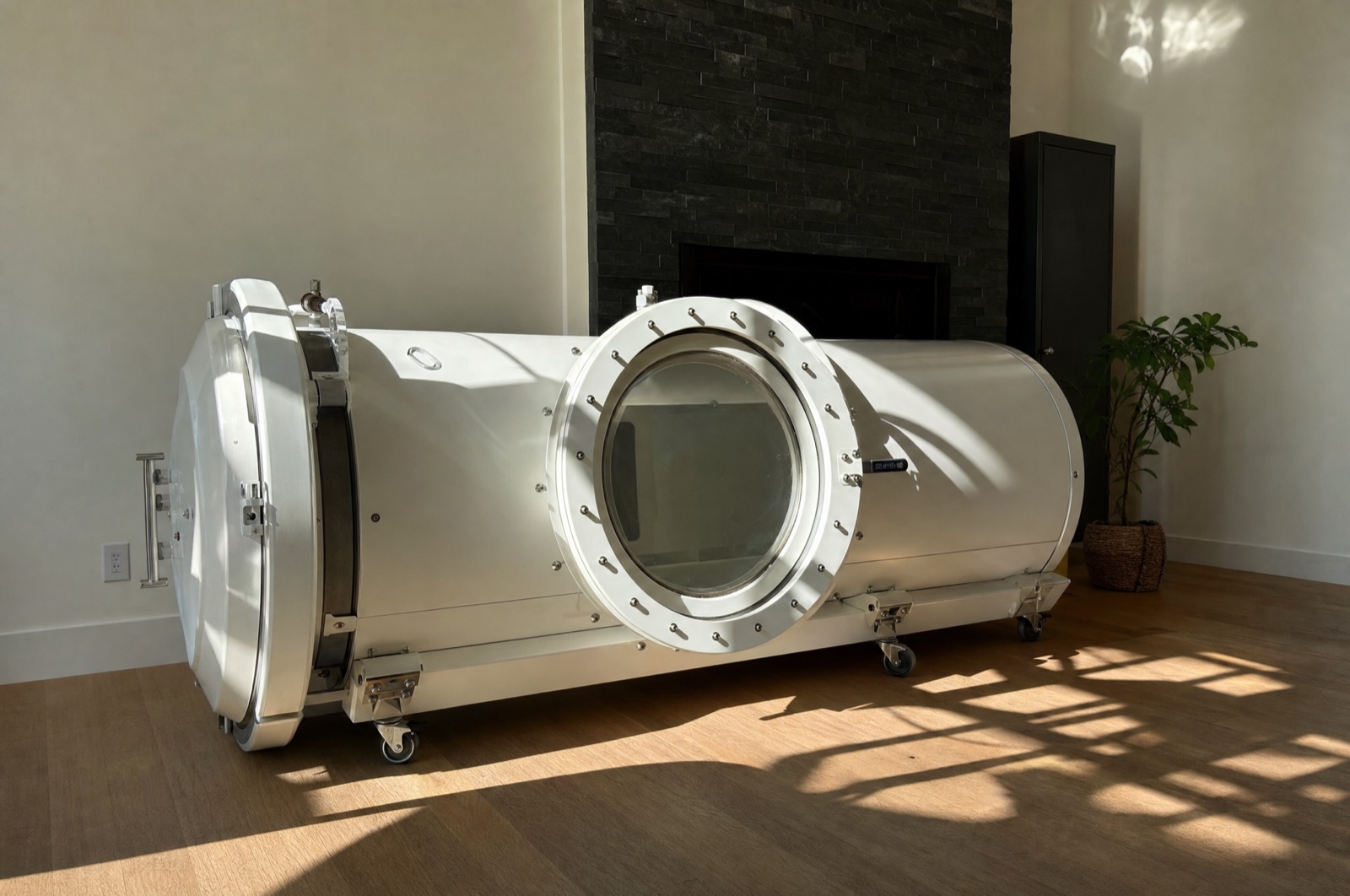
[ Home install ] Reference imagery; final photography in production
What federal law covers
In the US, written warranties on consumer goods fall under the Magnuson-Moss Warranty Act, 15 U.S.C. 2301 and the sections after it, and the FTC rules that carry it out, 16 CFR parts 700 to 703. The FTC's Businessperson's Guide to Federal Warranty Law describes a warranty as a promise to stand behind a product. It also says the Act does not require any business to provide a written warranty. The rules apply once a business chooses to give one.
The Act reaches consumer products. The FTC guide says only warranties on tangible property normally used for personal, family or household purposes are covered, and that this includes property attached to or installed on real property. A chamber bought for a home fits that description. Whether a chamber bought for a clinic or a gym counts as a consumer product is a separate question we did not research for this page.
The guide gives the price lines. Warranties on products over $10 must be titled full or limited. Products over $15 come under the disclosure and pre-sale availability rules. Both lines sit far below what chambers sell for; our price index tracks current list prices.
Full and limited warranties
The title on the document tells you which set of rules applies. The FTC guide lists five conditions for a full warranty, and the statute behind them is 15 U.S.C. 2304. A warranty that fails any one of them is a limited warranty.
| Federal minimum standard | Full warranty | Limited warranty |
|---|---|---|
| How long implied warranties last | Cannot be limited | Can be limited to the written term |
| Who gets service | Anyone who owns the product during the term | Can be restricted, if stated |
| Cost of the remedy | Free of charge | Can charge, for example for labor |
| If repairs keep failing | Buyer chooses refund or replacement | Not required |
| Duties on the buyer | Only notice, unless another duty is shown reasonable | Can add conditions |
Sources: FTC, Businessperson's Guide to Federal Warranty Law; 15 U.S.C. 2304(a), (b) and (d), read 12 October 2026.
Two details matter for a large product. Under 2304(d), "without charge" means the warrantor may not bill the buyer for costs it or its representatives incur in making the remedy. The same subsection says this does not always require the warrantor to pay the buyer's incidental expenses, unless those expenses come from a remedy not made in a reasonable time or from an unreasonable duty placed on the buyer. And the FTC guide says requiring a buyer to return a registration card is an unreasonable duty that a full warranty cannot impose.
Implied warranties
Implied warranties exist even when nothing is written down. The FTC's consumer page on warranties names two. The warranty of merchantability means the seller promises the product will do what it is supposed to do. The warranty of fitness for a particular purpose applies when you buy on the seller's advice that a product suits a specific job. The same page says implied warranties last as long as four years in some states.
Merchantability comes from UCC section 2-314. It applies when the seller is a merchant in goods of that kind. Among other things, it says the goods must be fit for the ordinary purposes for which such goods are used, be adequately packaged and labeled, and conform to any promises or facts stated on the container or label.
The federal Act limits how a written warranty can cut these back. Under 15 U.S.C. 2308, a supplier that gives a written warranty, or enters a service contract within 90 days of the sale, may not disclaim or modify implied warranties. A limited warranty may cap their length at the length of the written warranty, if the cap is reasonable and set out in clear and unmistakable language, prominently displayed. A disclaimer that breaks this section is ineffective under federal and state law. The FTC guide adds that selling "as is" needs a clear and conspicuous disclaimer, usually in writing, and that some states do not allow consumer products to be sold that way.
What a written warranty must disclose
For products over $15, 16 CFR 701.3 lists what a written warranty must state in one document, in simple and readily understood language. In plain terms:
- Who the warranty covers, if it is limited to the original buyer or to anyone short of every owner during the term.
- Which products, parts, components or properties are covered and, where needed, which are excluded.
- What the warrantor will do about a defect, which items or services it will pay for, and, where needed, which it will not.
- When the term starts, if not on the purchase date, and how long it runs.
- Step by step, how to get service, who may perform it, and a mailing address or free phone number.
- Any informal dispute settlement program the warrantor uses under part 703.
- Set statements on state law, where the warranty limits implied warranties or excludes incidental or consequential damages, and a line saying you may have other rights that vary from state to state.
The rule on reading it first is 16 CFR 702.3. A seller must make the text available before the sale, either by displaying it near the product, which can be done electronically, or by handing it over on request with signs saying it is available. A warrantor may instead post the terms online if the product materials say where to find them and give a non-internet contact. The FTC consumer page puts it simply: the law says a warranty must be available for you to read before you buy, in a store or online.
Six published warranties we read
To show what real terms look like, we read five chamber makers' published warranty text and one concentrator maker's warranty statement. These are examples, not a ranking. Each page says different things in different depth, and none of the chamber pages we read uses the word full or limited for the main product warranty.
| Published by | Product | Stated term | Stated exclusions | Shipping |
|---|---|---|---|---|
| Summit to Sea | Soft chambers and accessories | 2 years from delivery; parts and labor; repair or replace at maker's option | Damage from misuse or unauthorized modification | Customer pays both ways |
| Oxygen Health Systems | Soft chamber systems | 3 years on all aspects; 20 years on soft chamber windows | Not stated on the page | Not stated |
| Oxynova Hyperbaric | Manufactured products | Lifetime, defects in materials and workmanship; personal and commercial use | Accidents, improper care, negligence, normal wear and tear | Not stated |
| HERO LifeCare | Hard shell chamber, up to 2.0 ATA | 1 year on all parts and systems | Not stated on the page | Free US shipping on orders |
| OxyHealth | Repairs and replacement bladders | 1-year limited warranty on repaired components; 5-year limited warranty on new exchange bladders | Chambers 10+ years old may be non-repairable; 2 repairs per chamber | Not stated |
| Inogen | Oxygen concentrators | Concentrator: per customer invoice; Voxi 5 product page: 3 or 5 years; sieve beds and accessories 1 year; disposables none | Abuse, misuse, accident, alteration, neglect, unauthorized installation, repair or modification; non-approved parts; wear and tear | Paid both ways in first 90 days; after that at buyer's risk and expense |
Sources, read 12 October 2026: Summit to Sea warranty; Oxygen Health Systems warranty information; Oxynova lifetime warranty; HERO LifeCare product page; OxyHealth repair and exchange policy; Inogen Limited Warranty Statement and Voxi 5 product page. "Not stated" means the page we read did not say; the full document may.
The pages run from one sentence to several pages. The Inogen statement is the only one we read that sets out a claims procedure, an inspection window and a damages limit in the same document. That is a finding about length and detail. It says nothing about how any company handles a claim in practice.
How the parts are split
A home chamber is usually several products bought together. The hard vs soft shell guide covers the shells. Our space and power guide covers the compressor, the cooler and the electrical side. A warranty can treat each of them differently, and 16 CFR 701.3 requires the document to say which parts and components are covered.
- Shell or bladder. Summit to Sea lists zipper, windows, seams, valves and hoses as covered components. Oxygen Health Systems gives soft chamber windows a 20-year term against 3 years for the rest of the system. OxyHealth sells new exchange bladders with their own 5-year limited warranty.
- Compressor and air system. HERO LifeCare's single line covers all parts and systems for one year. Summit to Sea covers anything that came from Summit to Sea. None of the chamber pages we read gives the compressor its own term.
- Oxygen concentrator. This is a separate device from a separate maker in many bundles, with its own warranty. The Inogen statement splits the concentrator, the sieve beds and accessories, and disposables into three terms. Our concentrator guide covers the device and its prescription rule.
- Consumables. Inogen gives disposables such as cannulas, filters and tubing no warranty, and excludes normal routine service items.
The practical point is the paperwork. If a bundle has three makers, there may be three warranties, three claim routes and three start dates. Inogen's terms, for example, start on the date of shipment to the original purchaser and route claims through the authorized distributor that sold the product.
What published terms exclude
Every exclusion below comes from a document we read. Summit to Sea excludes damage from misuse or unauthorized modification. Oxynova excludes repairs needed from accidents, improper care, negligence or normal wear and tear, and says it may offer to repair such damage for a reasonable charge after discussing it with the buyer. Inogen excludes products subject to abuse, misuse, accident, alteration, neglect, improper operation, unusual stress, or unauthorized installation, repair or modification, plus use with parts it has not approved. Its statement also says failure to use the product according to its instructions voids the warranties, and that the buyer must inspect each product within two days of delivery.
Federal law sets limits on one kind of condition. Under 15 U.S.C. 2302(c), a warrantor may not make its warranty depend on the buyer using an article or service identified by brand, trade or corporate name, unless that article or service is provided free under the warranty or the FTC grants a waiver. The FTC guide gives "you must use genuine parts" and "failure to have scheduled maintenance performed voids this warranty" as examples of wording that is not allowed. It gives "damage caused by a non-authorized third party may void this warranty" as an allowed alternative. So a warranty can exclude damage that unauthorized service causes, but a blanket brand requirement needs the free or waiver exception.
The safety rules around chambers matter here too. Our safety guide covers the FDA statements on soft chambers and oxygen. We did not find a chamber warranty page that mentions oxygen use at all, so we cannot say how any maker treats it.
Shipping, freight and labor
Chambers are bulky, so shipping terms can cost real money. The FTC consumer page tells buyers to check who pays for labor and shipping. Summit to Sea covers parts and labor and puts shipping both ways on the customer. Inogen pays shipping both ways for a failure in the first 90 days, then has the buyer return the product at the buyer's risk and expense and returns it the same way. If Inogen finds the product is not covered, the buyer pays the repair charges plus all shipping.
The FTC guide's own sample limited warranties show the same pattern, with wording that the customer must pay any labor charges and must send the product in postage paid. For a full warranty, 2304(d) bars the warrantor from billing its own remedy costs, but as noted above it does not always cover the buyer's incidental costs. Installation is a separate line again. HERO LifeCare lists white glove delivery and installation as an option. Our cost guide breaks out what usually sits outside the chamber price. Freight damage on arrival is a carrier claim, not a warranty claim; the steps and deadlines are in our delivery and installation guide.
Warranties and service contracts
Paid add-on plans are a different legal product. 16 CFR 700.11 says an agreement is a service contract, not a written warranty, if it costs something on top of the purchase price or is made after the purchase. It gives the example of periodic cleaning and inspection, which is a service contract even when offered free at the time of sale. The FTC guide says the same thing in plain terms: warranties come with a product and are included in the price, while service contracts are separate. Under 15 U.S.C. 2306, a service contract must fully, clearly and conspicuously disclose its terms in simple and readily understood language.
Some chamber makers sell longer cover. Summit to Sea says extended warranties are available for purchase at any time within the two-year warranty period. The FTC's page on extended warranties and service contracts says these cost extra and may cover different issues from a maker's warranty. It tells buyers to check what is covered, who is responsible for the coverage, and costs beyond the price such as deductibles, service fees, shipping, transfer fees and reimbursement limits. It also says the value of such a contract is only as good as the company responsible for it.
Buying used or selling on
Transfer depends on the type of warranty. A full warranty must cover anyone who owns the product during the term. A limited warranty can be restricted to the first buyer, and 16 CFR 701.3(a)(1) says that restriction must be stated. The FTC guide shows a sample limited warranty with the line that coverage ends if the product is sold or transferred.
The Inogen statement is granted only to the original purchaser, is non-transferable, and needs the original receipt and proof of identity. A used concentrator from that maker would therefore come without its warranty under those terms. For chambers, the pages we read do not address transfer, so ask the maker directly before buying used. Our pros and cons guide and worth it guide cover the wider ownership trade-offs.
Questions to ask in writing
The FTC consumer page says to get any spoken promise in writing, because a business might later refuse to do something it only promised out loud. Ask for the full warranty document before you pay. Then get written answers to these points:
- Whether the document is titled full or limited, and which company is the warrantor for each device in the bundle.
- The term for the shell or bladder, windows, zippers, compressor, cooler, controls and concentrator, listed separately.
- When each term starts: purchase, shipment, delivery or installation.
- Who pays freight both ways, and for labor, travel and reinstallation.
- Whether service happens in your home or the product must be shipped, and who does it.
- What counts as misuse, what service by a third party does to coverage, and what any oxygen-related condition says.
- Whether registration is required, and whether coverage passes to a later owner.
- For any paid plan, who backs it, what it adds over the base warranty, and its fees and cancellation terms.
Keep the warranty and the receipt together, as the FTC page advises. For how the brands we track score on what we can verify, including ownership terms, see the scorecard. For build standards on hard chambers, see the ASME PVHO-1 guide.
What we have not verified
We read the warranty text each company publishes on the pages listed above, not the full warranty that ships in the box, which may differ. We did not find a chamber maker's page that states a separate term for the compressor, electronics or upholstery, or that addresses oxygen use, so we cannot say what such terms usually look like. We did not check whether any chamber warranty is titled full or limited in its shipped form, or how any company handles claims in practice. We did not assess whether any published term complies with federal or state law; this page sets out the law and the terms side by side. We have not researched state implied warranty rules, state service contract laws, or whether a chamber bought for a business is a consumer product under the Act. We could not open the eCFR site during research and read the 16 CFR text through Cornell's Legal Information Institute instead. If you hold a chamber warranty document that settles one of these points, send it and we will check it.
Frequently asked
Is a hyperbaric chamber warranty required by law?
No. The FTC says the Magnuson-Moss Warranty Act does not require any business to provide a written warranty. If a business does give one on a consumer product, the Act and the FTC rules in 16 CFR parts 700 to 703 set out how it must be titled, what it must disclose and how buyers can read it before they pay.
What is the difference between a full and a limited warranty?
A full warranty meets five federal minimum standards: no limit on how long implied warranties last, service for anyone who owns the product during the term, service free of charge, a choice of refund or replacement if repairs fail after a reasonable number of tries, and no duty on the buyer beyond notice unless the duty is shown to be reasonable. A warranty that misses any of the five is a limited warranty.
Who pays shipping when a chamber needs warranty repair?
It depends on the written terms. One soft chamber warranty we read says shipping to and from the maker is the customer's responsibility. One concentrator warranty we read covers shipping both ways in the first 90 days and puts later returns at the buyer's risk and expense. Federal law says a full warranty remedy must be made without charge, but that does not always require the maker to pay the buyer's incidental expenses.
Does the oxygen concentrator share the chamber warranty?
Not necessarily. A concentrator is a separate medical device with its own maker and its own written warranty. The Inogen statement we read covers its concentrators for the period on the customer invoice, sieve beds for one year and disposables not at all, and it is granted only to the original purchaser. Ask which company backs each device in a bundle.
Does a warranty carry over if I buy a used chamber?
Only if the terms say so. A full warranty must cover anyone who owns the product during the warranty period. A limited warranty can be restricted to the first buyer, and the FTC rule says that limit must be stated in the warranty. The Inogen concentrator warranty we read is granted only to the original purchaser and is non-transferable.

Alex tests the machines himself, in clinics and studios on three continents. Every score comes from the same 27 public criteria, and no manufacturer has a say in them.
Six questions, and we'll match chamber, options, and install to your space and budget.