Hyperbaric Chambers for Clinics: ROI, Pricing, and Financing
Researched and scored by Alex Evans. Last reviewed August 2026. Corrections are dated and public. See corrections
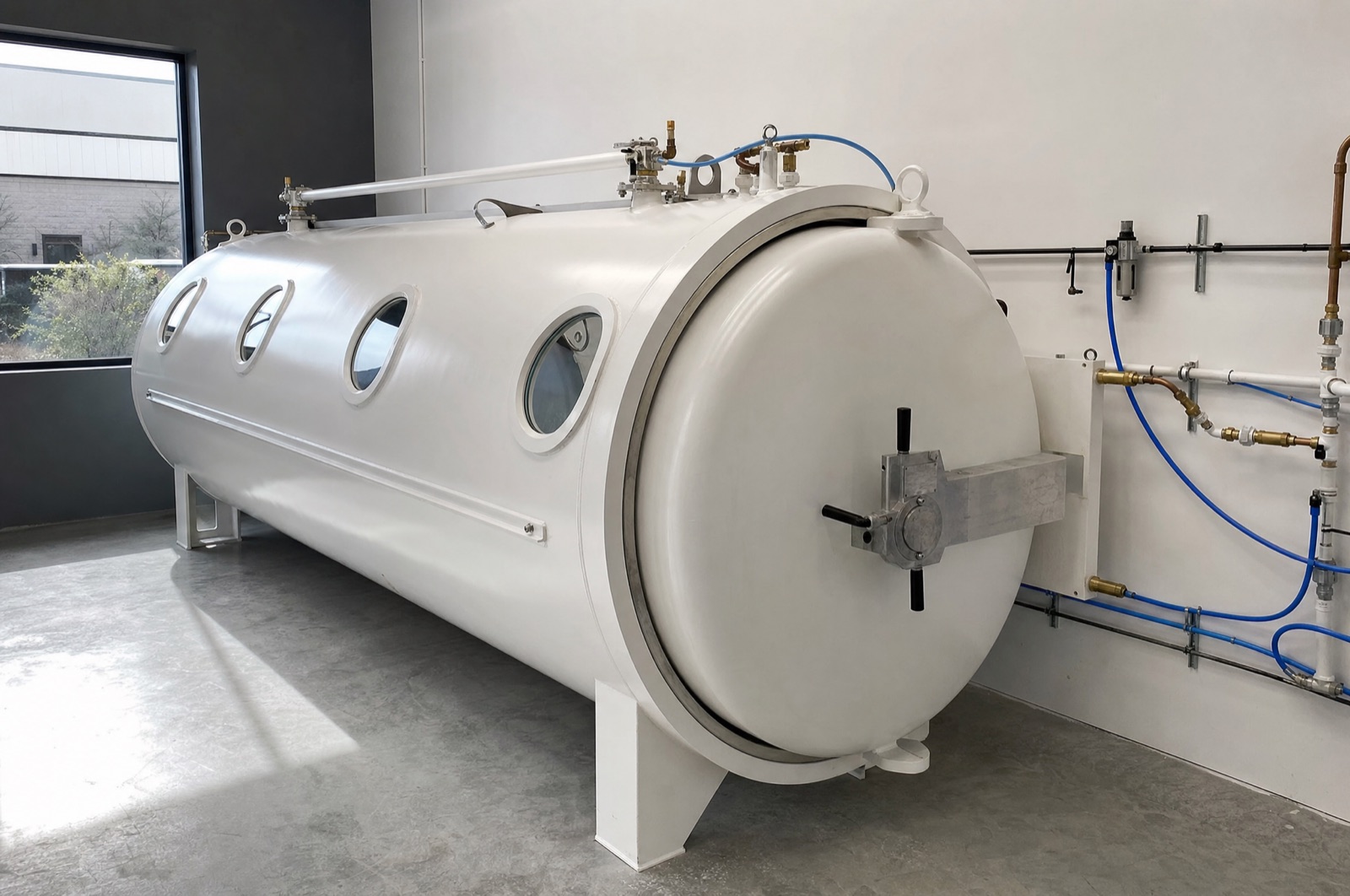
[ Multi-seat install ] Reference imagery; final photography in production
The revenue math
A chamber is a room that sells time. The math is occupancy times price times hours, minus power, staffing, and the payment on the machine. Everything a salesperson will tell you reduces to those variables, so run them yourself before anyone runs them for you.
Take the 4-seat OxyLife C3 at $180,900 list, roughly $200,000 installed with the options a clinic actually needs. At $100 per seat-session, the machine grosses $100 every time one person sits in it for an hour.
Payback scenarios
| Utilization | Seat-sessions / week | Gross / year | Months to cover $200k |
|---|---|---|---|
| Slow start | 20 | $104,000 | ~23 |
| Steady | 40 | $208,000 | ~12 |
| Busy studio | 60 | $312,000 | ~8 |
Modeling at $100 per seat-session, gross revenue against equipment cost only. Your staffing, rent, and payment terms change the picture; treat this as the frame, not a promise.
Two things decide which row you land in, and neither is the chamber. The first is existing traffic: a studio with members walking past the door fills seats a cold start cannot. The second is schedule density, because group sessions only pay when they run full. This is why we score service network and uptime so heavily; a chamber that is down for two weeks waiting on a part is a payment with no revenue against it.
Installation: what the building needs
From the manufacturer electrical specs: C-series chambers want 230/240V service with up to 3.5 kW peak draw, on multiple 16-amp circuits depending on configuration. Add the concentrators, a chiller, and clearance for the technical room, and you have a conversation with your landlord and an electrician before you have a delivery date.
The modular build matters more than it sounds: C-series chambers assemble from 76 cm modules that fit through ordinary doors. For a leased space that means no wall comes down, and when the lease ends the chamber leaves the way it came. Site assessment renders cost $1,200 from the manufacturer and are worth it for any multi-seat install.
Staffing and operations
Wellness chambers at 1.5 ATA run with trained front-of-house staff, not clinicians: intake, contraindication screening against your written protocol, session supervision, and logs. Keep the screening serious. The person with an untreated pneumothorax or a fresh ear surgery does not belong in your chamber, and your intake form is what stands between you and finding that out the hard way. Have a physician review your protocol and your waiver once, in writing, before you open.
How to buy without getting burned
Get the installed price, not the list price. Get lead time and the service commitment in writing, with a named response window for failures. Ask what the warranty excludes; our warranty guide lists what published terms cover and leave out. And check the certification claims against registries, because this industry has a documented habit of decorating spec sheets; our methodology explains how we verify, and the scorecard shows the result. If you want the numbers run against your own floor plan and schedule, the concierge does it free.
The monthly model
Here is the arithmetic we walk clinic buyers through, using the C3 at its realistic installed cost near $199,000 to $217,000 and the $75 to $150 session pricing the market actually advertises:
| Utilization | Paid seats / day | Monthly at $75 | Monthly at $150 |
|---|---|---|---|
| Conservative, 40% | 8 | $15,600 | $31,200 |
| Steady, 60% | 12 | $23,400 | $46,800 |
| Strong, 80% | 16 | $31,200 | $62,400 |
Wellness Vaults model: 4-seat chamber, five 90-minute blocks a day, 26 operating days a month. Session pricing from commonly advertised US clinic rates.
Read the table against the sticker and the story tells itself: at steady utilization and mid pricing, the machine returns its installed cost inside a year. The variable that decides everything is booking density, not equipment choice, which is why we tell clinics with no existing traffic to start smaller.
Staffing and supervision
One trained operator can run a multi-seat chamber: brief the clients, manage the profile from the console, stay present through the session. Budget for two trained staff so illness and holidays do not close the room, and put the operating protocol in writing from day one. Insurers ask for exactly two documents when you add hyperbaric services: the manufacturer certification file and your written operating procedure. Having both ready is the difference between a quote and a decline.
The revenue math above assumes cash-pay sessions. If you plan to bill health insurance instead, read our guide to hyperbaric insurance and CPT codes first: Medicare pays only under NCD 20.29, and the CMS manual limits HCPCS G0277 to hospital outpatient departments. Who needs which credential, and the supervision rules, are in our clinic staffing guide.
Frequently asked
How much do clinics charge for a hyperbaric session?
Wellness-market sessions commonly advertise between $75 and $150 in US metros, with memberships and packages discounting from there. Medical HBOT billed through insurance is a different world with different chambers and different rules.
How many seats should a clinic buy?
Group chambers earn more per hour but only when you can fill seats on a schedule. A busy recovery studio with existing traffic can justify 4 seats; a practice adding hyperbaric as its first big amenity usually starts with 1 or 2 and adds capacity when the calendar proves demand.
Can a med spa bill insurance for hyperbaric sessions?
Wellness sessions in 1.5 ATA chambers are cash-pay. Insurance-billed HBOT is physician-supervised medical treatment for cleared indications in clinical facilities. Any vendor who blurs that line for you is a vendor to avoid.
How many sessions a day can one multi-seat chamber run?
A 4-seat chamber turning over every 90 minutes runs five blocks in an 8-hour day: 20 seat-sessions of capacity. At realistic 60% utilization that is 12 paid seats a day, and the revenue model in this guide builds from that number.
Should a clinic start with a monoplace capsule instead?
Often, yes. A capsule at $55,500 to $58,500 installed proves demand with a fraction of the capital, and it remains useful as a private-session upsell after a multi-seat chamber arrives. The mistake is buying maximum capacity before booking density exists.

Alex tests the machines himself, in clinics and studios on three continents. Every score comes from the same 27 public criteria, and no manufacturer has a say in them.
Six questions, and we'll match chamber, options, and install to your space and budget.