Hyperbaric Chamber Safety: What Goes Wrong and Why
Researched and scored by Alex Evans. Last reviewed August 2026. Corrections are dated and public. See corrections
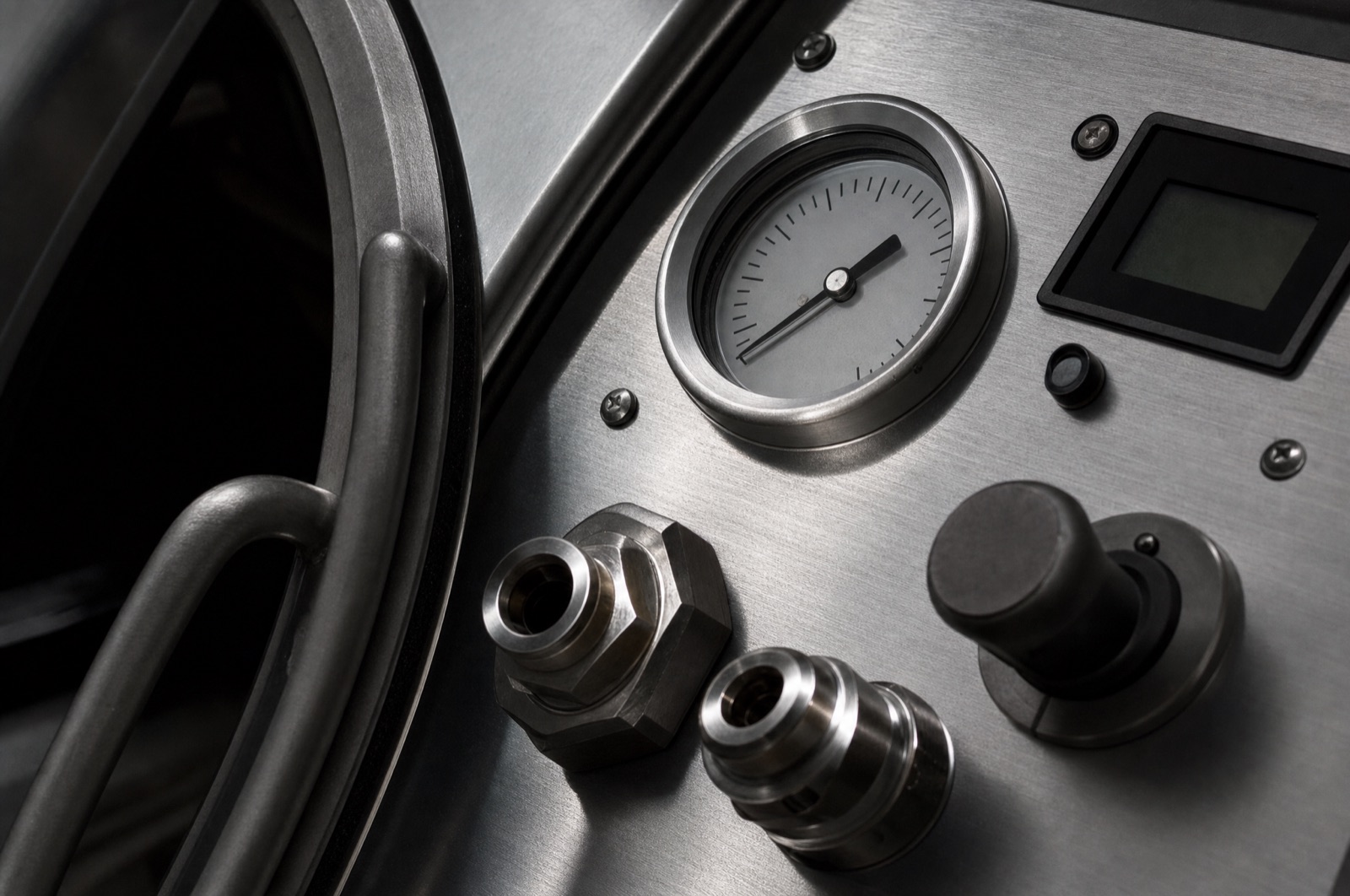
[ Pressure gauge ] Reference imagery; final photography in production
Where the risk comes from
A hyperbaric chamber is a sealed vessel with a person inside, held above room pressure, often with extra oxygen in play. Almost every documented way it goes wrong traces back to one of those three facts. Oxygen makes fire easier to start. Pressure has to go up and come down at a controlled rate. And the vessel has to hold that pressure for its whole service life without leaking, splitting or cracking a window.
This page is about the equipment and the setting, not about what a session does for the body. For each hazard it gives one documented example or one regulator or standards statement, and the engineering or procedural control that answers it. It does not rank chambers or say any brand is safe or unsafe. The scorecard covers how the chambers we track compare on things we can check.
The FDA's own summary is a useful starting point. Its consumer update "Hyperbaric Oxygen Therapy: Get the Facts" says that when chambers are used for cleared indications, treatment is generally safe and serious complications are rare. The same page says high oxygen concentrations pose a risk of fire, and that explosions and fires have occurred in chambers that the FDA has not reviewed, at unaccredited facilities. That page now returns a 404 on fda.gov; the link is the archived copy, with content dated July 26, 2021.
Hazards and controls at a glance
| Hazard | How it happens | The control | Source |
|---|---|---|---|
| Fire | Oxygen above about 23.5% makes items ignite more easily and burn hotter; a static spark can be enough | Grounding, cotton clothing, no electrical or static devices, fire safety measures, oxygen monitoring | FDA letter to providers (2025); Des Moines Fire Department letter (2024) |
| Items carried in | Oils, lotions, hair products, synthetics, electronics and lighters add fuel or sparks | Screening before each session against a written prohibited list | GBMC and Royal Brisbane and Women's Hospital patient information |
| Pressure changing too fast | Over-pressure, or a fast drop in pressure with a person inside | Relief valves, a gauge readable from outside, controlled decompression, staff at the controls | FDA 510(k) summary K171899; NFPA 99 TIA 1735 ballot (2023) |
| Vessel or window failure | A shell or acrylic window used past its service life | Build and pressure test to ASME PVHO-1; track window serviceability under PVHO-2 | ASME PVHO-1 and PVHO-2 pages; AP report on the Troy fire |
| Poor breathing gas | CO2 build-up from low ventilation; unknown air quality or gas emissions from materials | Ventilation rate, gas monitoring, air quality to NFPA 99, emissions testing | NFPA 99 TIA 1735 ballot (2023); FDA 510(k) summary K171899 |
| Improvised oxygen setups | Air-only zippered bags fed with oxygen tanks or concentrators | Use the device only as cleared; air only in fabric chambers | FDA consumer update (2021); UHMS position statement |
| Nobody watching | A sealed chamber run without a trained operator present | Continuous monitoring and supervision for the whole session | FDA letter to providers (2025); UHMS position statement |
Sources: FDA letter to health care providers, August 25, 2025; FDA consumer update (archived, July 2021); Des Moines Fire Department appeal letter, May 2024; NFPA 99 TIA 1735 final ballot (2023); FDA 510(k) summary K171899; ASME PVHO-1 and PVHO-2 product pages; UHMS position statement on low-pressure fabric chambers; GBMC and RBWH patient information; Associated Press, March 2025. Checked October 2026.
Fire in an oxygen-rich space
Fire needs oxygen, and more oxygen changes how things burn. The National Fire Protection Association's medical oxygen tip sheet says material in an oxygen-enriched area burns more quickly, and that oxygen saturates fabric-covered furniture, clothing, hair and bedding, making it easier for a fire to start and spread. A chamber is a closed space with a person, their clothes and often padding inside.
The Des Moines Fire Department's May 2024 appeal letter gives the thresholds. Normal air is about 20.95% oxygen. OSHA defines an atmosphere above 23.5% as hazardous, and NFPA 99 uses the same 23.5% figure to define an oxygen-enriched atmosphere. The fire engineer wrote that flammable items burn hotter and faster and ignite more easily with more oxygen, that items which do not burn in normal air can become flammable, and that a spark from static electricity can be enough to start a fire.
The FDA put fire at the top of its August 25, 2025 letter to health care providers. It said it was aware of recent reports of fires with hyperbaric oxygen devices that resulted in serious injuries and deaths, and that the root cause of those events was not known. It also said it believes serious adverse events with these devices are rare. Its recommendations: follow the maker's instructions, follow fire prevention measures, use proper grounding, train staff, monitor and supervise the patient for the whole treatment, keep to cleaning and maintenance schedules, and keep prohibited items out. The letter lists NFPA 99 and ASME PVHO-1 as additional resources. The fire code side of this is covered in our NFPA 99 fire safety guide.
The Troy, Michigan chamber fire
On January 31, 2025, a 5-year-old boy died when a hyperbaric chamber caught fire at the Oxford Center, a treatment center in Troy, Michigan. His mother was standing next to the chamber and was injured. In March 2025 the Associated Press reported that four people had been charged, and quoted the Michigan attorney general: "A single spark it appears ignited into a fully involved fire." She also said the center operated chambers beyond their expected service lifetime. AP reported that the center did not appear on the UHMS list of accredited facilities for February 2025.
Later court coverage points to grounding. In July 2026, FOX 2 Detroit reported that prosecutors had said the chamber's grounding strap was found in a junk drawer, and that an expert testified at a December 2025 hearing that a strap would have grounded the boy and likely prevented the static spark. We do not follow the criminal cases on this page, and anyone charged is presumed innocent unless convicted. We report only what the coverage states.
Grounding, cotton and the prohibited list
Static is a spark you carry in. The FDA letter tells providers to use proper grounding equipment, and to dress patients in clothing of hyperbaric-compatible material according to the maker's instructions, such as cotton. It adds that some fabrics, such as wool and synthetics, can produce more static electricity than others, and that some items may need extra grounding.
Hospitals turn this into a checklist and a screening before every session. The GBMC hyperbaric FAQ in Baltimore lists makeup, perfume, aftershave, hairspray and hair oils; wigs and hair extensions; nail polish; alcohol or petroleum-based products; phones and other electronics; metal items such as jewelry and keys; heat-producing items such as lighters and heating pads; hearing aids; paper products; and food. The Royal Brisbane and Women's Hospital patient booklet gives patients cotton clothing and bars creams, lotions, petroleum products, battery-operated or electrical devices, and synthetics such as rayon, nylon and pantyhose.
The NFPA home oxygen rules point the same way: no smoking, no candles or open flames, keep oil, grease and hand lotion away, no aerosol sprays nearby. If a seller tells you a home chamber needs none of this, ask them to put it in writing and to say what oxygen level the chamber reaches with the oxygen setup you are buying.
Oxygen by mask or a chamber full of it
There are two ways to put oxygen into a chamber, and they carry different fire loads. The RBWH booklet describes both. Its multiplace chamber is pressurized with air, and patients breathe 100% oxygen through a clear hood or a mask. Its monoplace chamber, a clear acrylic cylinder for one person, is pressurized with 100% oxygen.
In the mask or hood design, the atmosphere around the patient stays close to air, and the oxygen is meant to stay inside the breathing circuit. That only works if the circuit does not leak oxygen into the chamber. The UHMS indications page says that in mild hyperbaric chambers, oxygen is often delivered through masks that do not seal and that let the gas mix with the chamber air. Mixing is exactly how the chamber atmosphere creeps toward the 23.5% line. In the design where the whole chamber is filled with oxygen, the entire space is oxygen-enriched by intent, which is why grounding, clothing and screening carry so much weight there.
One control works in both: measure it. A consultant's analysis filed with a 2023 NFPA committee proposal described an oxygen monitor with an audible alarm that warns the operator to increase ventilation when the level inside reaches 23.5%. For more on the oxygen equipment itself, see oxygen concentrators explained.
Pressure that changes too fast
The second device hazard is pressure that goes too high or drops too quickly. Soft chambers handle the first with valves. One FDA 510(k) summary for a fabric chamber, K171899, says its relief valves operate at pressures above 1.3 atmospheres and that the compressor has an extra safety valve in case the supply hose is blocked. A description of a fabric chamber filed with the 2023 NFPA ballot says a relief valve prevents over-pressurization and that the inside pressure can be read on a gauge outside.
The other direction matters too. In the 2023 NFPA committee ballot on TIA 1735, one member wrote that a published expert medical opinion says rapid depressurization from as little as 2 psi can cause harm. The control is a vessel and valves built for a controlled decompression, and an operator who runs it. On the body side, the FDA lists ear and sinus pain, middle ear injuries including a ruptured eardrum, temporary vision changes and, rarely, lung collapse among the risks of increased pressure and oxygen. GBMC tells patients that holding their breath during treatment could cause lung collapse. We leave the medical detail to those sources.
The vessel, its windows and its age
A chamber is a pressure vessel, and pressure vessels wear. ASME's PVHO-1 page says the standard covers design, fabrication, inspection, testing, marking and stamping of vessels with a person inside at a pressure differential above 2 psi, plus the cleaning and certification of their piping. Its PVHO-2 page covers operation and maintenance after construction, including how to establish the serviceability of an acrylic window so that the user or the authority can decide when it needs replacing.
Age came up in Troy. The attorney general said the center ran chambers beyond their expected service lifetime. Makers address age in their filings: the K171899 summary lists a device life report based on reliability analysis of its components, and pressure testing based on ASME PVHO-1-2007 sections covering the response to excessive pressure. For what PVHO-1 asks and how to check a claim, see ASME PVHO-1 explained. For how hard and fabric shells differ, see hard shell vs soft shell.
What goes into the breathing gas
The air or oxygen inside is only as clean as what feeds it. Members of the NFPA committee raised this in the 2023 ballot. One wrote that the proposal did not list requirements for compressor piping, active sample monitoring or the quality of air used to pressurize the chamber, and that in their opinion it should meet the Category 3 air quality requirements in Chapter 5 of NFPA 99. Another wrote that the proposed ventilation rate was too low to prevent CO2 build-up or to flush out raised oxygen, gave 64 liters per minute per person as the minimum for an air-filled chamber, citing a published industry document, and said many of these units lack gas monitors.
Materials matter as well as the air supply. The K171899 summary lists biocompatibility testing that covers gas emissions, including volatile organic compounds, particulates, and ozone, carbon monoxide and CO2, under ISO 10993 and ISO 18562. We have not found a published case of contaminated gas in a home chamber, so we treat this as a question to ask, not a documented incident.
Improvised bags and suffocation
The FDA has cleared a large zippered bag to treat altitude sickness only. Its consumer update says these bags provide pressure but do not attach to oxygen tanks, that the FDA has not cleared them for use with oxygen tanks or concentrators, and that it knows of people using them to build homemade HBOT devices, which can pose a risk of fire and suffocation. The UHMS position statement on fabric chambers says they are designed to be compressed with air only and are not designed for supplemental oxygen.
Des Moines shows the code response. The fire department found a soft chamber running with its own oxygen concentrator in a commercial building. No documents showed it met ASME PVHO-1, so the department issued a stop work order and required its removal. A hard chamber with a PVHO-1 placard at the same business was accepted after some additional work. What a clearance does and does not cover is set out in FDA cleared vs FDA registered.
Using a chamber with nobody watching
In the fabric chamber setup described to the NFPA committee in 2023, staff zip the chamber closed and the compressor sits outside it. If something goes wrong, the person inside depends on someone outside who can see the gauge, stop the compressor and open the chamber. The FDA letter asks providers to make sure the patient is properly monitored and supervised for the whole treatment. The UHMS recommends that trained staff be available immediately throughout hyperbaric oxygen therapy, and its fabric chamber statement says it does not endorse in-home therapy at any time.
The UHMS indications page adds that mild hyperbaric sessions are generally not prescribed or supervised by a physician, and that commercial centers offering them often operate without the appropriate adherence to fire safety and chamber construction standards. The FDA advises consumers to use a facility accredited by the UHMS. At home, the practical control is simple: never run a session alone, and make sure the second person knows how to depressurize and open the chamber. The wider trade-offs of owning one are in home chamber pros and cons.
What to ask before a session or a purchase
- Is the chamber built and pressure tested to ASME PVHO-1, and can you show the documents for this unit?
- How old is the vessel, what service life does the maker give, and when were the acrylic windows last assessed?
- Is oxygen used? If so, is it a sealed mask or hood, or is the chamber filled with it?
- Is there an oxygen monitor with an alarm inside the chamber, and what level has been measured during use?
- How are the person and the chamber grounded, and what clothing is required?
- Is there a written prohibited items list, and is it checked before every session?
- What relief valves and gauges are fitted, and how is decompression controlled?
- Where does the compressor draw its air, and what are the filter and maintenance schedules?
- Is the facility accredited by the UHMS, and who stays with the chamber for the whole session?
What we have not verified
We have not read the paid text of NFPA 99, ASME PVHO-1 or PVHO-2. What we say about them comes from ASME's published summaries, committee ballot comments, a fire department letter and the FDA. Our account of the Troy fire follows the news coverage cited, not court records. We did not pull FDA adverse event reports for this page, and we have no count of chamber fires or failures by type. We make no claim that any brand is safe or unsafe. If you hold a document that settles one of these points, send it and we will check it.
Frequently asked
What is the biggest safety risk in a hyperbaric chamber?
Fire. The FDA wrote to health care providers in August 2025 that it was aware of recent reports of fires with hyperbaric oxygen devices that resulted in serious injuries and deaths, and that there is a heightened risk of fire with oxygen at high concentration. NFPA says oxygen soaks into clothing, hair and bedding, which makes it easier for a fire to start and spread.
Why do hyperbaric centers ban lotions, phones and synthetic clothing?
Each one is a fuel or an ignition source. Hospital lists name makeup, hair oils, lotions, petroleum products, electronic and battery devices, and synthetics such as nylon. The FDA tells providers to keep electrical and static devices out, to dress patients in hyperbaric-compatible material such as cotton, and notes that wool and synthetics can produce more static electricity.
Is it safe to add an oxygen concentrator to a soft-shell chamber?
The FDA says it has not cleared the zippered soft chambers for use with oxygen tanks or oxygen concentrators, and that homemade setups built from these bags can pose a risk of fire and suffocation. The UHMS says fabric chambers are designed to be compressed with air only. In Des Moines, the fire department ordered a soft chamber with its own concentrator out of a commercial building.
What caused the Troy, Michigan hyperbaric chamber fire?
A 5-year-old boy died in a chamber fire at a Troy treatment center on January 31, 2025. The Michigan attorney general said a single spark appears to have started it. FOX 2 reported that prosecutors said the grounding strap for the chamber was found in a junk drawer, and that an expert testified a strap would likely have prevented the static spark. Anyone charged is presumed innocent unless convicted.
Can I use a home hyperbaric chamber alone?
The UHMS says it does not endorse in-home hyperbaric therapy at any time. The FDA tells providers to keep the patient monitored and supervised for the whole treatment, and advises consumers to use facilities accredited by the UHMS. A fabric chamber is zipped shut and pressurized by a compressor outside it, so a second person who can see the gauge and open it is the basic control.

Alex tests the machines himself, in clinics and studios on three continents. Every score comes from the same 27 public criteria, and no manufacturer has a say in them.
Five questions, and we'll match chamber, options, and install to your space and budget.