Decompression vs Hyperbaric Chamber: What the Names Mean
Researched and scored by Alex Evans. Last reviewed August 2026. Corrections are dated and public. See corrections
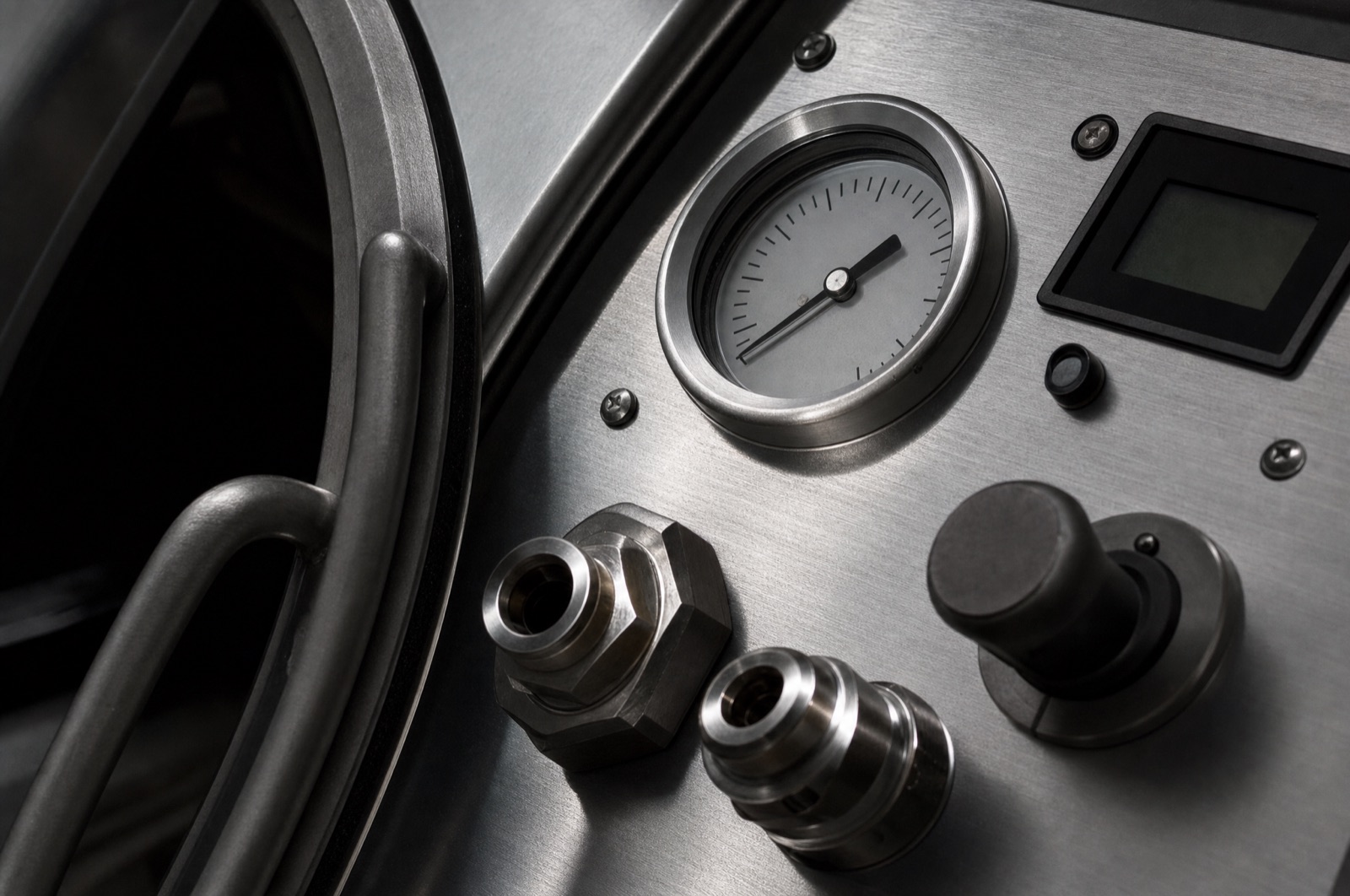
[ Pressure gauge ] Reference imagery; final photography in production
The terms, defined
Four words get used for chambers that raise air pressure: decompression, recompression, hyperbaric and compression. Two of them come from diving medicine, one is the general medical term, and one is mostly a search habit. A fifth word, hypobaric, describes a chamber that does the opposite and gets mixed in anyway. This table sorts them before the detail below.
| Term | What it means | Who uses it | Pressure |
|---|---|---|---|
| Decompression sickness (DCS) | Illness from inadequate decompression after exposure to increased pressure; also called the bends | Divers, dive medicine | Not a chamber |
| Decompression | Coming back from higher pressure to surface pressure | Divers | Falling toward 1.0 ATA |
| Recompression | Raising pressure again to treat decompression illness | Dive medicine, U.S. Navy | Treatment Table 6 starts at 2.8 ATA (60 feet of seawater) |
| Recompression chamber | The chamber that delivers recompression | U.S. Navy, Divers Alert Network | As above |
| Hyperbaric chamber | Any chamber pressurized above sea level | Medicine, manufacturers, everyone | Medical HBOT: 2.0 ATA or more |
| Decompression chamber | Everyday name for a recompression or hyperbaric chamber | General public, searches | Same as the chamber meant |
| Compression chamber | Not a defined term in the sources we checked; usually means hyperbaric | Searches | Same as the chamber meant |
| Mild hyperbaric chamber | UHMS: exposures below 1.5 ATA | UHMS, wellness market | Soft shells near 1.3 ATA |
| Hypobaric (altitude) chamber | Lowers pressure to simulate altitude | Aviation training | Below 1.0 ATA |
Definitions from Divers Alert Network, the U.S. Navy Diving Manual (Volume 5), the Undersea and Hyperbaric Medical Society and the FAA Civil Aerospace Medical Institute, linked in the text below. Home chamber pressures from our pressure guide.
Where the diving words come from
A diver breathing compressed air at depth takes up extra gas into the body. Coming back up, the surrounding pressure falls, and that return to surface pressure is decompression. Done carefully, it is routine. Done too fast, it causes the illness. Divers Alert Network puts it plainly: DCS "results from inadequate decompression following exposure to increased pressure". DAN groups it with arterial gas embolism, a lung injury from ascending without exhaling, under the umbrella term decompression illness.
The treatment runs the process in reverse. DAN's next line is the one that matters for this page: the treatment for decompression illness is recompression. You put the person back under pressure, in a chamber rather than in the water, and bring them back to the surface slowly on a set schedule. The schedules are called treatment tables, and the best known comes from the U.S. Navy.
The U.S. Navy Diving Manual, Volume 5, is titled Diving Medicine and Recompression Chamber Operations. Its chapter on decompression sickness and arterial gas embolism says recompression therapy is indicated for treating both, and that its procedures are to be performed only by trained personnel. Every chamber type the volume lists carries the same word in its name: the Transportable Recompression Chamber System, the Fly Away Recompression Chamber, the Standard Navy Double Lock Recompression Chamber System. In the chamber chapters we read, the phrase decompression chamber does not appear.
DAN's reference on treating DCS describes the common regimen, Navy Treatment Table 6. The chamber is first pressurized to 2.8 ATA, the pressure at 60 feet of seawater, and the patient breathes pure oxygen with scheduled air breaks. DAN gives the usual duration as just under five hours, with extensions added when needed. Hold that number up against a home session and the gap between the two worlds is obvious before anyone talks about hardware.
A recompression chamber is a hyperbaric chamber
Hyperbaric just means above normal pressure. Any vessel that raises the air pressure around a person above sea level is a hyperbaric chamber, which makes a recompression chamber a hyperbaric chamber by definition. The diving community uses the name that describes the job, and hospitals use the name that describes the physics.
The authorities treat the words as interchangeable in practice. DAN's description of its own Recompression Chamber Network calls it a global database of hyperbaric chambers available for treatment of DCI. The same DAN treatment reference says the therapy can run in a monoplace chamber, often an acrylic tube sized for one patient, or in a multiplace chamber that holds patients plus attendants, called tenders. The MSD Manual describes recompression therapy as 100% oxygen for several hours in a sealed chamber at at least 1.9 atmospheres, most often 2.5 to 3, and notes that some chambers hold more than one person and some hold only one. Those are the same two configurations we cover for the wellness market in monoplace vs multiplace.
An older DAN Alert Diver piece, Hyperbaric Chambers for Dive Injuries (2011), adds the practical detail. Multiplace chambers are pressurized with air and patients breathe oxygen through a hood or mask. Monoplace chambers, which it says make up the majority of chambers in the United States, are usually pressurized with 100 percent oxygen. It also warned that hospitals long available to treat divers were restricting chamber access or closing hyperbaric facilities. Not every hospital chamber takes dive emergencies, which is why the network exists.
Why people say decompression chamber
The everyday name follows the illness. Decompression sickness is the phrase people know, so the chamber that treats it becomes the decompression chamber. The name is backwards as physics, since the chamber compresses first and only decompresses at the end of the schedule, but it is not wrong as a pointer. When someone says decompression chamber, they almost always mean a recompression chamber, and so a hyperbaric chamber.
The searches that reach this site show the same pattern. People type decompression chamber benefits, recompression chamber benefits and what is a decompression chamber, and land on our benefits guide, which never used the diving words. They are asking about the same vessels that guide covers, in diving vocabulary. This page exists to translate.
The one place the plain word decompression does belong is the dive itself. A diver decompresses on the way up, with stops planned to let gas leave the body slowly. That is a process, not a piece of equipment, and it is the thing a recompression chamber is there to redo when it went wrong.
What compression chamber usually means
We have not found an authority that uses compression chamber as a defined term. The Navy manual uses compression as a verb: an embolism patient gets initial compression to 60 fsw, meaning the chamber is pressurized to the equivalent of 60 feet of seawater. Read that way, a compression chamber is a chamber that compresses the air around you, which is a hyperbaric chamber again.
So when a search pairs compression chamber with benefits, the most likely intent is the same as the hyperbaric question, just phrased by someone who has not seen the formal word. If you meant a different product altogether, the safe move is to check what the seller means in writing, because the word alone does not tell you whether a device raises pressure, how far, or to what standard.
Three vessels side by side
Once the names are sorted, the useful comparison is between settings. A dive-medicine recompression chamber, a hospital hyperbaric chamber and a home wellness chamber can all be called hyperbaric. They are not interchangeable, and pressure is only one of the differences.
| Dive-medicine recompression | Hospital hyperbaric (HBOT) | Hard-shell wellness | Soft shell | |
|---|---|---|---|---|
| Pressure | Treatment Table 6 starts at 2.8 ATA | Not less than 2.0 ATA; usually 1.9 to 3.0 | 1.5 ATA | Near 1.3 ATA |
| Breathing gas | Pure oxygen with scheduled air breaks | Physician-prescribed medical grade oxygen | Varies by setup; ask in writing | UHMS: often well under 95% oxygen, through masks without a tight seal |
| Who runs it | Trained chamber team; Navy requires a Diving Medical Officer before release | Physician prescription and oversight | Clinic staff or owner | Owner |
| Session length | Just under five hours, with extensions | Typically 90 to 120 minutes | Set by the user's protocol | Set by the user's protocol |
| Setting | Dive operations, Navy, chambers on DAN's network | Hospital or accredited facility | Home, studio, clinic | Home |
| Shell | Hard-sided | Hard-sided, to ASME PVHO-1 and NFPA 99 | Hard-sided | Fabric |
| Purchase price | Not a consumer product | Not a consumer product | $55,500 to $58,500 list for a capsule | Roughly $8,000 |
Dive-medicine column from DAN and the U.S. Navy Diving Manual; hospital column from the UHMS definition of hyperbaric oxygen; wellness pressures and prices from the Price Index and our pressure guide.
The pressure row is the one that settles most arguments. The Undersea and Hyperbaric Medical Society's definition of hyperbaric oxygen requires a physician's prescription and oversight, a hard-sided chamber built to the ASME PVHO-1 and NFPA 99 codes, and a pressure of not less than 2.0 ATA. The same page says scientifically supported treatments usually run at 1.9 to 3.0 ATA, and that mild hyperbaric exposure is currently considered anything below 1.5 ATA. By that framing, a 1.3 ATA soft shell is a mild chamber, and a 1.5 ATA hard shell sits between the mild line and the medical floor. Neither is the vessel a diver with the bends is treated in.
The staffing row matters as much. The Navy manual assigns a recompression treatment to a team, with minimum manning levels, a chamber supervisor and a Diving Medical Officer who has to be contacted before the patient is released. A home chamber is run by its owner. That is a reasonable arrangement for a wellness device and the wrong one for an emergency, and the hard shell vs soft shell guide covers what each home format is built and cleared for.
The chamber that lowers pressure instead
One more chamber gets pulled into these searches: the altitude chamber. It works the other way round. A hypobaric chamber reduces pressure to simulate height, and the FAA Civil Aerospace Medical Institute's 2010 report on hypoxia training describes hypobaric chamber training as the traditional method of demonstrating hypoxia to aviators. Pilots sit in one to learn how oxygen starvation feels before it happens in an aircraft.
If a product description mentions altitude, check the direction. Soft shells carry FDA clearance for acute mountain sickness because raising pressure recreates a descent from altitude, as our pressure guide explains. A hypobaric chamber does the reverse and is a different machine for a different purpose.
The benefits question, answered honestly
Most people searching decompression chamber benefits want to know what these chambers do for a person. Here is the part the authorities settle. Decompression sickness is on the UHMS list of approved indications for hyperbaric oxygen therapy, alongside air or gas embolism and carbon monoxide poisoning. DAN calls hyperbaric oxygen the definitive treatment for DCS. That treatment is facility medicine: hard-sided chambers, 2.0 ATA or more, physician oversight, a trained team, and sessions measured in hours.
What that does not tell you is anything about a home chamber. A soft shell at 1.3 ATA or a hard shell at 1.5 ATA is not the vessel in those statements, and no home chamber is cleared to treat disease. We do not claim outcomes for home use, and you should be wary of any seller who borrows the dive-medicine story to sell one. What the evidence says about mild and wellness pressures, and how to read a study before believing a sales page, is the job of our hyperbaric chamber benefits guide.
If the question is urgent rather than curious, a diver with symptoms after a dive is a medical emergency, not a shopping question. DAN says early oxygen first aid is essential but should not change the treatment plan, and the MSD Manual lists DAN's 24-hour line, 919-684-9111, as the place to find a treatment chamber.
What this means if you are shopping
Nobody sells a recompression chamber to households, and nothing on this site is one. What you can buy for a home or a studio is a hyperbaric chamber at 1.3 or 1.5 ATA, and the useful questions are the ones that apply to any pressure vessel: what pressure it actually reaches, what it was tested to, who certified it, and what the clearance on the paperwork covers. The Certification Database tracks those claims brand by brand.
Treat the diving vocabulary as a signal when you see it in marketing. A seller who calls a 1.3 ATA fabric shell a decompression chamber is borrowing the authority of a treatment that happens at more than twice the added pressure, in a different kind of room, run by different people. A seller who states the ATA, the test pressure and the clearance plainly is giving you what you need to compare. Those hard-shell numbers, checked against documents, are what the scorecard records, and the clinic guide covers the line between cash-pay wellness sessions and insurance-billed medical HBOT if you are buying for a business.
Frequently asked
Is a decompression chamber the same as a hyperbaric chamber?
In everyday use, yes. People say decompression chamber for the chamber divers are treated in, which dive medicine calls a recompression chamber. It raises pressure above sea level, so it is a hyperbaric chamber. The name comes from the illness it treats, decompression sickness, not from what the chamber does.
What is the difference between a recompression chamber and a hyperbaric chamber?
Mostly the context. Recompression chamber is the diving and Navy term for a hyperbaric chamber used to treat decompression sickness and arterial gas embolism. Divers Alert Network describes its Recompression Chamber Network as a global database of hyperbaric chambers available for treating decompression illness.
What are the benefits of a decompression chamber?
The established medical use is treating decompression sickness, which the Undersea and Hyperbaric Medical Society lists as an approved indication for hyperbaric oxygen therapy, delivered under a physician in a hard-sided chamber at 2.0 ATA or more. That is facility medicine. For what home and wellness chambers can and cannot claim, see our benefits guide.
Can a home hyperbaric chamber treat decompression sickness?
No. Home soft shells run near 1.3 ATA and hard-shell wellness chambers 1.5 ATA, below the 2.0 ATA floor the UHMS sets for hyperbaric oxygen therapy, and no home chamber is cleared to treat disease. Divers Alert Network states that the treatment for decompression illness is recompression, which happens in staffed treatment facilities.
What is a compression chamber?
It is not a defined term in the diving and hyperbaric sources we checked. In searches it is almost always shorthand for a hyperbaric chamber, since compression is what the chamber does to the air inside it. The U.S. Navy Diving Manual uses compression as the verb for pressurizing a patient, not as a type of chamber.
Is an altitude chamber the same thing?
No, it is the opposite. An altitude or hypobaric chamber lowers pressure to simulate height; the FAA describes hypobaric chamber training as the traditional way of demonstrating hypoxia to aviators. A hyperbaric chamber raises pressure above sea level.

Alex tests the machines himself, in clinics and studios on three continents. Every score comes from the same 27 public criteria, and no manufacturer has a say in them.
Five questions, and we'll match chamber, options, and install to your space and budget.