Selling a Used Hyperbaric Chamber: Transfer, Resale and What Buyers Check
Researched and scored by Alex Evans. Last reviewed August 2026. Corrections are dated and public. See corrections
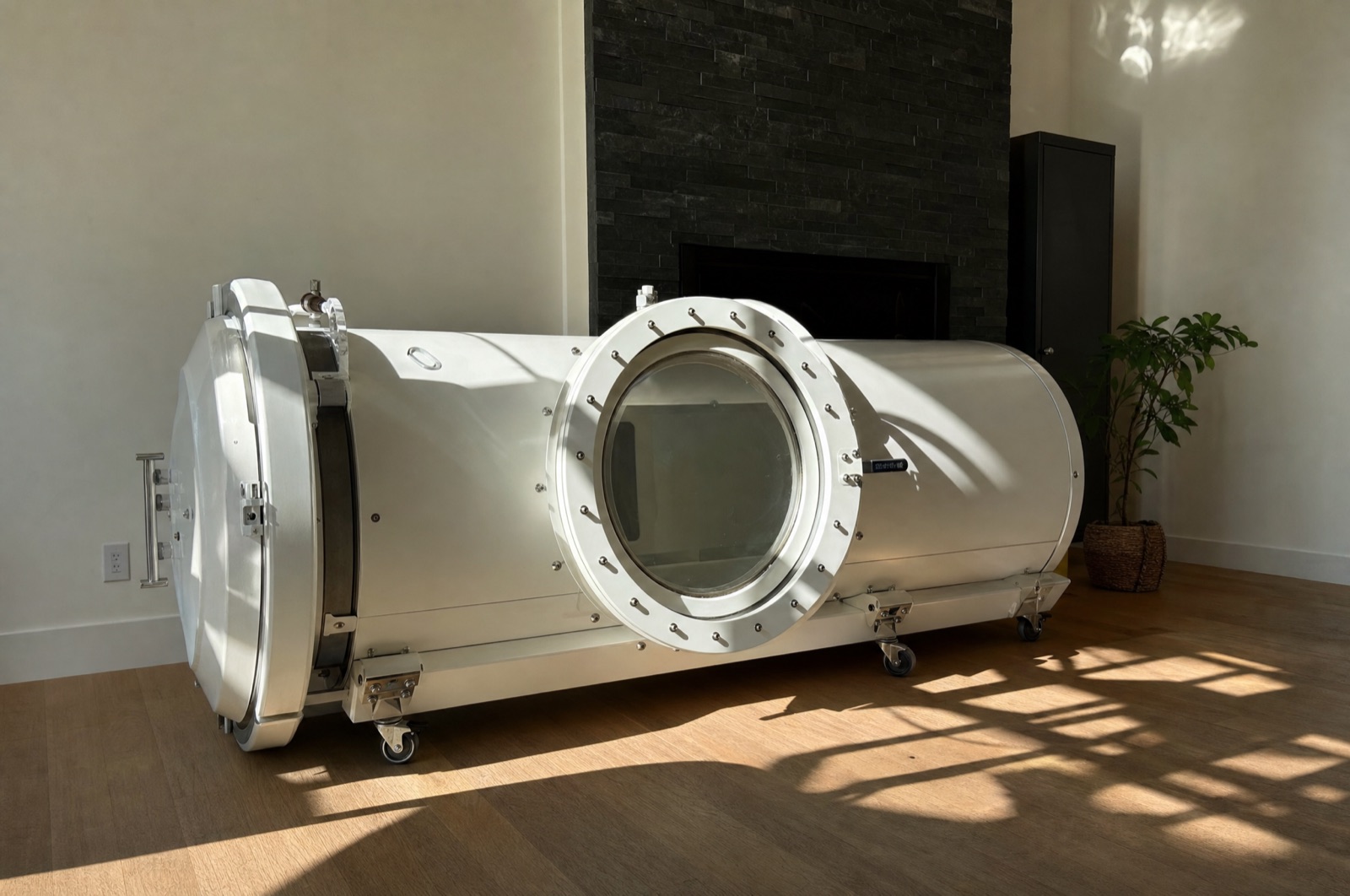
[ Home install ] Reference imagery; final photography in production
Who may sell a prescription device
Start with how the chamber was cleared, because that sets the rules for selling it on. The classification regulation, 21 CFR 868.5470, puts hyperbaric chambers in Class II (performance standards). It does not say prescription or over the counter. That is set by each clearance. Our prescription guide opened seven chamber clearances in the FDA 510(k) database, soft and hard, and every one was marked for Prescription Use. None was marked over the counter.
The rule for prescription devices is 21 CFR 801.109. Paragraph (a) describes a device in the possession of a person regularly and lawfully engaged in the manufacture, transportation, storage, or wholesale or retail distribution of the device, or in the possession of a licensed practitioner. It adds that the device is to be sold only to or on the prescription or other order of such a practitioner, for use in the course of professional practice. Paragraph (b) is why the label on most chambers reads "Rx only" or carries the federal law caution sentence.
A home owner who bought a chamber on a prescription is not a distributor or a practitioner in the plain words of that paragraph. We did not find FDA text that deals directly with one private owner reselling one used prescription device. What the regulation does make clear is the buyer side: the sale is meant to go to a practitioner, or on a practitioner's order. The cautious route is to sell to a clinic or licensed practitioner, or to ask the buyer for a prescription or other order and keep a copy with your records. A lawyer in your state can tell you whether that is enough where you live.
FDA registration and the private seller
Selling a used unit does not, on the FDA's own chart, turn you into a registered establishment. The FDA page Who Must Register, List and Pay the Fee, content current as of 27 September 2018, lists each type of activity with a yes or no for registering, listing and paying the fee. Three rows matter for a seller.
- Refurbishers or remarketers of used devices already in commercial distribution in the United States: no, no and no.
- Wholesale distributor that is not a manufacturer or importer: no, no and no.
- Remanufacturer: yes, yes and yes. So is the initial importer of a device made abroad, for registration and the fee.
The regulation behind the chart is 21 CFR part 807. Its definitions section, 807.3, defines commercial distribution as any distribution of a device intended for human use which is held or offered for sale. Its exemptions section, 807.65, lists classes of business that need not register, including pharmacies, surgical supply outlets and similar retail establishments that make final sales to the ultimate user. The chart is the plainer statement for a used unit.
Selling the chamber also does not move its 510(k) clearance. A clearance belongs to the company that holds it. A Federal Register notice of 5 June 2025 announced a draft guidance titled Transfer of a Premarket Notification (510(k)) Clearance, Questions and Answers. It deals with a clearance passing from one holder to another, which is a deal between companies. The K-number on your chamber stays with its maker, and the buyer looks it up the same way you did. Our FDA cleared vs FDA registered guide explains the difference between a clearance and a registration.
Servicing is not remanufacturing
The line that matters before a sale is between fixing the chamber and changing it. The FDA guidance Remanufacturing of Medical Devices, final and current as of 9 May 2024, defines servicing as the repair or preventive or routine maintenance of one or more parts in a finished device, after distribution, to return it to the safety and performance specifications set by the original maker. Remanufacturing is any act done to a finished device that significantly changes its performance or safety specifications, or its intended use.
The guidance says remanufacturers are considered to be manufacturers and must hold their own establishment registration and device listing. It also defines recondition, refurbish and rebuild as restoring a device to the original maker's specifications comparable to when new, which can include repair of components, installation of updates the maker provides, and replacement of worn parts. The FDA says it looks at the specific activities performed, whatever the person doing them calls themselves.
For a seller, that points one way. Replacing a worn zipper, seal or filter with the maker's part is servicing. Changing the pressure setting, fitting a different compressor or adding an oxygen inlet that the maker did not provide is the kind of change the guidance describes as remanufacturing. eBay applies the same test in its own words: used items must not be altered in any way that changes the performance or safety specifications of the device. Warranty terms follow the same line. Summit to Sea's published warranty, as our warranty guide reports, excludes damage from misuse or unauthorized modification.
Where you can list it
The large general marketplaces we checked do not allow prescription medical devices. We read each policy page on 22 October 2026.
| Channel | What the published rule says | Source |
|---|---|---|
| eBay (US) | Any medical device that requires a prescription can't be sold. OTC devices are allowed. Listings must say if a device has been opened or used, used items must be properly cleaned, and they must not be altered in a way that changes performance or safety specifications. | eBay medical devices and equipment policy |
| Facebook Marketplace | Commerce content may not promote the buying, selling or trading of medical and healthcare products, including medical devices. A separate rule covers prescription products. Recalled or banned products are also barred. | Meta commerce policies |
| Craigslist | Prohibited list includes prescription drugs and medical devices, and separately recalled items. | Craigslist prohibited items |
| Direct sale to a clinic or practitioner | 21 CFR 801.109(a) describes sale to, or on the prescription or other order of, a licensed practitioner for use in professional practice. | 21 CFR 801.109 |
| Private sale to an individual | No marketplace rule applies. The 801.109 condition on who the device is sold to still describes the sale. | 21 CFR 801.109 |
Sources, read 22 October 2026: eBay medical devices and equipment policy; Meta commerce policies; Craigslist prohibited items. Marketplace rules change; check the page on the day you list.
That leaves direct sale. Clinics, practitioners and private buyers who hold a prescription are the buyers the federal rule describes. We did not research the resale terms of specialist used medical equipment brokers, or whether any chamber maker buys back used units, so ask the maker before you assume either route exists.
What happens to the warranty
A warranty transfers only if its written terms say so. The FTC's Businessperson's Guide to Federal Warranty Law says a full warranty must provide warranty service to anyone who owns the product during the warranty period. A limited warranty can stop at the first owner. The FTC guide's own sample limited warranty for a hearing aid includes the line "Coverage terminates if you sell or otherwise transfer the aid." Our warranty guide notes that 16 CFR 701.3(a)(1) requires such a restriction to be stated in the warranty.
The chamber pages we read leave the question open. Summit to Sea's warranty page says it warrants its products and accessories against defect for two years from delivery date, and does not say who the warranty covers. Oxynova's lifetime warranty page does not mention transfer, proof of purchase or registration. The one concentrator warranty our warranty guide read, Inogen's, is granted only to the original purchaser and is non-transferable.
Two practical steps follow. Ask the maker in writing whether the warranty passes to a new owner and what the new owner must send, and give the buyer that reply. Hand over the original invoice too, because both start dates above run from delivery or shipment, not from the date of resale.
Implied warranties and selling as is
Implied warranties depend on who is selling. The FTC guide says merchants make the implied promise of merchantability automatically every time they sell a product they are in business to sell, and that merchants of used goods also give implied warranties. The source is UCC section 2-314, which applies when the seller is a merchant with respect to goods of that kind. A clinic or a dealer that sells chambers is closer to that line than a family selling one unit.
Implied warranties can usually be disclaimed. UCC section 2-316(3)(a) says that, unless the circumstances indicate otherwise, all implied warranties are excluded by expressions like "as is" or "with all faults", or other language that makes plain there is no implied warranty. The FTC guide adds that some states do not allow consumer products to be sold as is. Put the terms in a written bill of sale, list the faults you know about, and state whether the maker's warranty is still running.
The documents a buyer will ask for
A careful buyer will ask for paper before money. Our used chamber inspection checklist is written for that buyer. Gathering the same file in advance shortens the sale.
| Document | Why the buyer asks | Where the reason comes from |
|---|---|---|
| Original invoice with model, serial number and delivery date | Shows when warranty terms started and whether any time is left | Summit to Sea warranty runs from delivery date |
| The warranty document and any written reply on transfer | Shows whether coverage passes to a later owner | FTC warranty guide; 16 CFR 701.3 |
| K-number for the exact model | Lets the buyer open the FDA record and see the cleared indications and prescription box | FDA 510(k) database; our prescription guide |
| Owner's manual and labeling | Operating limits and maintenance steps; the "Rx only" statement | 21 CFR 801.109(b); FDA remanufacturing guidance on labeling for serviced devices |
| Service and repair records, with who did the work and what parts were used | Shows servicing to the maker's specifications rather than modification | FDA remanufacturing guidance; eBay used item rule |
| Crate dimensions, gross weights and electrical specification | The buyer has to book freight and plan the room | Our delivery and installation guide |
| Concentrator invoice, warranty and model, if included | A separate device with its own maker and its own terms | Inogen warranty statement; FDA on concentrators |
Sources as linked in this guide and in our warranty, prescription, and delivery and installation guides.
The FDA remanufacturing guidance says it includes recommendations for information that should go in labeling to help assure the continued quality, safety and effectiveness of devices intended to be serviced over their useful life. A buyer who cannot see the manual cannot tell what servicing the maker expects, so keep it with the chamber.
Check for recalls before you list
Craigslist and Meta both bar recalled items, and a buyer will check anyway. We queried the openFDA device recall data for product code CBF, the hyperbaric chamber code, on 22 October 2026. It returned three records: two Sechrist monoplace chambers with an electronic control module, models 3300E/ER and 3600E/ER, initiated on 28 August 2008, and the Baro-Therapies Rejuvenator Chamber, initiated on 8 August 2014. All three show a status of terminated. A chamber filed under a different product code would not appear in that search, so look up your maker and model by name in the FDA medical device recalls database as well, and save the result for the buyer.
Crating and freight
A hard chamber goes out the way it came in, as less than truckload freight. On the packing, ABF Freight's LTL Packaging Guide tells shippers to meet or exceed the minimum packaging requirements in the National Motor Freight Classification. Its crating section says crates should have three-way locking corners, that everything inside should be blocked, braced and cushioned, that skeletal crates should have diagonal boards at 30 to 60 degrees, and that long crates should have access on all sides and chamfered runner boards. The bill of lading should give the number of pieces, a description and dimensions for each unit, the NMFC number and the weight including packaging and pallets.
R+L Carriers' packing page recommends crating for heavier items or things that could be damaged easily, and says the bill of lading and the freight should both carry a bar code and tracking number, with labels on all sides. The NMFTA's LTL packaging guidelines suggest asking the carrier whether it offers custom crates, and say pallets should not be stacked above 84 inches.
If you kept the original crate, inspect it before reuse. If not, a crating company or the carrier's crate service is the usual answer. Our delivery and installation guide has the published chamber weights, the doorway and liftgate limits, and the federal claim deadline under 49 U.S.C. 14706, under which a motor carrier may not allow less than 9 months to file a damage claim. Agree in writing who books the freight, who pays for it, and who files a claim if the chamber arrives damaged.
The concentrator is a separate sale
Many home chambers were sold with an oxygen concentrator. It is its own prescription device. Our prescription guide quotes the FDA consumer update of February 2021, which says oxygen concentrators are medical devices required to be sold and used only with a prescription, and that the FDA has not cleared any concentrator to be sold or used without one. The same guide quotes the FDA saying it has not cleared zippered soft chambers for use with oxygen tanks or concentrators. A listing that pairs the two, or describes oxygen use in a soft chamber, puts that FDA statement in front of the buyer.
The warranty is separate too. The Inogen statement our warranty guide read is non-transferable and needs the original receipt and proof of identity, so a used Inogen unit would go to its new owner without that warranty. Treat the concentrator as its own sale with its own paperwork.
On price, we have no published figures for used chamber values and do not estimate one. Our price index tracks new list prices, which is what a buyer will compare against, and our worth it guide covers the ownership costs a buyer will be weighing. For how the brands we track score on what we can verify, see the scorecard.
What we have not verified
We did not find FDA text that addresses a private individual reselling a single used prescription device, so the reading of 21 CFR 801.109 above is ours, not the agency's. We could not open California's statute or its Department of Public Health licence form for home medical device retailers during research, and we did not check any other state's rules on reselling prescription devices or on selling consumer goods as is. We did not confirm whether the June 2025 draft guidance on 510(k) transfers has been finalized. We did not find a chamber maker's published page that states whether its warranty transfers to a second owner; a retailer page that once described one such term now returns an error. We did not research buy-back programs, used equipment brokers, sales tax on private sales, or resale prices, and we do not publish a depreciation figure. Marketplace policies were read once and may change. If you hold a maker's written answer on warranty transfer, send it and we will check it.
Frequently asked
Can I sell my used hyperbaric chamber on eBay or Facebook Marketplace?
The published rules say no for most chambers. eBay's medical devices policy says any medical device that requires a prescription can't be sold on eBay. Meta's commerce policies say listings may not promote the buying, selling or trading of medical devices. Craigslist lists medical devices among its prohibited items. Every chamber clearance our prescription guide opened was marked for prescription use.
Do I need to register with the FDA to sell a used chamber?
Not according to the FDA chart we read. The FDA page Who Must Register, List and Pay the Fee marks refurbishers or remarketers of used devices already in commercial distribution in the United States as not required to register, list or pay the fee. A remanufacturer and an initial importer are required to register.
Does the chamber warranty pass to the person who buys it from me?
Only if the written terms allow it. The FTC says a full warranty must cover anyone who owns the product during the warranty period. A limited warranty can end on sale, and the FTC sample wording reads that coverage terminates if you sell or otherwise transfer the product. The chamber warranty pages we read do not say either way, so ask the maker in writing.
Can I sell a used chamber as is?
Often, but not everywhere. UCC section 2-316 says expressions such as as is or with all faults exclude implied warranties unless the circumstances indicate otherwise. The FTC says some states do not allow consumer products to be sold as is. The FTC also says merchants make implied warranties automatically, including merchants of used goods.
What paperwork should I give the buyer?
The original invoice with the model, serial number and delivery date, the warranty document, the owner's manual, the K-number for the model, and every service and repair record. Under the warranty terms we read, coverage start dates run from delivery or shipment, so the invoice date matters. A concentrator has its own maker and its own paperwork.

Alex tests the machines himself, in clinics and studios on three continents. Every score comes from the same 27 public criteria, and no manufacturer has a say in them.
Six questions, and we'll match chamber, options, and install to your space and budget.