HBOT vs EWOT: What Is the Difference?
Researched and scored by Alex Evans. Last reviewed August 2026. Corrections are dated and public. See corrections
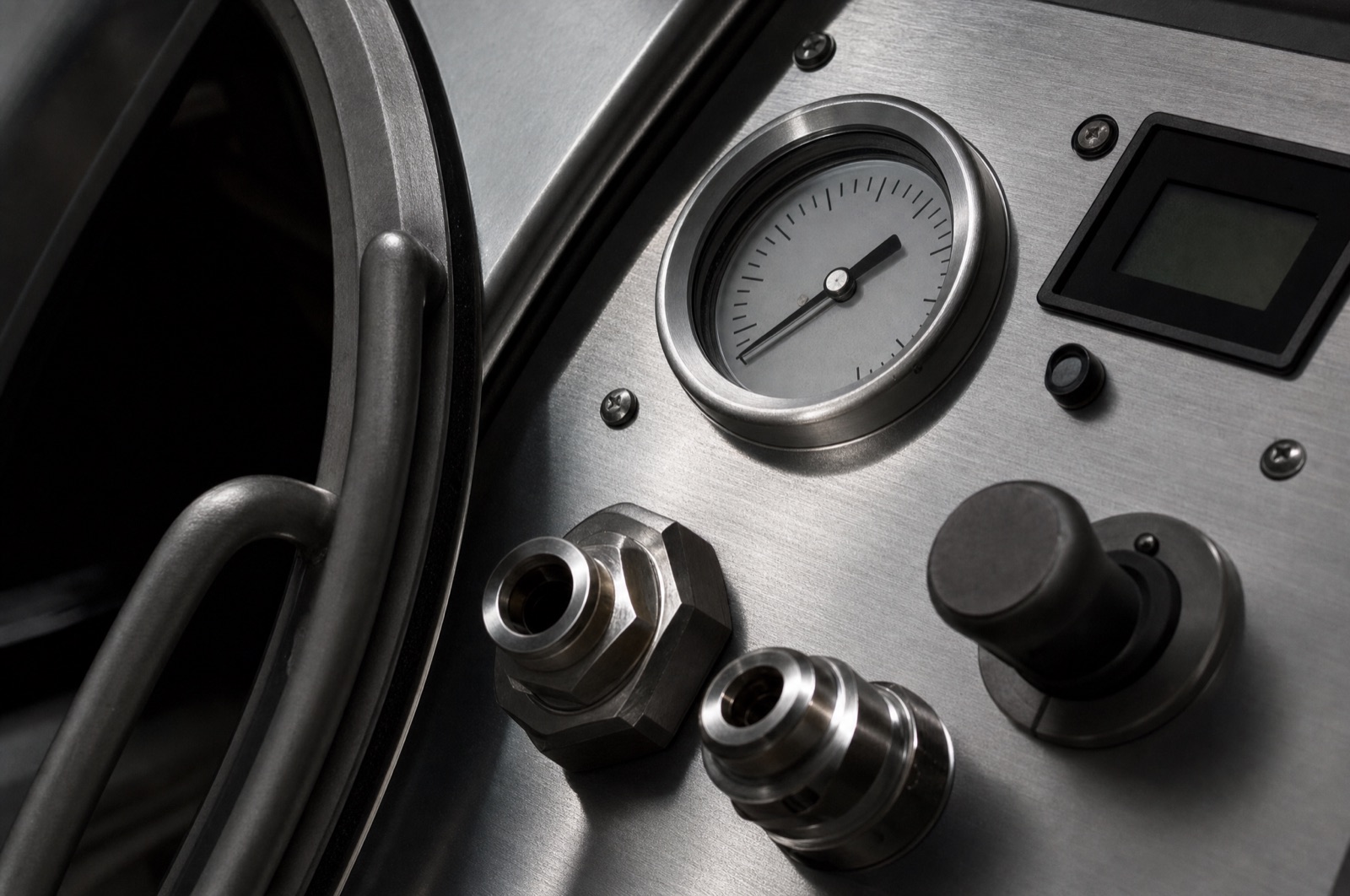
[ Pressure gauge ] Reference imagery; final photography in production
What EWOT is
EWOT stands for exercise with oxygen therapy. A person breathes oxygen-enriched gas through a mask while they exercise, usually on a bike or treadmill. The gas comes from an oxygen concentrator, and in most setups it is stored first in a large plastic reservoir bag. The room stays at normal air pressure. There is no chamber and no seal around the body.
Independent sources on EWOT are thin. We did not find a hospital, regulator or professional society that defines it. The clearest technical description we found is a patent. US Patent 11,717,634, "Therapeutic oxygen breathing apparatus and exercise system", was filed on 27 March 2020, granted on 8 August 2023, and assigned to Maxxo2 LLC. We cite it because it gives numbers. A patent describes an invention. It is not a safety review, a standard or an FDA decision.
The patent describes an air supply that produces oxygen-enriched air at 93% oxygen and a flow of 10 liters per minute. The gas fills a first bladder, or bag, of about 900 liters. The patent says that bag holds air above 20.95% oxygen, which is the oxygen share of ordinary air at sea level. The person breathes from it through a breathing mask, and the patent says other devices such as a nasal cannula can be used. Its design also adds a second, smaller bag of 20 to 40 liters holding low-oxygen air, about 14% on average, with a switch to choose between the two. That second bag is for altitude-style training. Not every EWOT kit has one.
The patent's background says physicians often prescribe EWOT and that athletes use it for altitude training. Those are the inventors' statements. We did not find an independent source that confirms either one, and we make no claim about what EWOT does.
What HBOT is
HBOT stands for hyperbaric oxygen therapy. The person is inside a sealed vessel, and the air pressure around the whole body is raised above sea level. US federal regulation defines a hyperbaric chamber in 21 CFR 868.5470 as a device intended to increase the environmental oxygen pressure by means of pressurization greater than atmospheric pressure. It is a Class II device. The FDA's letter to health care providers of 25 August 2025 says these devices are cleared through the 510(k) process and can be found under product code CBF.
Pressure is measured in atmospheres absolute, or ATA. Sea level is 1.0 ATA. Home soft shells run near 1.3 ATA and home hard shells near 1.5 ATA, as our pressure guide explains. The Undersea and Hyperbaric Medical Society (UHMS) defines medical hyperbaric oxygen as the whole body inside a hard-sided chamber at not less than 2.0 ATA, breathing medical grade oxygen prescribed by a physician. Our mild vs medical guide covers where that line sits.
The word oxygen in the name can mislead. Many home chambers run on room air. The UHMS position statement on low-pressure fabric chambers says those chambers operate below 1.4 ATA, are cleared for acute mountain sickness, and are designed to be compressed with air only. So a home hyperbaric session may involve raised pressure and no added oxygen at all. EWOT is the reverse: added oxygen and no raised pressure.
HBOT and EWOT side by side
Every cell below comes from a source linked on this page or from one of our related guides. Where we found nothing, the cell says so.
| Question | HBOT (hyperbaric chamber) | EWOT (exercise with oxygen) |
|---|---|---|
| Pressure around the body | Above 1.0 ATA; home units near 1.3 or 1.5 ATA; medical HBOT 2.0 ATA or more | 1.0 ATA, ordinary room pressure |
| What is enclosed | The whole body, in a sealed fabric or hard shell | Nothing; only the mouth and nose, by a mask |
| What is breathed | Room air in fabric chambers; medical grade oxygen in medical HBOT | Oxygen-enriched gas from a bag; 93% at the source in one patent |
| Oxygen source | Room air compressor; oxygen by mask or hood from a built-in system in hard chambers | Oxygen concentrator filling a reservoir bag |
| Main hardware | Pressure vessel, compressor, valves, gauge | Concentrator, bag of about 900 liters in one patent, tubing, mask, exercise machine |
| Body position | Sitting or lying still | Exercising |
| US federal device status | Class II, 21 CFR 868.5470, 510(k), product code CBF | No clearance found for an EWOT system; the concentrator is Class II, 21 CFR 868.5440, product code CAW |
| Prescription | Covered in our prescription guide | FDA says concentrators require one; we found no rule for the full kit |
| Main fire concern | Oxygen inside or near a closed chamber | A large bag of oxygen-enriched gas in an open room |
Sources: 21 CFR 868.5470 and 868.5440; FDA letter to health care providers (August 2025); FDA Product Classification, product code CAW; UHMS HBO indications and fabric chamber position statement; US Patent 11,717,634; Zinner and Sperlich (2019); NFPA medical oxygen tip sheet. Checked 22 October 2026.
Pressure: the dividing line
The whole difference starts here. A hyperbaric chamber exists to raise the pressure around the body. That is what the FDA rule says it does, and it is what the gauge on the shell reads. Without the raised pressure, the device is not a hyperbaric chamber.
EWOT happens at 1.0 ATA. The person is on a bike or treadmill in a normal room. The patent does describe pressure, but of a different kind. It says weights apply a constant positive pressure to the air stored in the first bag, which pushes the gas toward the mask. It gives no number for that pressure. It acts on the gas in the bag, not on the air around the person.
The research term for this condition is normobaric hyperoxia. Normobaric means normal pressure. Hyperoxia means more oxygen than ordinary air. Hyperbaric means raised pressure. The two words sound alike, and that is part of why the two setups get mixed up.
Where the oxygen comes from
In EWOT the oxygen comes from a concentrator. Federal regulation calls this a portable oxygen generator. Under 21 CFR 868.5440, it is a device intended to release oxygen for respiratory therapy by a chemical reaction or by physical means, such as a molecular sieve. It is Class II. The sieve takes nitrogen out of room air, as our oxygen concentrator guide explains, along with the flow and purity figures that concentrators publish.
A concentrator makes oxygen at a steady flow, measured in liters per minute. A person exercising hard can breathe faster than that flow. The reservoir bag is how EWOT kits handle the gap: the concentrator fills the bag between sessions, and the person draws from the stored volume. The patent pairs a 10 liter per minute source with a bag of about 900 liters. That is roughly 90 minutes of output at the full rated flow to fill it from empty. That figure is our arithmetic from the patent's two numbers, not a figure the patent states.
In a hyperbaric chamber the picture depends on the type. A fabric chamber is filled with room air by an electric compressor. Hard chambers in hospitals deliver oxygen by mask or hood through a built-in breathing system, often called BIBS, which our BIBS and oxygen delivery guide covers. In both cases the pressure comes from the chamber and its compressor. The oxygen, if any, is a separate supply.
The equipment in each setup
A hyperbaric setup is built around a pressure vessel. It has a shell, a door or zipper that seals, a compressor, valves to control the pressure, and a gauge. A hard chamber may also have oxygen fittings and an exhaust. The person sits or lies still inside.
An EWOT setup is built around a bag. Based on the patent, the parts are these:
- An oxygen concentrator, rated 93% oxygen at 10 liters per minute in the patent.
- A first reservoir bag of about 900 liters, holding oxygen-enriched air.
- In some designs, a second bag of 20 to 40 liters holding low-oxygen air, with a switch.
- Tubing from the bag to the person.
- A breathing mask, or another device such as a nasal cannula.
- An exercise machine, such as a stationary bike or treadmill.
We read one patent. Kits sold under the EWOT name may use other bag sizes, other concentrators or no bag at all. We have not inspected any of them, and we make no claim that any product matches the patent.
How each one is regulated
The hyperbaric chamber has a clear federal category. It is a Class II device under 21 CFR 868.5470, cleared through 510(k), product code CBF. Clearance covers specific uses. The FDA consumer update "Hyperbaric Oxygen Therapy: Get the Facts" says the FDA has cleared zippered bags to treat altitude sickness, and has not cleared them for use with oxygen tanks or oxygen concentrators. Our FDA cleared vs FDA registered guide explains how to read a clearance.
The concentrator inside an EWOT kit also has a clear category. The FDA Product Classification entry for product code CAW lists it as a portable oxygen generator under 868.5440, Device Class 2, with 510(k) as the submission type. It names ISO 80601-2-69, the safety standard for oxygen concentrator equipment, as a recognized standard. The FDA's archived consumer update on pulse oximeters and oxygen concentrators says concentrators are medical devices required to be sold and used only with a prescription, and that the FDA has not cleared any to be sold or used without one. The live fda.gov address for that update now shows a pulse oximeter page only, so the link is the archived copy.
The EWOT system as a whole is where we found nothing. On 22 October 2026 we searched the openFDA 510(k) dataset for device names containing EWOT, exercise with oxygen and oxygen training, and for the patent holder as applicant. None returned a match. The same searches of openFDA registration and listing data also returned nothing. The same 510(k) dataset did return records for product codes CBF and CAW, so the searches were working. A search can miss a device sold under another name. We cannot say every EWOT kit lacks a clearance. We can say we did not find one.
That leaves an open question for buyers. If a kit includes a concentrator, the FDA's prescription statement applies to that part. Whether the bag and mask need anything of their own, we could not establish.
What the research literature calls it
Sports scientists do not use the name EWOT in the paper we read. A 2019 systematic review by Zinner and Sperlich in the German Journal of Sports Medicine calls the idea hyperoxic training, or normobaric hyperoxia during exercise. It found seven studies. In all of them the inspired oxygen fraction during training ranged from 0.60 to 1.00, which means 60% to 100% oxygen. Six of the studies used cycling and one used running. Training ran for 3 to 6 weeks, at 2 to 5 sessions per week.
The review does not describe the delivery equipment. It does not say whether the studies used a bag, a mask or a tank. So we cannot say that a home EWOT kit matches what the studies used. We report the setup figures only. This page makes no claim about what the studies found, and a finding about hyperbaric chambers says nothing about EWOT, or the reverse. For the hyperbaric side, our hyperbaric chamber benefits guide covers what home chambers can and cannot claim.
Oxygen and fire at home
Both setups bring concentrated oxygen into a home, and the fire rules for home oxygen apply to both. The National Fire Protection Association's medical oxygen safety tip sheet says fire needs oxygen to burn. If a fire starts in an oxygen-enriched area, the material burns more quickly. Oxygen saturates fabric-covered furniture, clothing, hair and bedding, which makes it easier for a fire to start and spread.
The tip sheet's home rules are short:
- No smoking in the home when oxygen is in use. Smoking materials are the leading heat source in medical oxygen fires.
- No candles, matches, wood stoves or sparking toys.
- No aerosol sprays with combustible contents near the oxygen.
- Keep oxygen cylinders at least five feet from heat, open flames or electrical devices.
- Keep body oil, hand lotion, oil and grease away from where oxygen is used.
We found no fire guidance written for EWOT reservoir bags. The NFPA sheet covers home medical oxygen in general. What we can add is a threshold. A 2024 fire department appeal record from Des Moines, Iowa notes that normal air is about 20.95% oxygen, that OSHA treats anything above 23.5% as a hazardous atmosphere, and that NFPA 99 uses the same 23.5% figure for an oxygen-enriched atmosphere. A bag holding gas well above 20.95% oxygen is a store of oxygen-enriched gas. We have not seen a seller publish what happens to the room's oxygen level when a bag leaks or is emptied indoors.
On the hyperbaric side, the FDA's August 2025 letter says it is aware of recent reports of fires with HBOT devices that resulted in serious injuries and deaths, and that there is a heightened risk of fire with oxygen at a high concentration. Our hyperbaric chamber safety guide lists each hazard and its control.
Cost
We do not publish EWOT prices. We have not collected kit prices from a source we could cite. For hyperbaric chambers, the cost guide and the price index list sourced prices. The concentrator guide records what chamber makers and sellers charge for a concentrator option. A concentrator is a shared part: both a chamber with oxygen and an EWOT kit can use one. Power draw and filter upkeep for concentrators are in the same guide.
What to ask a seller
The questions differ because the machines differ. Get the answers in writing.
- For EWOT: what concentrator is in the kit, and what is its 510(k) number?
- For EWOT: who writes the prescription the FDA says a concentrator requires?
- For EWOT: what purity does the concentrator make at its rated flow, and how large is the bag?
- For EWOT: does the kit itself, as a system, hold any FDA clearance? If so, for what use?
- For EWOT: what fire guidance does the maker give for storing a filled bag indoors?
- For a chamber: what is the 510(k) number, and what uses does the clearance cover?
- For a chamber: what pressure does it run at, in ATA, and is oxygen part of the cleared setup?
- For either: has the concentrator model been recalled? Check the FDA recall database yourself.
If you are shopping for a chamber to own, our hyperbaric chamber scorecard compares the models we track on what we can verify. We do not review EWOT kits.
What we have not verified
Our EWOT equipment figures come from one patent. We have not checked any kit on sale against it. We did not find a hospital, regulator or professional society definition of EWOT. We found no FDA clearance or listing for an EWOT system under the terms we searched, but we cannot rule out one sold under another name. We could not establish whether a reservoir bag or mask needs any clearance of its own. We found no fire guidance written for EWOT bags, and no measured room oxygen levels during use. We give no EWOT prices. The research review we cite does not describe its delivery equipment. If you have a source that settles any of these points, send it and we will check it.
Frequently asked
What is the difference between HBOT and EWOT?
Pressure. HBOT puts the whole body inside a sealed chamber at an air pressure above sea level. EWOT, short for exercise with oxygen therapy, has a person breathe oxygen-enriched gas through a mask while exercising in an ordinary room at normal pressure, which is 1.0 ATA. EWOT has no chamber. The oxygen reaches the person only through the mask.
Is EWOT done under pressure?
No. The person exercises in room air at sea level pressure. The one EWOT patent we read describes weights pressing on the reservoir bag to push gas toward the mask, but that pressure acts on the gas in the bag, not on the body. A 2019 sports science review describes this kind of training as normobaric hyperoxia, and normobaric means normal pressure.
What equipment does an EWOT setup use?
An oxygen concentrator, a large reservoir bag, tubing and a mask, next to an exercise machine. A 2023 US patent for one system describes a concentrator making 93% oxygen at 10 liters per minute, a first bag of about 900 liters, and a breathing mask or nasal cannula. Other kits may differ, and we have not checked them.
Is EWOT equipment FDA cleared?
We did not find a clearance for an EWOT system. Searches of the openFDA 510(k) and registration data on 22 October 2026 for the terms EWOT, exercise with oxygen and oxygen training, and for the patent holder, returned no matches. The oxygen concentrator inside a kit is its own device: the FDA classifies it under 21 CFR 868.5440 as Class II, and has said concentrators are to be sold and used only with a prescription.
Is a hyperbaric chamber with an oxygen mask the same as EWOT?
No. In a hyperbaric chamber the pressure around the whole body is raised, whatever the person breathes. EWOT adds oxygen by mask at normal room pressure, during exercise. The FDA also says it has not cleared zippered soft chambers for use with oxygen concentrators, so pairing a soft chamber with a concentrator is a separate question covered in our concentrator guide.
Which is better, HBOT or EWOT?
We do not rank them, and this page makes no claim about what either one does for health. They are different machines that do different physical things. For what the evidence does and does not support on the hyperbaric side, see our benefits guide. We have not reviewed the EWOT evidence.

Alex tests the machines himself, in clinics and studios on three continents. Every score comes from the same 27 public criteria, and no manufacturer has a say in them.
Six questions, and we'll match chamber, options, and install to your space and budget.