Do Hyperbaric Chambers Need Maintenance? Service and Inspection Explained
Researched and scored by Alex Evans. Last reviewed August 2026. Corrections are dated and public. See corrections
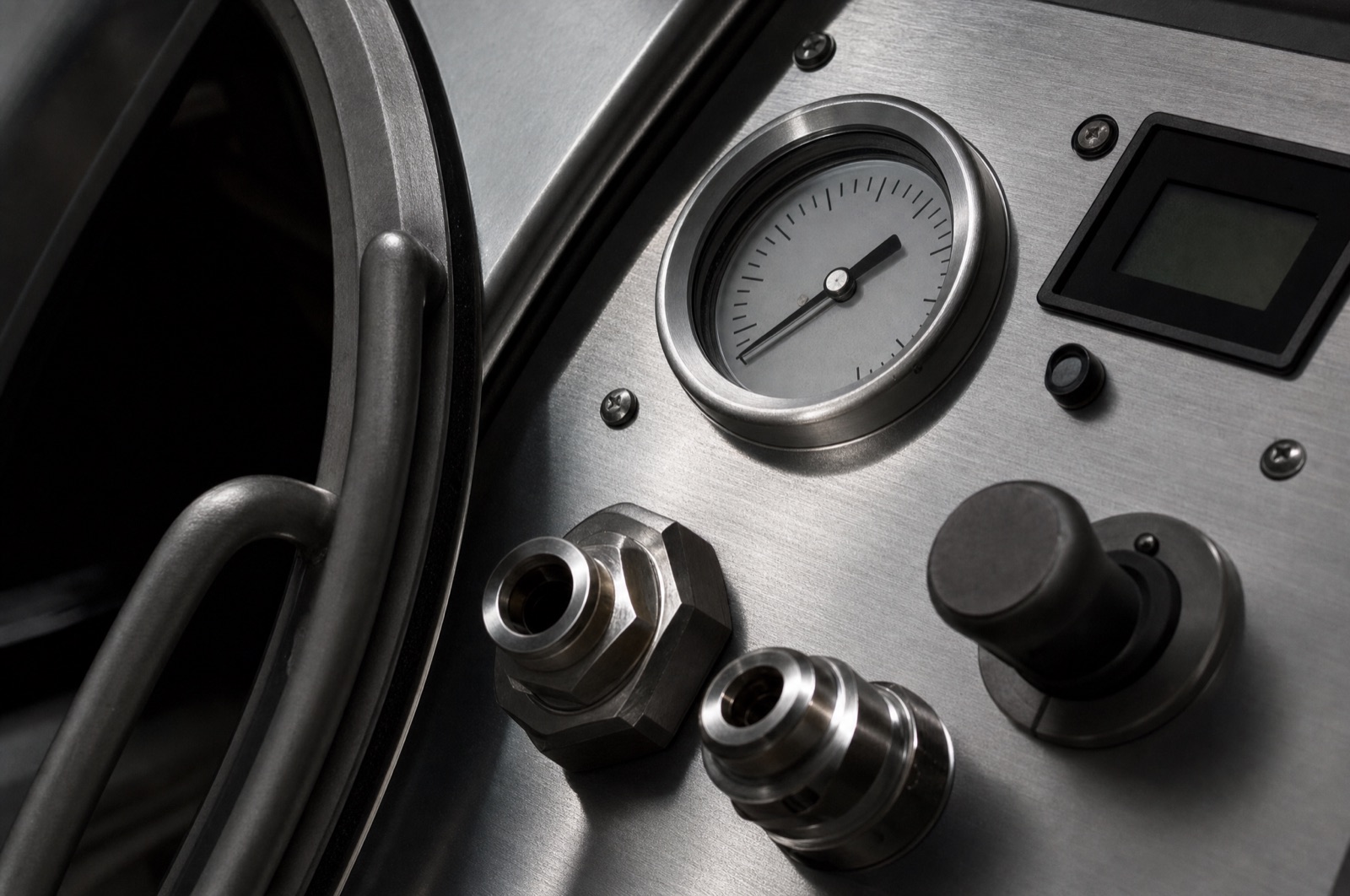
[ Gauge and fittings ] Reference imagery; final photography in production
What wears, and what to check
A hyperbaric chamber is a pressure vessel with moving and soft parts, and those parts wear. The maker's manual sets the schedule for each model. The table below lists the parts that published sources name, the check each source gives, and where it comes from. Where a source states an interval, it is in the table. Where none does, the cell says so.
| Component | Published check | Interval stated | Source |
|---|---|---|---|
| Soft shell zippers | Wipe the open zippers with a damp cloth; lubricate the inside zipper docks with Tzip silicone when the zipper is hard to seat | "Periodically"; docks when needed | Summit to Sea Grand Dive manual |
| Fittings and hoses | Check for cracks or damage; order a replacement part from the distributor | "Regularly" | Grand Dive manual |
| Relief valves (soft shell) | Blue valve should release air at 1.3 ATA; if it does not, stop and call the distributor | Every session | Grand Dive manual |
| Compressor intake filter | Replace | Once a year at 24-hour daily use; about five years at average use | Grand Dive manual |
| Compressor filter under top plate | Clean with water; replace | Clean every 6 months; replace every year | Grand Dive manual |
| .001 micron filter | Replace | Every 6 months | Grand Dive manual |
| Acrylic window or viewport | Operational inspection by a trained operator; maintenance inspection by a qualified inspector | Operational: before the first pressurization of the day. Maintenance: periodic, and after 18 months or more out of service | Wound Education Partners on ASME PVHO-2 |
| Acrylic window at end of design life | Stricter inspection with added documentation | Annual before end of design life per the operator's manual; at most 24 months after it, per the advisory's reading of PVHO-2 | Perry Baromedical advisory |
| Door seals and O-rings (Navy chambers) | Check, replace as needed, lightly lubricate with approved lubricant; keep spare hatch O-rings | Before and after each dive | NOAA operating standards |
| Pressure gauges (Navy chambers) | Calibrated or compared | Per the Navy planned maintenance system | NOAA operating standards |
| Concentrator particle filters (Inogen G5) | Wash and dry; replace if misshapen or the screen is damaged | Weekly, more often in dusty rooms | Inogen G5 particle filter page |
| Concentrator oxygen output (Philips EverFlo) | Purity test at 5 L/min with a calibrated analyzer by a technician | Not stated in the service manual; the user manual points to the maker's intervals | Philips EverFlo service and user manuals |
Sources read 22 October 2026 and linked in the sections below. Each interval belongs to the product or chamber type named in its source. It is not a rule for other models.
Makers also look at wear before a chamber is sold. The K171899 510(k) summary for the Revitalair 430F lists a device life report that addresses the device's useful life based on reliability analysis of the individual components. The summary does not publish the resulting figure. Ask the maker of your chamber what useful life it gives the shell, the windows and the compressor.
What the FDA asks of users
The FDA has put maintenance in writing. Its letter to health care providers of 25 August 2025 says the agency is aware of recent reports of fires with hyperbaric devices that caused serious injuries and deaths, and that the root cause is not known. One of its recommendations reads: ensure that manufacturer recommended cleaning procedures, maintenance intervals, and safety checks are followed for each HBOT device being used. The letter also asks for proper grounding equipment, staff training and the maker's list of prohibited items. Our safety guide covers the fire side in more depth.
The FDA also says what a maker should publish. Its May 2024 guidance, Remanufacturing of Medical Devices, encourages makers, as an industry best practice, to give servicing instructions for reusable devices. It says the labeling should include, as applicable, the recommended maintenance activities and schedule, troubleshooting steps, routine testing and acceptance criteria, and a description of error codes and alarms. So the manual is the first place to look. If you do not have one, ask the maker for it.
Owner care in a soft chamber manual
The Summit to Sea Grand Dive manual is one public example of owner care for a soft chamber. We use it because it is public and specific, not because it is typical. Its chamber care pages say the outside zipper needs no maintenance beyond a periodic wipe with a damp cloth. The inside airtight zipper needs Tzip silicone on the docks where the zipper triggers seat, when the zipper becomes hard to seat. The manual says the silicone does not go on the zipper itself.
The manual ties zipper life to use. It says both zippers must be fully closed and all belts buckled during a session, that the belts reduce stress on the zipper and extend its life, and that failing to close the outside zipper past the white strap may damage it.
For the air side, it says to check fittings and hoses regularly for cracks or damage. It gives the filter rules in the table above, and says the black output filter shows a green ball that turns red when the filter needs changing. A separate page describes how to reset the compressor's safety switch if the unit is jarred, with the compressor unplugged first.
Storage is part of care too. The manual says to clean the chamber inside and out with a non-petroleum household cleaner before storing it, fold it with the gauges and fittings wrapped in bubble wrap or similar, and keep it in its case in a dry area between 40 and 80 degrees. On first reuse, it says to run the chamber for several hours to purge odors. Our hard vs soft shell guide explains how the two designs differ.
Acrylic windows and PVHO-2
Hard chambers with acrylic windows carry a second schedule, set by a standard. ASME's PVHO-2 page says the standard provides technical criteria and guidelines for the operation and maintenance of PVHOs and PVHO systems designed, built, tested and certified to ASME PVHO-1. It also gives criteria for the user to establish the serviceability of an acrylic window. The page lists a 2025 edition and says the standard has been placed on stabilized maintenance. Our ASME PVHO-1 guide covers the build side.
We have not read the paid text. A 2023 Wound Education Partners article by Jaclyn Mackey describes it. It says cylindrical and flat disc windows have a design life of 10 years from the date of fabrication under PVHO-1. It describes three kinds of inspection under PVHO-2:
- Operational window inspection: by trained operators before pressurization, limited to the viewing faces. For a chamber pressurized several times a day, it is needed only before the first pressurization that day.
- Maintenance window inspection: at periodic intervals by a qualified maintenance inspector, more thorough, and it may need the window removed. It is also required before a PVHO that has been out of service for 18 months or longer goes back into use.
- Viewport seat and seal inspection: when a window is removed for maintenance or repair, or a new one is fitted.
The article says inspection forms cover crazing, cracks, discoloration, blisters, scratches and pits. A 2014 Perry Baromedical product advisory adds the time line as one maker reads it. It cites PVHO-2 clause 2-4.1 for an operational inspection based on daily use and a fuller maintenance inspection based on design life. Before the end of design life, it says, the window is also inspected annually under the schedule in the operator's manual. At 10 years or 10,000 cycles, whichever comes first, the requirements become more stringent, at a maximum interval of 24 months after the end of design life, citing PVHO-2 Table 2-4.3-1. It says a satisfactory 10-year review usually keeps the chamber in service one year at a time, up to a possible 20 years or 20,000 cycles. If the acrylic fails and cannot be repaired, it says the inspecting firm is required to red tag the chamber.
Seals, gauges and relief valves
We did not find a home chamber maker's published schedule for door seals, O-rings or gauge calibration. The fullest public example we found comes from diving. The Operating Standards for NOAA Hyperbaric Chambers, dated January 2017, reproduce the US Navy Diving Manual chapter on recompression chambers. The same text limits Navy recompression chambers to a maximum operating pressure of 100 psig, a different class of vessel from a home chamber. Our decompression vs hyperbaric guide explains the naming. We include the Navy schedule to show what a full maintenance regime covers, not as a rule for home units.
- Every use or monthly: after every use or once a month, whichever comes first, routine maintenance per the postdive checklist, with minor repairs and restocking.
- Seals: door seals checked, replaced as necessary, and lightly lubricated with an approved lubricant. Spare hatch O-rings are on the pre-dive list.
- Gauges: pressure gauges calibrated or compared before each dive, as set by the planned maintenance system.
- Relief valves: tested to verify the setting, and each tested valve tagged with its set pressure, test date and testing activity.
- Inspection: at least once a year, inside and outside.
- Pressure test: when first installed, at 2-year intervals, and after a major overhaul or repair, with leak checks of viewports, door seals, fittings and joints.
The same text has a caution that matters for any acrylic window: acrylic viewports should not be lubricated or come in contact with any lubricant, or with any volatile detergent or leak detector. On a home soft chamber, the Grand Dive manual's relief valve rule is the owner's check: watch the valve release at full pressure, and stop if it does not.
The oxygen concentrator
A concentrator sold with a chamber is a separate device with its own manual, as our concentrator guide explains. On the Philips EverFlo, the owner's part is small. The EverFlo user manual says the home care provider is responsible for preventive maintenance at the intervals the maker recommends. It says the device contains no user-serviceable parts, that the covers should not be removed, and that servicing must go to an authorized and trained Respironics home care provider. The user wipes the case with a damp cloth, unplugged.
The EverFlo service and technical manual shows the technician's side. It says only trained and qualified personnel should repair the device, using authorized parts, and that Philips Respironics offers service training. Its oxygen test runs the unit at 5 L/min with a calibrated oxygen analyzer, with a pass mark above 90% or above 87% depending on model number. It says the device typically takes 10 minutes to reach its purity specification.
Portable units differ. Inogen's G5 particle filter page tells owners to wash and dry the filters weekly, more often in very dusty settings, and to replace a filter that is misshapen or has a damaged screen.
Cleaning and disinfection
Cleaning products are chosen by the material, and the maker names them. For a soft chamber, the Grand Dive manual says no maintenance is needed beyond cleaning with a non-petroleum household cleaner. It supplies a silver-based microfiber cloth to be used with water only.
For acrylic, Perry Baromedical's approved acrylic products page is specific. It lists Joy or Ivory dish detergent in warm water and a set of named disinfectants approved only at their ready-to-use strength, with any dilution done outside the treatment room so vapors do not condense on the acrylic. It says not to use cleaners with high concentrations of alcohol, which it says are known to start crazing of the acrylic cylinder. It says hospital cleaners such as Oxivir TB cause serious damage to the window and must not be used. It bans dry cloths and abrasive cleaners on the window, and says not to use cleaners while the chamber is pressurized. The Navy text uses nonionic detergent and warm fresh water for the inside of its chambers.
We did not find a published infection control protocol written for home chambers. If more than one person uses a chamber, ask the maker which disinfectants it approves for each surface, including the mattress and any mask.
NFPA 99 and the facility program
For a clinic, maintenance is a code duty, not only a manual. Our NFPA 99 guide explains how the code reaches a building. A WoundReference review by J. Mize and T. Hamm, Understanding the NFPA 99 Chapter 14 Hyperbaric Facilities: Administration and Maintenance, Part 1, quotes the 2021 edition. It quotes 14.3.1.1 as saying section 14.3 contains requirements for administration and maintenance. Under 14.3.1.3.2, the facility designates an on-site hyperbaric safety director in charge of all hyperbaric equipment, who takes part in developing procedures for operation and maintenance. Under 14.3.1.3.5, the safety director makes sure the chamber's electrical, monitoring, life support, protection and ventilating arrangements are inspected and tested as part of the facility's routine maintenance program.
The Perry advisory names NFPA 99 clause 14.3.1.3.2 among the requirements that make the end user responsible for a maintenance program covering the acrylic window. A committee member's comment in the July 2023 committee ballot on proposed TIA 1735 says chapter 14 requires chambers to be fabricated to PVHO-1 and housed, maintained and operated per the chapter.
Some fire codes add a paper trail. Section 609 of the 2025 California Fire Code, as shown on a code library site, says hyperbaric facilities shall be inspected, tested and maintained in accordance with NFPA 99. It says records shall be kept of all testing and repair on the chamber and its associated devices and equipment, and be available to the fire code official. Other states may word this differently.
Who does the work
The owner does the daily checks the manual assigns. Repairs and inspections go to people the maker or the standard names. The sources we read divide the work this way.
| Work | Who, per the source | Source |
|---|---|---|
| Zipper care, filter changes, hose checks on a soft chamber | The owner, with parts from the distributor | Grand Dive manual |
| Operational window inspection | A trained operator | Wound Education Partners on PVHO-2 |
| Maintenance window inspection | A qualified maintenance inspector | Wound Education Partners on PVHO-2 |
| Clinic maintenance program | Overseen by the hyperbaric safety director | NFPA 99 14.3.1.3, as quoted by WoundReference |
| Concentrator preventive maintenance and repair | An authorized, trained home care provider | EverFlo user and service manuals |
| Factory repair of one maker's chambers | Factory-trained technicians at the maker's facility, with its own parts | OxyHealth repair and exchange policy |
Sources read 22 October 2026. We do not compare service networks between brands.
The OxyHealth repair and exchange policy shows how one maker frames limits. It says it does not use glues or adhesives in any repair, allows a maximum of two repairs per chamber over its lifetime, lets each component be replaced only once, and says chambers 10 or more years old may be judged non-repairable based on condition. Ask your maker for its own terms.
The FDA draws the line between fixing and changing. The remanufacturing guidance defines servicing as repair or preventive or routine maintenance that returns a device to the safety and performance specifications set by the original maker. Remanufacturing is any act that significantly changes those specifications or the intended use, and the guidance treats a remanufacturer as a manufacturer. A repair with non-original parts that changes how the chamber performs may cross that line. Records matter later too: OxyHealth's used chamber page tells buyers to ask for records of inspections, repairs and part replacements, and who did them. Our used chamber inspection checklist and guide to selling a used chamber both turn on that file.
Maintenance and the warranty
A warranty can reach maintenance, within limits. The FTC's Businessperson's Guide to Federal Warranty Law gives, as wording that is not allowed, a clause saying that failure to have scheduled maintenance done at your expense by a named company voids the warranty. It gives as an allowed alternative a clause saying any company can do the maintenance or repairs, but damage caused by you or a non-authorized third party may void the warranty. A warrantor may require a named service if it is provided free under the warranty, or if the FTC grants a waiver.
The Grand Dive manual's warranty section says it does not cover damage from misuse or modification. Keep receipts for parts and a dated log of the checks you do, so you can show what was done and by whom. Our warranty guide covers full and limited warranties and service contracts. For how the brands we track score on what we can verify, see the scorecard.
What we have not verified
We have not read ASME PVHO-1, PVHO-2 or NFPA 99 directly. The window figures come from a 2014 maker advisory and a 2023 article that describe the standards, and the NFPA clauses come from a review of the 2021 edition. We did not confirm the clause numbers in the 2024 edition, and we did not find the chapter 14 text on maintenance logs or test intervals. We do not know whether any home hard chamber was built to PVHO-1, so whether PVHO-2 applies to it is a question for its maker. We found no published service life for a soft chamber zipper, seam or window, and no published schedule for door seals, O-rings or gauge calibration on a home or clinical chamber; the seal and gauge items above come from Navy recompression chambers. The Grand Dive manual describes two filter changes, and we could not tell from its pages whether the black output filter and the .001 micron filter are the same part. We did not find published prices for service visits, inspections or parts, and we do not estimate them. We did not check state rules other than California's. If you hold a maker's maintenance schedule or an inspection report that settles one of these points, send it and we will check it.
Frequently asked
Do home hyperbaric chambers need maintenance?
Yes. The FDA's August 2025 letter to health care providers asks users to follow the maker's cleaning procedures, maintenance intervals and safety checks for each device. The Summit to Sea Grand Dive manual, as one example, covers zipper care, checks of fittings and hoses, compressor filter changes, and storage. Follow the manual for your own model.
How often do compressor filters on a soft chamber need changing?
Only the manual for your model can say. The Grand Dive manual says the compressor cover recommends replacing the intake filter once a year based on 24-hour daily use, and expects about five years at average use. It says a white filter under the top plate should be cleaned with water every 6 months and replaced every year, and a .001 micron filter replaced every 6 months.
How long does an acrylic chamber window last?
A Perry Baromedical advisory says acrylic windows reach a 10-year design life at 10 years or 10,000 cycles, whichever comes first. A 2023 Wound Education Partners article says design life runs from the date of fabrication. After that, ASME PVHO-2 sets a stricter inspection regime, and Perry says a window that fails and cannot be repaired is red tagged.
Can I service my own oxygen concentrator?
Not on the units we read. The Philips EverFlo user manual says the device contains no user-serviceable parts, that the covers should not be removed, and that servicing goes to an authorized and trained home care provider. The user can wipe the case with a damp cloth. Inogen tells owners of its G5 to wash and dry the particle filters weekly.
Does skipping scheduled maintenance void a chamber warranty?
It depends on the wording. The FTC's guide to federal warranty law gives a clause saying that failure to have scheduled maintenance done by a named company voids the warranty as an example of wording that is not allowed, unless the service is free or the FTC grants a waiver. A warranty can still exclude damage caused by misuse, modification or a non-authorized third party.
What should I clean an acrylic chamber window with?
What the maker approves. Perry Baromedical lists Joy or Ivory dish detergent in warm water and named disinfectants at ready-to-use strength. It says not to use cleaners with high concentrations of alcohol, which it says are known to start crazing, and never to use a dry cloth or abrasive cleaner on the window.

Alex tests the machines himself, in clinics and studios on three continents. Every score comes from the same 27 public criteria, and no manufacturer has a say in them.
Six questions, and we'll match chamber, options, and install to your space and budget.