Hyperbaric Chamber Financing and Leasing Explained
Researched and scored by Alex Evans. Last reviewed August 2026. Corrections are dated and public. See corrections
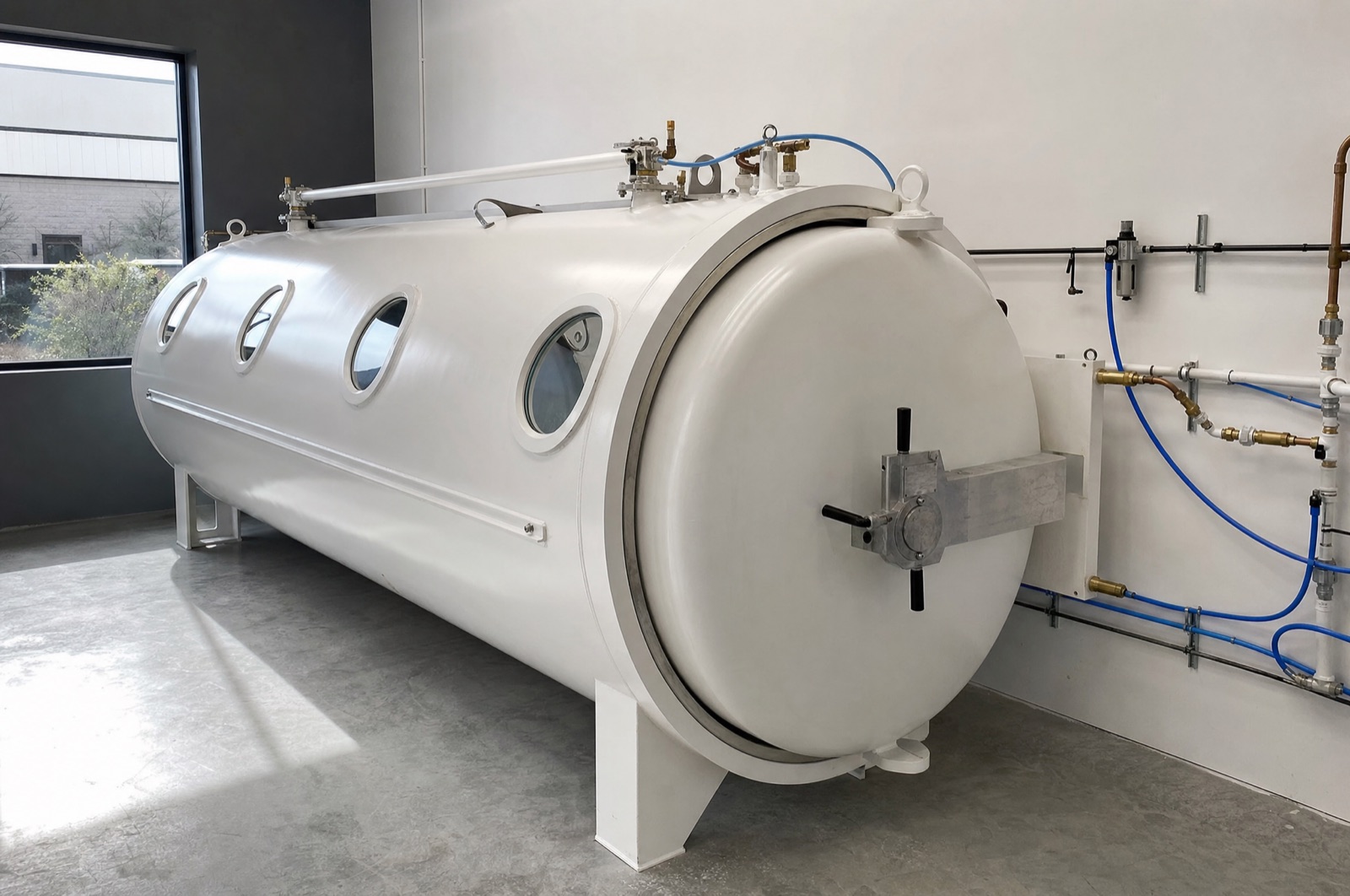
[ Multi-seat install ] Reference imagery; final photography in production
The ways people pay for a chamber
A chamber is paid for in one of five ways: cash, consumer credit, a business equipment loan, a lease, or an SBA backed loan. The first two are for people buying for the home. The last three are for clinics, studios and practices. Each one moves the same price into a different shape, and each one is governed by a different set of rules. What the chamber itself costs is in our cost guide and our price index. This page does not restate those numbers, and it does not quote rates, because we have not sourced any.
This page is general information, not tax or legal advice. The tax and lending rules below come from IRS, CFPB and SBA pages we read on 22 October 2026. Your own position depends on facts we cannot see, so take the contract and your return to a tax adviser or lawyer before you sign.
- Cash. No finance charge and no lender rules. A business that pays cash still owns the chamber and can still depreciate it.
- Consumer installment credit. A loan, a card or a payment plan for a personal purchase. Federal disclosure rules often apply.
- Equipment loan. A business borrows and owns the chamber from day one.
- Lease. The lessor owns the chamber during the term. What happens at the end depends on the lease type.
- SBA 7(a) or 504. A bank or development company lends with an SBA guaranty. Business use only.
Loans and leases: who owns the chamber
The first question for any deal is who owns the chamber while you pay for it. That answer decides who can depreciate it, whether the payment is rent, and which consumer rules apply.
With a loan, you own the chamber. IRS Publication 946 gives the example of a business that buys a van and will make payments over the next five years: you own the van and you can depreciate it. A chamber bought with an equipment loan follows the same logic.
With a true lease, you do not own it. Publication 946 says you can depreciate leased property only if you retain the incidents of ownership, and that if you lease property to use in your business you generally cannot depreciate its cost. You can depreciate capital improvements you make to it. IRS Publication 334, the tax guide for small business, describes the other side. Rent is any amount you pay for the use of property you do not own, and you can deduct it only if the property is used in your business. It then adds the line that matters for chamber leases: if you have or will receive equity in or title to the property, you cannot deduct the rent.
Lenders and accountants also use the words capital lease, finance lease and operating lease. Those are accounting labels. We did not open the accounting standard behind them, so this page sticks to the commercial law test and the IRS test, which we did read.
Fair market value and $1 buyout leases
The end of the lease is where the two common types split. A fair market value lease lets you return the chamber, renew, or buy it at what it is worth when the term ends. A $1 buyout lease, sometimes called a nominal purchase option, lets you take title for a token sum once the payments are made.
The Uniform Commercial Code draws the line. UCC section 1-203 says whether a transaction in the form of a lease creates a lease or a security interest is decided by the facts of each case. It then says a lease that the lessee cannot terminate creates a security interest if, among other tests, the lessee has an option to become the owner for no additional consideration or for nominal additional consideration. A security interest is the lender's claim in a sale on credit. In plain terms, a $1 buyout lease that you cannot cancel is treated as a sale on credit under that test.
The same section says what does not make a lease a sale on its own. A purchase option is not enough. Nor is the lessee paying taxes, insurance or maintenance, or bearing the risk of loss. An option to buy at a fixed price equal to or above the reasonably predictable fair market value is not enough either. Section 1-203(d) adds that a price stated to be the fair market value at the time the option is used is not nominal.
Two practical points follow. A chamber on a $1 buyout lease may be treated as yours for tax, which ties back to the Publication 334 line on equity and title. And a fair market value lease leaves you with a decision at the end, so ask in advance how the lessor will set that value and who pays to crate and ship the chamber back. Our guide to selling a used chamber covers crating and freight, and we found no published resale values.
SBA 7(a) and 504 loans for clinics
A clinic can use either main SBA program for equipment. The SBA does not lend directly. You apply through a lender, and the SBA guarantees part of the loan.
The 7(a) loans page lists purchasing and installing machinery and equipment as an eligible use. The maximum loan is $5 million. A business must operate for profit in the U.S., be small under SBA size rules, be creditworthy, and be unable to get the credit on reasonable terms from other sources other than government. The SBA's lender terms page says the term will be ten years or less, unless the loan finances equipment with a useful life over ten years. A loan for equipment may add up to 12 months to finish installation. The guaranty is up to 85% on loans of $150,000 or less and up to 75% above that. Rates are negotiated but may not exceed the SBA maximum.
The 504 loans page describes long-term, fixed rate financing for major fixed assets, up to $5.5 million. It covers long-term machinery and equipment with a remaining useful life of at least 10 years, and it cannot be used for working capital. A 504 loan goes through a Certified Development Company. Terms of 10, 20 and 25 years are listed. The lender terms page says a typical project has a private lender covering up to 50% of the cost, the development company up to 40%, and the borrower at least 10%.
The 10 year useful life test is the open point for a chamber. We did not find a published useful life for a hyperbaric chamber, so ask the lender how it will classify yours. For the revenue side of the decision, see our clinic guide.
Section 179 and bonus depreciation
A business that owns its chamber may be able to write off much of the cost in the first year. There are two routes, and both are set out by the IRS.
Section 179. Publication 946 (2025) sets the 2025 cap at $2,500,000, reduced by the amount by which section 179 property placed in service in the year costs more than $4,000,000. For 2026, Rev. Proc. 2025-32 sets the cap at $2,560,000, reduced once that cost passes $4,090,000. Publication 946 adds three limits that matter here. The property must be acquired by purchase. It must be used more than 50% for business in the year it is placed in service. And the deduction cannot exceed taxable income from the active conduct of a trade or business, with any excess carried to the next year. If business use later drops to 50% or less during the recovery period, you may have to recapture part of the deduction as ordinary income.
Example, with hypothetical round numbers: a business buys a chamber for $100,000 and uses it 80% for business. Publication 946 says to multiply the cost by the business use percentage, so the business cost for Section 179 is $80,000. That is the IRS formula applied to an invented price, not a quote.
Bonus depreciation. The IRS calls it the special depreciation allowance. An IRS release of 14 January 2026 describes a permanent 100% first year deduction for qualified property acquired after 19 January 2025, with an election to take 40% instead for the first tax year ending after that date. Publication 946 says property acquired before 20 January 2025 is limited to 40% when placed in service in 2025. Section 179 comes first, then the allowance, then regular depreciation.
A chamber on a true lease sits outside both routes for the lessee, because the lessee does not own it. That is often the trade being weighed: rent deducted as paid, or ownership with a large first year deduction. Which way suits a business is a question for its tax adviser.
Can an HSA or FSA pay for a chamber?
We could not confirm that a home chamber qualifies, and the IRS pages we read do not settle it. The answer turns on whether the purchase is medical care.
IRS Publication 502 defines medical expenses as the costs of diagnosis, cure, mitigation, treatment or prevention of disease, including equipment needed for those purposes. It says medical care expenses must be primarily to alleviate or prevent a physical or mental disability or illness, and do not include expenses that are merely beneficial to general health. Its capital expenses entry covers special equipment installed in a home if its main purpose is medical care, and the costs of running and keeping it up on the same test. Its oxygen entry covers oxygen and oxygen equipment to relieve breathing problems caused by a medical condition. Publication 502 has no entry for hyperbaric chambers.
IRS Publication 969 covers the accounts. HSA qualified medical expenses are amounts paid for medical care as defined in Code section 213(d), and only expenses incurred after the HSA was set up count. Money taken out for anything else is taxed and may face an additional 20% tax. You must keep records showing the money paid qualified medical expenses. A health FSA must be shown a written statement from an independent third party that the expense was incurred and its amount, and an FSA cannot reimburse future or projected expenses. Rev. Proc. 2025-32 puts the 2026 health FSA salary reduction limit at $3,400.
Many plan administrators ask for a letter of medical necessity from a doctor. The IRS pages we read do not use that phrase, so we cannot tell you what a letter must say or whether one is enough. Ask your administrator in writing before you buy. A payer's view is a separate matter: our insurance and CPT codes guide sets out what Medicare and one large insurer say about chamber treatment. Publication 502 also warns that if you deduct medical equipment and sell it later, you may have a taxable gain.
Truth in Lending and Regulation M
A personal purchase on credit usually comes with federal disclosures. A business deal usually does not.
For a closed-end consumer loan, Regulation Z section 1026.18 requires the creditor to disclose the amount financed, the finance charge (the dollar amount the credit will cost you), the annual percentage rate, the payment schedule, the total of payments, and whether a prepayment penalty applies. Two exemptions in section 1026.3 matter for chambers. Credit primarily for a business purpose is exempt. So is credit above the annual threshold, unless it is secured by real property or by personal property used as the consumer's principal dwelling. For 2026 that threshold is $73,400. Some chambers in our price index list above that figure and some below, so check where yours falls.
For a personal lease, Regulation M applies. A consumer lease is a lease of personal property by a natural person primarily for personal, family or household purposes, for more than four months, with a total contractual obligation at or below the threshold, which is also $73,400 for 2026. Business leases are excluded, and so is a lease that counts as a credit sale under Regulation Z. Under section 1013.4, the lessor must disclose the amount due at signing, the payment schedule, the total of payments, the early termination conditions and charges, your maintenance duties, whether you have a purchase option, and the express warranties that apply to you. If a lessor quotes a percentage rate, it must say the rate may not measure the overall cost of financing the lease, and it may not call it an annual percentage rate. Our warranty guide covers what the published chamber warranties say.
Deferred interest and buy now, pay later
Read the word "no interest" slowly. The CFPB page on deferred interest says that if you have not paid off the balance by the end of the period, or are more than 60 days late on a minimum payment, you will be charged interest. It says the interest is usually figured on the balance you owed in each month since you first made the purchase. The CFPB page on medical credit cards and payment plans says interest on those cards is often deferred, that a low or zero percent APR could signal a deferred interest promotion, and that missed payments can show up on your credit report.
Short pay in four plans sit in a gap. The Regulation Z definition of creditor in section 1026.2 covers a person who regularly extends consumer credit that has a finance charge or is payable in more than four installments, not counting a down payment. On our reading, a plan of four or fewer payments with no finance charge does not meet that test. The CFPB issued an interpretive rule on buy now, pay later loans in May 2024, and its Federal Register notice of 12 May 2025 lists that rule among the guidance it withdrew. Treat a short plan as a contract to read, not a protected loan.
The structures side by side
The table sets out what each structure means for ownership, tax and federal disclosure. It has no rates or prices, because we have not sourced any.
| Structure | Who owns the chamber during payments | Business tax treatment | Federal consumer rule |
|---|---|---|---|
| Cash | You | Depreciation, Section 179 or bonus if eligible | None needed |
| Consumer installment loan | You | Personal use, no depreciation | Regulation Z, unless over $73,400 in 2026 |
| Deferred interest card or plan | You | Personal purchase | Regulation Z; interest back to purchase date if not paid in time |
| Pay in four, no fee | You | Personal purchase | Outside the Regulation Z creditor test on our reading |
| Business equipment loan | The business | Owner depreciates; Section 179 or bonus if eligible | Exempt as business credit |
| $1 buyout lease | Often treated as the lessee, a sale on credit | Depends on the facts; no rent deduction where you will receive title | Business: exempt. Personal: may be a credit sale under Regulation Z |
| Fair market value lease | The lessor | Rent deductible if used in business; lessee does not depreciate | Business: exempt. Personal: Regulation M up to $73,400 |
| SBA 7(a) | The business | Owner depreciates | Business credit |
| SBA 504 | The business | Owner depreciates | Business credit; equipment needs 10 years of remaining life |
Sources as linked above: IRS Publications 334 and 946, Rev. Proc. 2025-32, UCC section 1-203, Regulation Z sections 1026.2, 1026.3 and 1026.18, Regulation M sections 1013.2 and 1013.4, and SBA program pages, read 22 October 2026. Tax treatment depends on the facts of each deal.
What to ask a lender
Get each answer in writing, and compare offers on the same terms. The disclosure rules above tell you which numbers a consumer lender must already give you.
- Is this a loan or a lease, and if a lease, which type? Ask for the end of term options and the buyout price or how it will be set.
- What is the total of payments? Compare totals, not monthly figures.
- What is the APR, or for a lease, the full cost? A consumer lessor may not call its rate an APR.
- Is any interest deferred? If so, what date ends the promotion and what happens after a late payment.
- Is there a prepayment penalty or early termination charge? Get the method, not a summary.
- Who insures the chamber and who pays for service? Our operator liability insurance guide notes that a clinic should check whether a leased chamber is its property for cover.
- What lien or security interest will you file? And on what: the chamber alone or all business assets.
- Who pays freight, installation and removal? Our delivery and installation guide covers what those involve.
- Does the maker's warranty reach the lessee? Regulation M requires a personal lessor to identify the warranties that apply to you.
- For an SBA loan, what useful life will you assign the chamber? It sets the term and decides 504 eligibility.
Finance terms do not change what a chamber is. For how the brands we track score on what we can verify, see the scorecard, and for whether owning makes sense at all, see our worth it guide.
What we have not verified
We have not sourced any interest rate, lease rate, APR, fee or term from a chamber maker or lender, so this page quotes none. We did not find an IRS page that names hyperbaric chambers as medical care, or one that says what a letter of medical necessity must contain, so HSA and FSA eligibility for a home chamber is an open question. We did not open the accounting standard that defines finance and operating leases. We did not find a published useful life or recovery period for a chamber, which bears on the SBA 504 test and on depreciation. We did not check whether bonus depreciation applies to a used chamber, or any state rule on sales tax, usury or leasing. The Section 179 and threshold figures are for 2025 and 2026 and change each year. If you hold a lender's written terms for a chamber, the corrections page says how to send them.
Frequently asked
Can you lease a hyperbaric chamber?
Yes, leases exist, and the two common shapes are a fair market value lease and a $1 buyout lease. Under UCC section 1-203, a lease that cannot be cancelled and lets you become the owner for no or nominal extra payment is treated as a security interest, which works like a purchase on credit. A fair market value lease leaves ownership with the lessor. Ask for the lease type in writing.
Can a clinic deduct a hyperbaric chamber under Section 179?
A business that buys a chamber and uses it more than 50% for business can elect Section 179 under the rules in IRS Publication 946. Rev. Proc. 2025-32 sets the 2026 cap at $2,560,000, reduced dollar for dollar once section 179 property placed in service in the year passes $4,090,000. The deduction is also limited to business taxable income. A lessee under a true lease generally cannot depreciate the chamber. Ask a tax adviser before you sign.
Can I use my HSA or FSA to buy a hyperbaric chamber?
We could not confirm that you can. HSA and FSA money pays for medical care as defined in the tax code. IRS Publication 502 says medical care must be primarily to alleviate or prevent a disability or illness, not merely beneficial to general health, and it does not name hyperbaric chambers. A health FSA needs a third party statement that the expense was incurred. Ask your plan administrator in writing before you buy.
Do Truth in Lending rules cover chamber financing?
For a personal purchase, often yes. Regulation Z requires closed-end credit disclosures such as the annual percentage rate, finance charge, amount financed and total of payments. It does not apply to credit primarily for a business purpose, and in 2026 it does not apply to credit above $73,400 unless secured by real property or a principal dwelling. Regulation M covers personal leases over four months up to the same $73,400 threshold.
What is deferred interest on a chamber payment plan?
A promotion where no interest is charged if you pay the balance in full by a set date. The CFPB says that if you do not, or if you are more than 60 days late on a minimum payment, you are usually charged interest for each month on the balance you owed since the purchase. Its medical credit page warns that interest then accrues on the full amount charged.
Can a clinic use an SBA loan for a hyperbaric chamber?
SBA pages list machinery and equipment as an eligible use for both programs. A 7(a) loan can go up to $5 million, with a term of ten years or less unless the equipment has a useful life over ten years. A 504 loan, up to $5.5 million through a Certified Development Company, covers long-term equipment with a remaining useful life of at least 10 years. We did not find a published useful life for a chamber, so ask the lender how it will classify one.

Alex tests the machines himself, in clinics and studios on three continents. Every score comes from the same 27 public criteria, and no manufacturer has a say in them.
Six questions, and we'll match chamber, options, and install to your space and budget.