What Is a Wellness Chamber? Hyperbaric, Cryotherapy, Float, Sauna and Red Light Pods Compared
Researched and scored by Alex Evans. Last reviewed August 2026. Corrections are dated and public. See corrections
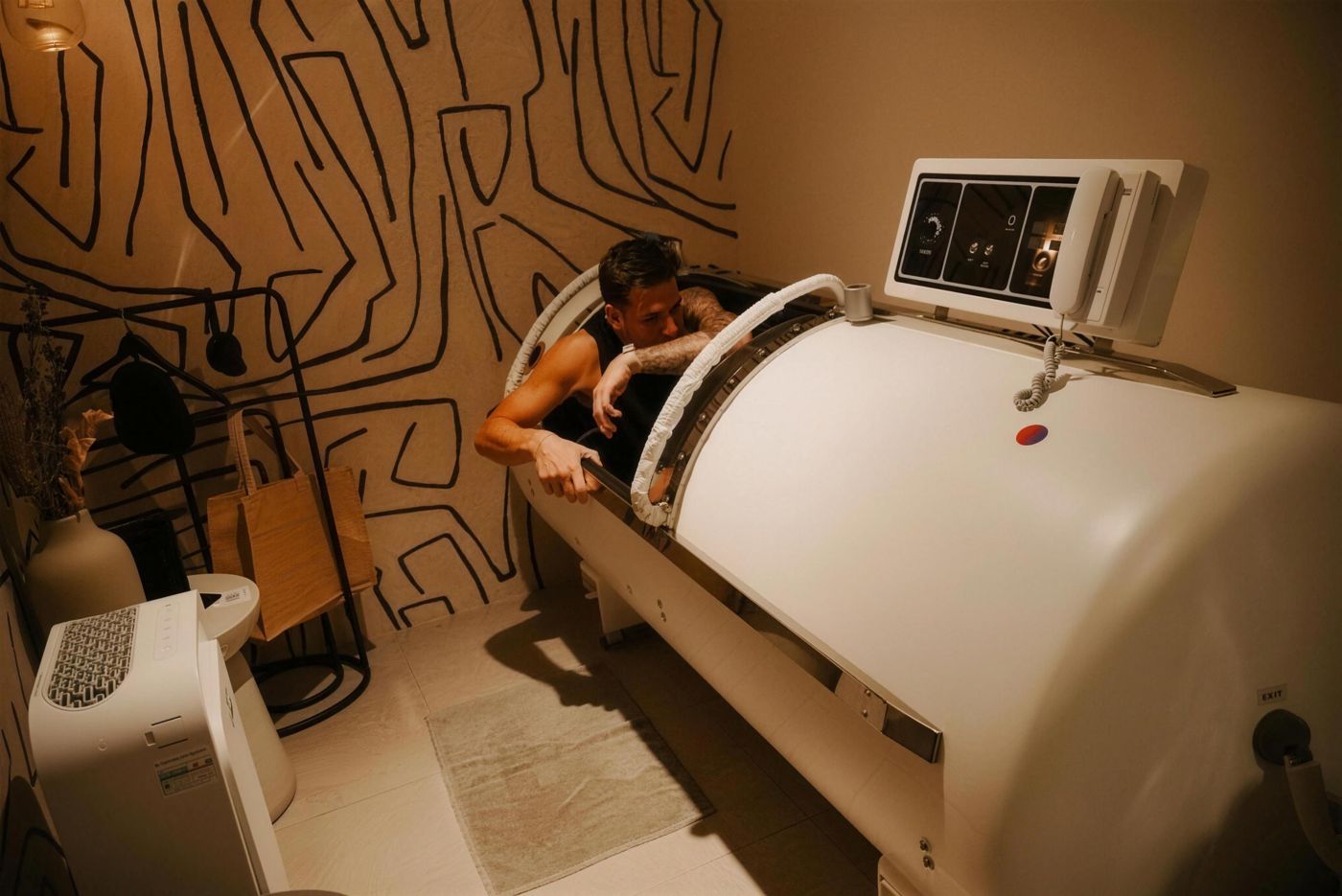
[ Hard-shell chambers ] Reference imagery; final photography in production
Search for a wellness chamber and you will find capsules, cabins, tanks and beds that look alike in photos and work in unrelated ways. This page sorts them by what each one physically does to the space around your body: pressure, cold, salt water, heat, light or extra oxygen. For each it gives how US regulators file the machine and which hazards public bodies have named. It makes no claim that any of them does anything for your health, and it does not rank brands or pick products.
A sales label, not a device type
No regulator we checked uses the phrase. We searched the FDA's device classification data through openFDA on 28 October 2026. Of the classification names containing the word chamber, the only one for a whole person to sit or lie in under pressure is Chamber, Hyperbaric. The word wellness appears in just two names, General Wellness Product and Oximeter, Wellness, and the first is marked in the data as being for imports only. No name covers a wellness chamber, a pod or a sauna. The term works as a shelf label. It groups machines by where they are sold, in studios, gyms and home wellness rooms, not by what they do.
That matters because the rules, the paperwork and the risks follow the machine, not the label. A pressure vessel has a federal device rule and a fire code. A float tank, in the places we checked, is treated as a pool. A sauna is mostly a consumer product until someone claims it treats a disease. The sections below take each machine in turn, and each one links to the longer comparison we have already published.
Hyperbaric chambers: pressure
A hyperbaric chamber is a sealed vessel that raises the air pressure around the whole body. The federal rule, 21 CFR 868.5470, identifies it as a device intended to increase the environmental oxygen pressure by means of pressurization greater than atmospheric pressure, and places it in Class II. The FDA's August 25, 2025 letter to health care providers says these devices are cleared through the 510(k) process under product code CBF, and describes hyperbaric oxygen therapy as breathing 100% oxygen in a special chamber.
Cleveland Clinic says a hospital chamber delivers oxygen at two to three times normal air pressure, and that sessions usually last one to two hours. The Undersea and Hyperbaric Medical Society defines medical hyperbaric oxygen as the whole body inside a hard-sided chamber at not less than 2.0 ATA, breathing medical grade oxygen prescribed by a physician. Home chambers run lower, and the UHMS position statement on low-pressure fabric chambers says fabric units operate below 1.4 ATA, are cleared for acute mountain sickness only, and are designed to be compressed with air only. Our guide to mild vs medical hyperbaric explains where that line sits.
Cryotherapy chambers: cold
A cryotherapy chamber holds the body in extreme cold for a few minutes. The most detailed regulator text we have read is from Bahrain's National Health Regulatory Authority, Annex 49 to its Resolution No. 2 of 2019. It describes a classic two-room cryochamber with a main room at about minus 120 degrees Celsius, the head inside, and a session of 3.5 minutes at most. It describes a cryosauna as a one-person enclosure open at the top, with the head outside and the body in cold nitrogen vapor that leaves near 0 percent oxygen inside.
The FDA has not given the cabin a category of its own that we could find. Reporting on the FDA's consumer update on whole body cryotherapy, HealthDay (republished by Medical Xpress, March 2017) quoted an FDA medical officer as saying consumers may wrongly believe the FDA has cleared or approved these devices as safe and effective to treat medical conditions, and that this is not the case. The only FDA classification name containing the word cryotherapy that openFDA returned to us was an ophthalmic cryotherapy unit, product code HQA, which is an eye surgery tool. Our page on hyperbaric vs cryotherapy chambers covers the two cryotherapy designs in detail.
Float tanks: salt water and darkness
A float tank takes input away instead of adding something. You lie on your back in shallow water so dense with Epsom salt, which is magnesium sulfate, that you float without effort, inside a pod or room that blocks light and sound. The Western Australia Department of Health's float tank guidelines describe typical commercial pods holding around 1,000 liters of water at around 30 to 40 percent salt by weight, heated to around 35 degrees Celsius. A 2024 trial in PLOS ONE from the Laureate Institute for Brain Research describes pools 0.28 meters deep, about 11 inches, with a specific gravity of about 1.26.
None of the float sources we read describes pressurizing the tank. In the places we checked, float tanks are regulated as pools. The Florida Department of Health states that Epsom salt float tanks fall under its jurisdiction as pools, and the Western Australia guidelines regulate commercial tanks as aquatic facilities. openFDA returned no classification name containing the word float when we searched. Our page on hyperbaric chamber vs isolation tank sets the two side by side.
Infrared saunas: heat
An infrared sauna heats the body at normal air pressure. In its guide to infrared saunas, Cleveland Clinic says they use infrared lamps or panels to make radiant heat that warms the body more directly than the air, with the cabin at about 110 to 135 degrees Fahrenheit. Northwestern Medicine says most people use one for 15 to 30 minutes a session.
The FDA has no sauna category that we found. The nearest rule is 21 CFR 890.5500, which covers an infrared lamp intended for medical purposes that emits energy at roughly 700 to 50,000 nanometers to provide topical heating. It is Class II, and an infrared therapeutic heating lamp is exempt from 510(k) within set limits. The FDA steps in on claims: in a July 2022 warning letter it told a Kansas seller that disease claims on its website made its far infrared sauna adulterated and misbranded. Our hyperbaric vs infrared sauna page covers the rest.
Red light beds and pods: light
A red light bed or pod is a shell lined with light-emitting diodes, or LEDs, that you lie in. The word photobiomodulation often appears alongside them, but when we searched openFDA on 28 October 2026, no FDA classification name and no 510(k) device name contained it. Light devices are filed under other names instead, chosen by the use the maker claims.
Two rules come up. The first is the infrared lamp rule, 21 CFR 890.5500, product code ILY, whose openFDA classification record names it Lamp, Infrared, Therapeutic Heating. A 2016 clearance for a professional LED bed, K153399, was filed under ILY. Its indications describe an over-the-counter device intended to emit energy in the visible and infrared spectrum to provide topical heating. The second is the code group FDA places under 21 CFR 878.4810, the rule for laser surgical instruments. Product code OHS, Light Based Over The Counter Wrinkle Reduction, is Class II and sits under that regulation, with 163 510(k) records in openFDA when we looked. The text of 878.4810 itself names carbon dioxide and argon lasers, so the code assignment comes from FDA's classification data, not from the wording of the rule.
A clearance covers the uses written in its own paperwork. A 2025 clearance for another LED bed, K252786, lists two product codes, OLI under 21 CFR 878.5400 and ILY, and two separate indications. Two beds that look alike can hold clearances for different things, or none. We do not review light beds, and this page does not weigh the research on them.
Oxygen bars and EWOT: enriched air at room pressure
Two products put extra oxygen in front of your face without a chamber. An oxygen bar runs oxygen from a concentrator, often scented, through a nasal tube for a few minutes. The FDA described bars in a November 2002 FDA Consumer article, reprinted on Quackwatch, which said oxygen given to a person for breathing by another person is a prescription drug, and that the FDA leaves enforcement of dispensing to state licensing boards.
EWOT, short for exercise with oxygen therapy, has a person breathe oxygen-enriched gas through a mask while exercising. The clearest technical description we found is a patent, US 11,717,634, which describes a concentrator making 93% oxygen at 10 liters per minute feeding a bag of about 900 liters. A patent is not an FDA decision. Both run at normal room pressure. The National Fire Protection Association's medical oxygen safety tip sheet says that if a fire starts in an oxygen-enriched area, the material burns more quickly. Our pages on hyperbaric chamber vs oxygen bar and HBOT vs EWOT cover each one.
Every machine side by side
The table puts the sourced facts on the same rows. Every cell comes from a source linked on this page or on the comparison page for that machine.
| Machine | What it changes around you | Typical session | US federal status we found | Main hazard named |
|---|---|---|---|---|
| Hyperbaric chamber | Air pressure, above 1.0 ATA; hospital units two to three times normal (Cleveland Clinic) | One to two hours (Cleveland Clinic) | Class II, 21 CFR 868.5470, cleared by 510(k), product code CBF | Fire, with oxygen at high concentration (FDA, 2025) |
| Cryotherapy chamber | Temperature, about minus 120 to minus 160 degrees Celsius; nitrogen vapor in a cryosauna (Bahrain annex) | 3.5 minutes at most (Bahrain annex) | No classification name found; FDA official said not cleared or approved for medical conditions (HealthDay) | Oxygen deficiency from nitrogen; frostbite, burns, eye injury |
| Float tank | Buoyancy, light and sound: shallow Epsom salt water near 35 degrees Celsius | Not set by the sources we read | No FDA classification found; treated as a pool in Florida | Germs passing between users in water not changed between them (Western Australia) |
| Infrared sauna | Heat, about 110 to 135 degrees Fahrenheit (Cleveland Clinic) | 15 to 30 minutes (Northwestern Medicine) | No sauna category; infrared lamps fall under 21 CFR 890.5500, Class II | Dehydration, overheating; heater fire (CPSC recall) |
| Red light bed or pod | Visible and infrared light from LEDs | Not set by the sources we read | Some beds cleared under ILY (890.5500) or other codes; no photobiomodulation category | Eye burns in one voluntary report on a face mask (FDA MAUDE) |
| Oxygen bar | Oxygen-enriched air by nasal tube, at room pressure | A few minutes to about 20 minutes (FDA Consumer) | Oxygen for breathing is a prescription drug; enforcement left to states (FDA Consumer) | Lipoid pneumonia from oily scents; fire near smoking |
| EWOT | Oxygen-enriched air by mask during exercise, at room pressure | Not set by the sources we read | No EWOT category found | Fire: oxygen-enriched areas burn more quickly (NFPA) |
Sources: 21 CFR 868.5470, 890.5500 and 880.5450; FDA letter to health care providers, August 25, 2025; Cleveland Clinic; UHMS; Bahrain National Health Regulatory Authority, Annex 49 (2019); HealthDay via Medical Xpress (2017); Western Australia Department of Health; Florida Department of Health; Northwestern Medicine; CPSC recall 26-784; FDA 510(k) summaries K153399 and K252786; FDA MAUDE; FDA Consumer (2002) via Quackwatch; openFDA, queried 28 October 2026.
What isolation chamber means
The phrase has two unrelated meanings. In wellness use, an isolation chamber is a float tank. The name goes back to John C. Lilly, whose first sensory deprivation tank a 2025 systematic review in BMC Complementary Medicine and Therapies dates to 1954. The same review describes chamber-REST, a dry version where a person lies on a bed in a dark, soundproof room with no water at all.
In FDA terms the phrase means a hospital enclosure. Under 21 CFR 880.5450, a patient care reverse isolation chamber is a roomlike enclosure designed to prevent the entry of harmful airborne material, for a patient being treated for burns or lacking normal immune defenses. It uses fans and air filters to keep clean air at a pressure greater than the air outside the enclosure, and it is Class II. That positive pressure is for keeping germs out. It is not a hyperbaric chamber, and none of the wellness pods on this page is one.
How US regulators file each machine
Only one of these machines has a federal device rule written for it by name. The rest are filed by the claim made for them, by the setting they sit in, or not at all.
- Hyperbaric chamber: a device under 21 CFR 868.5470, Class II, cleared through 510(k). The FDA letter of August 2025 points buyers to product code CBF.
- Cryotherapy chamber: no classification name we could find. The FDA's position, as HealthDay reported it, is that it has not cleared or approved these devices as safe and effective to treat medical conditions.
- Float tank: no FDA classification we could find. Local health departments treat commercial tanks as pools or aquatic facilities in the two places we checked.
- Infrared sauna: no sauna category. Infrared lamps sold for a medical purpose fall under 21 CFR 890.5500, and disease claims have drawn FDA warning letters.
- Red light bed: no photobiomodulation category. Individual beds hold 510(k) clearances under codes such as ILY, for the uses in each clearance.
- Oxygen bar: the oxygen, not the bar, is the regulated product. The FDA treats oxygen given to a person for breathing as a prescription drug.
A product that makes only general wellness claims may fall outside FDA premarket review. The FDA's general wellness guidance, reissued January 6, 2026, lists claims to promote relaxation or manage stress as general wellness claims for low-risk products, and says being covered by the policy does not show a product is safe or effective. It does not name any of these machines, and we have not seen the FDA say which of them fit it. For what a clearance proves, see our guide to FDA cleared vs FDA registered.
The hazards public bodies name
Each machine fails in its own way, so the safety questions differ.
- Hyperbaric: the 2025 FDA letter says there is a heightened risk of fire with oxygen at high concentration, that it knew of recent fires that caused serious injuries and deaths, and that it believes serious adverse events are rare. Our hyperbaric chamber safety guide covers the rules.
- Cryotherapy: the FDA, as HealthDay reported, named frostbite, burns and eye injury from the cold, and asphyxiation when liquid nitrogen is used. The Bahrain annex says one liter of liquid nitrogen evaporates into about 700 liters of gas.
- Float tank: the Western Australia guidelines say the salt water is not changed between users, so bacteria, amoeba and viruses can pass from one to the next. The salt kills most bacteria and amoeba, but viruses and some salt-tolerant bacteria may survive. The guidelines require an emergency alarm button in every tank and tell users not to put their face under water.
- Infrared sauna: Northwestern Medicine lists dehydration, dizziness and overheating. On September 17, 2026 the CPSC announced recall 26-784 of about 41,580 infrared saunas and kits whose panels can short circuit and overheat.
- Red light: we found no public body warning about full body LED beds. The closest record is a voluntary report in the FDA's MAUDE database, received in March 2020, in which a user of an LED face mask sold without goggles described flash burns to the eyes confirmed by an ophthalmologist. It is one person's account, about a mask, not an FDA finding.
- Oxygen bar: the 2002 FDA Consumer article named oily scents, which can cause lipoid pneumonia, as the FDA's biggest concern, and called smoking near oxygen extremely dangerous.
Which comparison to read next
Each machine on this page has a longer, sourced comparison against a hyperbaric chamber. Pick the one that matches the machine you are looking at.
- A cold cabin fed from a nitrogen tank: hyperbaric chamber vs cryotherapy chamber.
- A dark pod with salt water: hyperbaric chamber vs isolation tank.
- A heated wooden cabin with panels: hyperbaric chamber vs infrared sauna.
- A nasal tube at a counter: hyperbaric chamber vs oxygen bar.
- A mask on an exercise bike: HBOT vs EWOT.
- A soft or hard chamber sold for home use: mild vs medical hyperbaric.
Whatever the label, three questions sort most of these machines. What does it change around my body? What federal record covers it, and for what use? Who is watching while I am inside? If you are shopping for a pressure chamber to own, our hyperbaric chamber scorecard covers the models we track on the points we can verify. We do not review cryotherapy, float, sauna or light equipment.
What we have not verified
We could not open the FDA's whole body cryotherapy consumer update on fda.gov or an archived copy, so its date and wording come from HealthDay's 2017 report. We did not find an FDA page on photobiomodulation or on full body LED beds, and we found no public body hazard statement written for them; the eye injury record we cite concerns a face mask. Our openFDA searches matched device and classification names, so a machine sold under another name could be missed. We checked float tank rules in Florida and Western Australia only. We give no session prices for any machine, because we found none in a source we could check. If you hold a source that settles any of these points, send it and we will check it.
Frequently asked
Is a wellness chamber a medical device?
The phrase itself is not a device category. We did not find it in the FDA classification data we searched through openFDA on 28 October 2026. Some of the machines sold under that name are devices: a hyperbaric chamber is a Class II device under 21 CFR 868.5470, and some LED light beds have 510(k) clearances under the infrared lamp rule. We found no FDA classification name for a whole body cryotherapy cabin, a float tank or a sauna.
Is a hyperbaric chamber the same as a cryotherapy chamber?
No. A hyperbaric chamber is defined by pressure: the federal rule describes a device that pressurizes above atmospheric pressure. A cryotherapy chamber is defined by cold. Bahrain's National Health Regulatory Authority describes classic cryochambers at about minus 120 to minus 160 degrees Celsius, with sessions of about three minutes. Cleveland Clinic says hyperbaric sessions usually last one to two hours.
What is an isolation chamber?
In wellness use, it usually means a float tank, also called an isolation or sensory deprivation tank: a dark, quiet pod with shallow, heavily salted water. In FDA terms the phrase means something else. The FDA files a patient isolation chamber under 21 CFR 880.5450, a hospital enclosure with fans and filters that keeps harmful airborne material away from a patient. Neither one is a hyperbaric chamber.
Are red light therapy beds FDA cleared?
Some are, for specific uses. We found 510(k) records for LED beds, including one cleared in 2016 under the infrared lamp rule, 21 CFR 890.5500, as an over-the-counter device that gives off visible and infrared light to provide topical heating. A clearance covers the uses in its own paperwork. We found no FDA classification or 510(k) device name containing the word photobiomodulation.
Which wellness chamber uses oxygen?
Hyperbaric oxygen therapy uses 100% oxygen in a pressurized chamber, per the FDA and Cleveland Clinic, though many home chambers run on air. Oxygen bars and EWOT setups feed oxygen-enriched gas through a nasal tube or mask at normal room pressure. Cryotherapy, float tanks, saunas and light beds do not add oxygen. A nitrogen-cooled cryosauna does the reverse, lowering the oxygen inside the cabin.
Who regulates float tanks and saunas?
Mostly not the FDA, in what we found. The Florida Department of Health treats Epsom salt float tanks as pools, and Western Australia regulates commercial float tanks as aquatic facilities. For saunas, the FDA acts on disease claims, as in a 2022 warning letter, and the US Consumer Product Safety Commission recalls units with faulty heaters.

Alex tests the machines himself, in clinics and studios on three continents. Every score comes from the same 27 public criteria, and no manufacturer has a say in them.
Six questions, and we'll match chamber, options, and install to your space and budget.