Does a Hyperbaric Chamber Get Hot? Temperature During Compression Explained
Researched and scored by Alex Evans. Last reviewed August 2026. Corrections are dated and public. See corrections
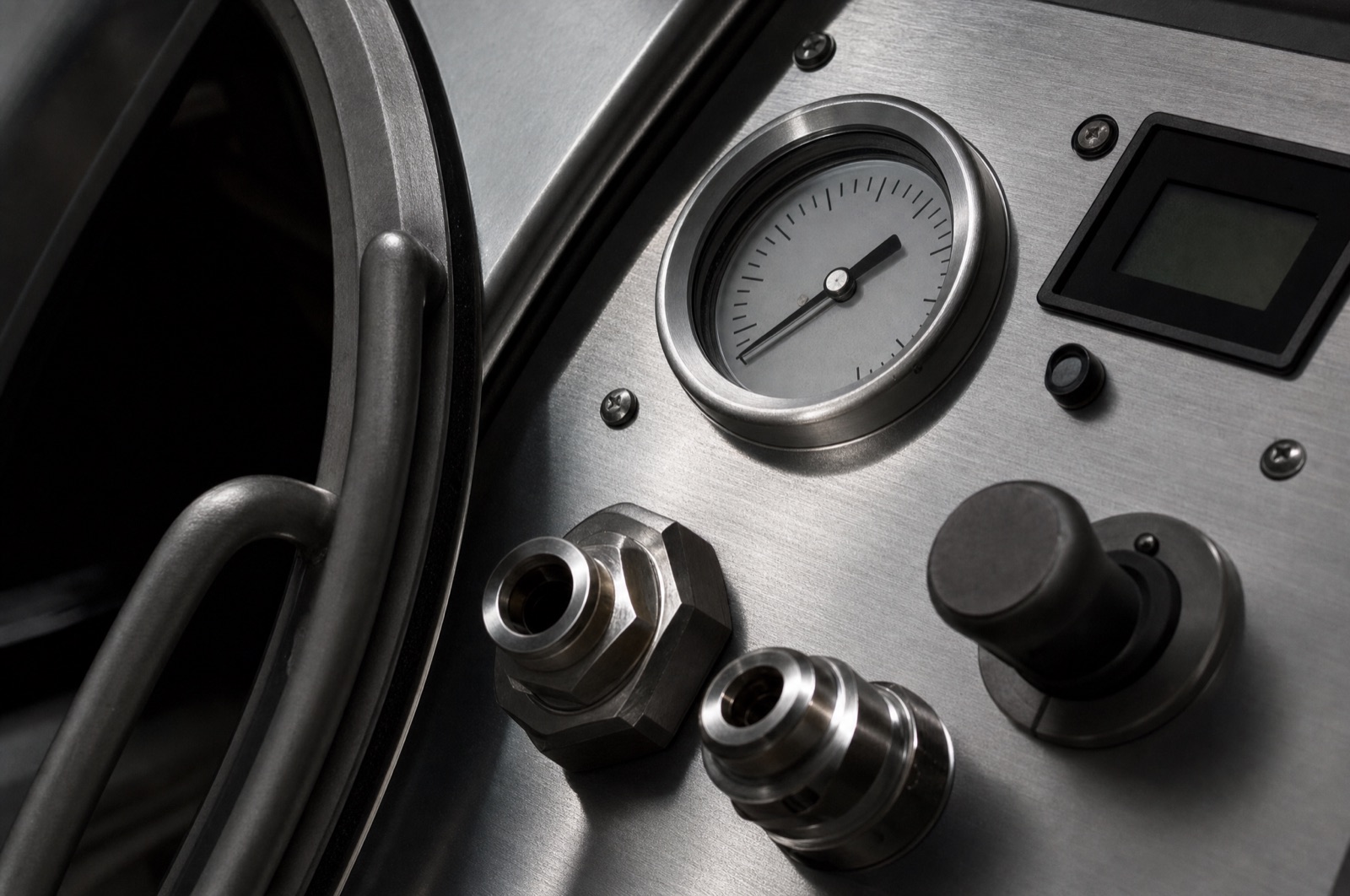
[ Chamber pressure gauge ] Reference imagery; final photography in production
A hyperbaric chamber warms up while it is pressurized and cools down while the pressure is let out. That is ordinary gas physics, and every hospital patient guide we read warns patients about it. This page explains why it happens, what hospitals and manuals say about it, what the fire and diving codes set as targets, and how chambers shed the heat. It makes no claim about health effects, and it does not rank brands.
Why compressing air warms it
Pushing air into a smaller space does work on it, and that work shows up as heat. NASA's Glenn Research Center explains this on its page on isentropic compression and expansion. It derives an equation in which the temperature rises with the pressure when no heat is allowed to leave the gas. For air, its worked example says that doubling the pressure multiplies the absolute temperature by about 1.219. The same equation run the other way describes expansion, where the pressure drops and the temperature falls with it.
That example is an upper bound, not a forecast for a chamber. The NASA case assumes no heat leaves the gas. A real chamber fills over minutes, and its walls, the room and the people inside all exchange heat with the air while it fills. Air is also flushed through the chamber during the session. So the physics tells you which way the temperature moves. It does not tell you how far it moves in any given chamber.
The diving and hyperbaric texts take the effect as given. The US Navy Diving Manual, Revision 7, chapter 17 (the copy hosted by the Undersea and Hyperbaric Medical Society) says that recompression chambers usually become hot and must be cooled continuously. The OxyHealth operating manual for portable mild chambers (revision 5, September 2005) states the reverse case plainly: reducing the pressure reduces air temperature.
What hospitals tell patients
Hospital patient guides describe three stages, and the temperature moves in each one.
Pressurizing. The Prince of Wales Hospital patient information from Sydney says the temperature in the chamber will increase as the pressure is increased. The Royal Brisbane and Women's Hospital booklet says it will seem warm at first while pressurized air enters the chamber. The University of Maryland Medical Center's inside the chamber guide says you will notice a hissing noise and an increase in air temperature as the air flows in.
At treatment pressure. Prince of Wales says the temperature settles once the correct pressure has been reached. Royal Brisbane says the temperature will adjust to a comfortable level. Maryland explains how: once the prescribed pressure is reached, the air is exchanged to cool the chamber, a step it calls a vent. It adds that if you feel too warm you should tell the chamber staff, and that vents are easy to do.
Decompression. Prince of Wales says the temperature will decrease as the pressure returns to normal at the end of treatment. Royal Brisbane says air leaves the chamber and the environment becomes colder. Maryland lists a cooling temperature along with ear popping and some noise. Our guide to what a hyperbaric session feels like walks through the same stages for the ears and the noise.
None of these guides gives a number for the swing. They describe it as noticeable and short, and they treat the warm stage as something staff can fix by venting.
How much warmer: the figures in print
We found three kinds of figures: limits set by codes and the Navy, and estimates printed in home chamber manuals. The table puts them together. They answer different questions, so read the right-hand column before comparing rows.
| Source | What it says about temperature | What it applies to |
|---|---|---|
| NFPA 99, 2015 edition, 14.2.4.3.2 | Comfortable for occupants, usually 22 °C ± 2 °C (75 °F ± 5 °F) | Multiplace (Class A) chambers not used as operating rooms |
| NFPA 99, 2015 edition, annex A.14.2.4.3.2 | As close to 22 °C as possible; below 29 °C (85 °F) during pressurization and above 19 °C (65 °F) during depressurization, if possible; relative humidity 50 to 70 percent at stable depth | Design and operation of Class A thermal control systems; advisory annex text |
| European Code of Good Practice, monoplace annex | Ideally 22 ± 2 °C with relative humidity of 50 to 70 percent | Monoplace chambers |
| US Navy Diving Manual, Table 17-5 | Under 85 °F (29 °C): no time limit. 85 to 94 °F: 6 hours. 95 to 104 °F: 2 hours. Over 104 °F (40 °C): intolerable | Maximum exposure times in Navy recompression chambers |
| Oxynova user manual (2021) | Inside can be 5 to 10 °C higher than outside, especially during compression | Oxynova soft chambers |
| OxyHealth manual (2005) | Pressure changes raise the inside temperature by about 3 to 5 °F | OxyHealth portable mild chambers |
Sources: NFPA 99 (2015) Chapter 14 as reproduced in a Baromedical training handout; European Code of Good Practice for Hyperbaric Oxygen Therapy, monoplace annex, posted by Diving and Hyperbaric Medicine; US Navy Diving Manual Revision 7, chapter 17; Oxynova user manual (2021); OxyHealth operating manual, revision 5 (2005).
The two manual figures disagree by a wide margin. Five to ten degrees Celsius is nine to eighteen degrees Fahrenheit, several times the OxyHealth estimate. Neither manual says how the number was measured, what the room temperature was, or whether anyone was inside. We treat both as the maker's own rough guide.
Temperature and humidity targets for chambers
The US fire code for hyperbaric facilities is NFPA 99, chapter 14. NFPA does not publish the full text free, so we read the 2015 edition reproduced with NFPA permission in a Baromedical training handout. It sorts chambers into Class A (human, multiple occupancy) and Class B (human, single occupancy). Our NFPA 99 guide covers the rest of the chapter.
For Class A chambers, section 14.2.4.3.1 permits warming or cooling the air by circulating it past coils that carry a constant flow of warm or cool water or a water and glycol mix. Section 14.2.4.3.2 says chambers not used as operating rooms shall keep a temperature comfortable for the occupants, usually 22 °C plus or minus 2 °C. The annex note to that section goes further. It asks designers to keep the air below 29 °C (85 °F) during pressurization and above 19 °C (65 °F) during depressurization, if possible, and says the air handling should hold relative humidity between 50 and 70 percent during stable depth operations. The annex uses should, not shall, and adds if possible to both temperature limits.
The Class B rules we read are about heat sources, not air temperature. Section 14.2.8.6.3 says no material in a Class B chamber may exceed 50 °C (122 °F), and no electrical circuit inside may operate above that temperature. Section 14.2.8.3.12 sets an 85 °C (185 °F) cap on the operating surface temperature of electrical equipment installed or used in a Class A chamber.
Europe has a similar target for single-person chambers. An annex on monoplace chambers to the European Code of Good Practice for Hyperbaric Oxygen Therapy, posted by the journal Diving and Hyperbaric Medicine, says chambers should ideally be kept at 22 ± 2 °C and 50 to 70 percent relative humidity. It links humidity and temperature to static electricity as well as comfort, and says rooms that house monoplace chambers should have air conditioning.
The Navy sets limits by time. Its manual says a chamber temperature below 85 °F (29 °C) is always desirable. It says never to commit to a treatment that would expose occupants to a longer time at a higher temperature than its Table 17-5 allows, unless qualified medical staff weigh the heat stress first. It also says patient temperature should be monitored routinely. These are rules for Navy recompression of divers, not for home chambers. They are useful as a record of how seriously chamber heat is taken.
How chambers are cooled
There are two main methods in the sources we read: swap the air, or chill it.
Ventilation. The Navy manual says cooling can usually be done by ventilating the chamber, and that ventilation is the usual way to control oxygen, carbon dioxide and temperature together. It gives a rate of two actual cubic feet per minute for each resting occupant and four for each active one. Its note under Table 17-5 says venting or an installed chiller can keep the inside well below the outside temperature, and that ventilation causes temperature swings, so its limits should be read as averages. Hospital vents, as Maryland describes them, are the same idea.
Chillers and conditioning units. The Navy manual says a chamber with a heater and chiller unit can usually be held at a comfortable temperature in any outside weather. The NOAA Operating Standards for Hyperbaric Chambers (January 2017), which reprint Navy chamber chapters, describe modernized Navy chambers with an environment control system that regulates humidity and temperature, and list a heater/chiller unit in an equipment checklist. The NFPA coil method above is a version of the same thing.
Home chamber coolers. OxyHelp's FAQ says the temperature inside depends mostly on how long the compressor has been running and on your own body heat, and that for continuous use beyond an hour the optional cooler keeps the cabin comfortable. Its home chamber page lists cooling among the controls on the panel inside the capsule. The Oxynova manual describes an accessory it calls the Ice Pack air cooler. The compressed air passes through a long pipe inside a cooler filled with ice cubes and cold water before it enters the chamber.
Placement and shade. The Navy manual says chambers should always be shaded from direct sunlight. The home manuals ask for a cool room. Our space and power guide covers where the compressor, the concentrator and a cooler go, and the heat they add to the room.
Soft chambers and hard chambers
We found no study or test that measured the inside of a soft chamber and a hard chamber side by side. What we have are the makers' own instructions, and they point to the same causes in both.
In a soft chamber, the compressor runs for the whole session. The OxyHealth manual says the air exchange valves start moving air as soon as the compressor is on, and that the compressor should stay on throughout. The Oxynova user manual says the air pushed inside is warmer than the room for two reasons: heat generated by the compressor, and the higher pressure. It warns that leaving the transport straps on will overheat the compressor and the air inside the chamber.
Both soft chamber manuals tell you to pick the room with heat in mind. OxyHealth says to set up in an air-conditioned or well-ventilated room, since the inside will be a little warmer than the room, and to consider a spot near an air-conditioning vent. Oxynova advises a cool, well-ventilated place and gives an operating range of 15 to 30 °C ambient. If the chamber gets too warm, OxyHealth says to open the pressurization and depressurization valve slightly so the warm air cools as the pressure drops, then close it to resume. It also says a person may sweat heavily and the window may fog from heat, calls this uncommon, and says the chamber can then be depressurized so the person can get out.
Hard chambers vary more. OxyHelp lists an ambient range of 15 to 28 °C for its home capsule and sells a cooler. Steel hospital and Navy chambers can carry chillers and full conditioning systems. A hard chamber is not cooler by nature; whether it stays comfortable depends on the cooling fitted and the room it sits in. For the other differences, see our hard shell vs soft shell guide.
What to wear when the temperature swings
Hospitals dress patients for both ends of the swing with cotton and a blanket. Prince of Wales provides 100 percent cotton scrubs, 95 percent cotton socks and a blanket to take into the chamber. Royal Brisbane says patients are given specific cotton clothing to reduce the risk of fire. NFPA 99 (2015) permits garments of 100 percent cotton or a cotton and polyester blend in Class A chambers, and in Class B chambers a blend with no more than 50 percent polyester. It bars silk, wool and synthetic textiles in both classes, with narrow exceptions the physician in charge can approve.
Those rules take the warmest layers off the table. A wool sweater or a fleece is out in a hospital chamber, so the blanket is how you stay warm during decompression. If you run hot, light cotton and a request for a vent are the options the hospital guides describe. Our guide to what to wear in a hyperbaric chamber lists what each hospital provides and what home manuals ask for.
Why you cannot bring a fan or a heat pack
Anything that makes heat is an ignition risk in a chamber, and the codes say so by name. NFPA 99 (2015), section 14.3.1.5.1.2, prohibits personal warming devices inside the chamber, giving therapeutic chemical heating pads, hand warmers and pocket warmers as examples. The same list bans cell phones and pagers, sparking toys and personal entertainment devices. The Oxynova manual lists hand warmers among things never to take into its chamber, and says laptops and other electronic devices are not advised because of fire hazards.
We found no source that names a personal fan. A battery fan is an electrical device, though, and the NFPA rules above limit what electrical equipment can be in a chamber and how hot it may run. The Mount Carmel patient handout bars electronic devices and any products containing batteries, and lists hand warmers separately. Our hyperbaric chamber safety guide covers the wider prohibited list. We would treat a fan as not allowed unless the unit or the maker says otherwise in writing. Cooling in a chamber comes from the vent or the cooler, not from something you carry in.
Questions to ask before a session or a purchase
- Clinic: how is the chamber cooled, by venting, a chiller or both?
- Clinic: can I ask for a vent if I get warm, and do you provide a blanket?
- Clinic: what temperature and humidity does the chamber run at, and is it monitored?
- Home chamber: what ambient range does the manual give, and what happens outside it?
- Home chamber: is a cooler included or optional, how does it work, and where does it sit?
- Home chamber: does the manual give a figure for how much warmer the inside gets?
If you are comparing chambers to buy, our hyperbaric chamber scorecard covers the models we track on the points we can verify.
What we have not verified
We have not measured the temperature inside any chamber. The two home figures come from the makers' manuals, which do not say how they were taken, and they disagree. We read the 2015 edition of NFPA 99 in a reproduction, not the current 2024 edition, so the section numbers and wording may have changed. We did not find a temperature or humidity target in that text for Class B chambers. The European figures come from one annex posted by a journal, and we have not confirmed which revision of the code it belongs to. The Navy limits are for its recompression chambers and we do not know how civilian clinics apply them. OxyHelp's FAQ calls its cooler optional in one answer and says each chamber needs a cooling unit in another, and we have not asked which applies to which model. We found nothing from a maker or a lab that compares heat in soft and hard chambers, and nothing on whether a personal fan is ever allowed inside.
Frequently asked
Does a hyperbaric chamber get hot?
It gets warmer while the pressure goes up. Prince of Wales Hospital in Sydney tells patients the temperature increases as the pressure is increased and settles once treatment pressure is reached. The US Navy Diving Manual says recompression chambers usually become hot and must be cooled continuously. Hospitals cool the air by venting, and some chambers have a chiller.
Why does the chamber get cold at the end of a session?
Air cools when it expands. During decompression the pressure is let out, and Royal Brisbane and Women's Hospital tells patients the environment becomes colder as air leaves the chamber. The OxyHealth soft chamber manual says the same thing from the other side: reducing the pressure reduces air temperature.
How much warmer is a home chamber than the room?
The two home manuals we read give different figures. The Oxynova user manual (2021) says the inside can be 5 to 10 degrees Celsius higher than outside, especially during compression. The OxyHealth manual (2005) says pressure changes raise the inside temperature by about 3 to 5 degrees Fahrenheit. Neither manual says how the figure was measured.
What temperature should a hyperbaric chamber be kept at?
NFPA 99, in the 2015 edition reproduced by Baromedical, says multiplace (Class A) chambers should be kept comfortable, usually 22 degrees Celsius plus or minus 2. Its explanatory annex suggests staying below 29 degrees Celsius (85 F) during pressurization and above 19 degrees Celsius (65 F) during depressurization, if possible, with relative humidity of 50 to 70 percent at stable depth.
Can I bring a hand warmer or a small fan into the chamber?
Not a hand warmer. NFPA 99 (2015) lists personal warming devices such as chemical heating pads, hand warmers and pocket warmers among items prohibited inside the chamber, and the Oxynova home manual lists hand warmers too. We found no source that allows a personal fan inside. Ask for a blanket from the unit, or ask the operator to vent the chamber.
Is a soft chamber hotter than a hard chamber?
We found no measurement that compares the two. The soft chamber manuals we read say the inside runs warmer than the room and advise a cool, air-conditioned or well-ventilated room. Hard chambers can carry a cooling unit: OxyHelp sells a cooler for its aluminium capsules, and the Navy manual describes heater and chiller units on steel recompression chambers.

Alex tests the machines himself, in clinics and studios on three continents. Every score comes from the same 27 public criteria, and no manufacturer has a say in them.
Six questions, and we'll match chamber, options, and install to your space and budget.