What to Wear in a Hyperbaric Chamber, and What Has to Stay Outside
Researched and scored by Alex Evans. Last reviewed August 2026. Corrections are dated and public. See corrections
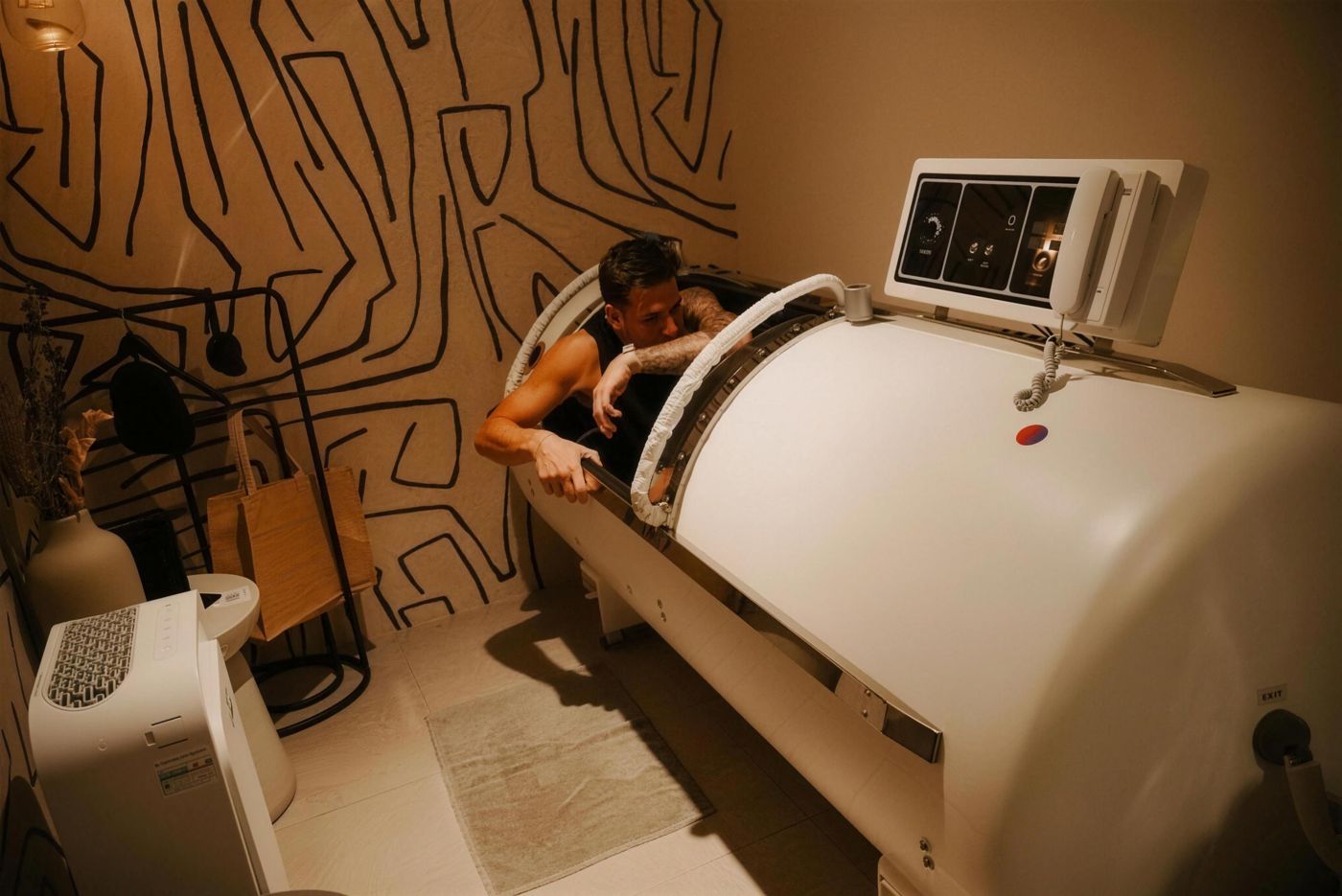
[ Hard-shell chambers ] Reference imagery; final photography in production
This page is the patient checklist. It uses the patient guides of twelve hospitals and health systems, one hospital fire safety page, the FDA's 2025 letter to providers, and four documents written for home and mild chambers. For each item it gives what the sources say and the reason they give, and says so when they give none. The engineering behind the rules sits in our hyperbaric chamber safety guide and our NFPA 99 fire safety guide, and we do not repeat them here. Nothing on this page is a claim about what treatment does.
What hospitals give you to wear
Hospitals issue the clothing, and most ask you to wear nothing else. The Covenant Health patient guide says you will be given a special gown made of 100% cotton to reduce the risk of fire, and asks you not to wear any other clothing into the chamber without checking with the therapist. It names nylons and synthetic clothing as things you may not wear. Dartmouth Health goes furthest: wear only the cotton hospital gown it provides, with no underwear or socks, and use only its cotton linens.
Others issue a different set. The Mount Carmel patient sheet (Columbus, Ohio, October 2019) asks you to change into scrubs. Nova Scotia Health (QEII, Halifax, August 2022) gives special clothing and footwear for its chamber. UCHealth gives a gown or cotton clothing. Beverly Hospital gives a cotton gown and says that for safety reasons no other clothing may be worn inside. The Cedars-Sinai health library says you will likely wear a 100% cotton gown, and lists clothing that is not 100% cotton or a cotton blend as restricted.
The practical upshot is simple. Come in clothes you are happy to take off, and expect a locker. UCHealth says lockers are available and asks you not to bring valuables.
Why cotton, and why cotton is not the whole answer
Hospitals choose cotton for static and for burns. UCHealth says cotton reduces the potential for static electricity. Dartmouth's guide for inpatient nurses says only its 100% cotton gown and linen can be worn, to reduce the build-up of static electricity, and that no personal clothing is allowed. The University of Iowa Health Care fire safety page gives two reasons: 100% cotton garments minimize the chance of a static spark, and they do not release toxic fumes or melt onto skin if exposed to fire. The FDA's 2025 letter to providers, covered in our safety guide, asks for cotton too and says wool and synthetics can produce more static.
Cotton does not settle the question on its own. The same FDA letter tells providers to use proper grounding as well, and says some items may need extra grounding. So the gown works alongside grounding, not in place of it. If a hospital clips a grounding strap to your wrist, that is part of what you wear. Our safety guide covers how grounding is set up.
Skin, hair and face products
Hospitals ban these because they burn. University of Iowa Health Care puts grease, oil and other petroleum products under fuel, as highly flammable materials, and says cosmetics and hair sprays are prohibited. Covenant Health says you will be asked to remove anything with oil in it, and lists lipstick, makeup, hair oil, cream, hair spray, nail polish, ointments, cologne or perfume, liniments and deodorant. Cedars-Sinai says items are restricted because the chamber is filled with 100% oxygen and there is a risk of fire.
The lists are long and close to each other. Mount Carmel bars alcohol products, hairspray and hair products, makeup, lipstick, perfume, deodorant, aftershave, lotions and glycerin, along with petroleum or glycerin products such as creams, oils, Vaseline-based products and certain wound ointments and dressings. The Hamad Medical Corporation prohibited items sheet (2021) groups oils and grease (makeup, lipstick, sunscreen, lotion, cream, hair oils), petroleum-based products, and alcohol-based products (hair spray, deodorant, body spray, nail polish, hair gel). UCHealth adds shaving cream. Dartmouth names lip balm and hair relaxers. Nova Scotia Health asks you to arrive with clean, product-free hair.
Timing matters at two units. Dartmouth asks for no lotions, creams, oils or deodorant in the 12 hours before treatment, says you can apply them afterwards, and wants nail polish or gels to be at least 12 hours old. Its nurse guide says lotions, deodorants, powders, cosmetics, perfumes and hair-care products should not be applied before treatment, and that bath wipes without alcohol may be used. So skip the products before you go, and bring them to put on after.
Metal, electronics and anything that makes heat
Electronics and heat sources are banned as ignition sources. University of Iowa Health Care says any source of flame or spark is not allowed, including lighters, smoking materials, hand warmers and any non-approved electronic devices. Dartmouth says that because the chamber is pressurized with 100% oxygen, it allows no items inside, naming anything that may create heat, fire or sparks, hand warmers, ear buds, phones, computers and tablets. UCHealth bars all air- or chemically-activated heat wraps. Mount Carmel bars hand warmers and any products containing batteries. Nova Scotia Health adds vapes and e-cigarettes, and knitting.
Jewelry and watches appear on nearly every list, but few say why. Covenant Health lists jewellery, watches and metal objects. Nova Scotia Health bans watches and jewelry that hangs, so its rule is narrower than most. Mount Carmel lists ID emergency bracelets with the rest of the jewelry, so tell staff if you wear one for a medical reason. Beverly Hospital lists metallic coins and keys. The pages we read put jewelry under general safety or fire headings and give no item-level reason.
Hearing aids, glasses, contact lenses and dentures
Hearing aids come out at every hospital that mentions them. Covenant, Nova Scotia Health, Mount Carmel, Dartmouth, Hamad, Beverly and Hoag all list them. Mount Carmel puts them in the same line as electronic devices and products containing batteries. Dartmouth's nurse guide says to send inpatients down with their hearing aids anyway, and staff remove them before treatment.
Contact lenses split the lists. Nova Scotia Health says hard contact lenses come out and soft lenses are OK, and Dartmouth's nurse guide says the same. Covenant Health says to remove contact lenses, without saying which kind, and Tower Health asks patients not to wear contact lenses. Beverly Hospital tells you to ask your hyperbaric doctor, and Hoag your chamber technician. None of the pages we fetched explains the hard lens rule. Bring your lens case and glasses either way.
Glasses depend on the frame. Dartmouth says no eyeglasses, unless you need them to see the TV and staff can confirm they contain no titanium. Beverly Hospital lists metallic or titanium eyeglass frames among banned items. UCHealth says you may be asked to remove contact lenses and eyeglasses. No page we read says why titanium is singled out.
Dentures are handled differently again. UCHealth says dentures and partial plates will be removed. Hamad lists dentures as not allowed. Tower Health lists loose fitting dentures, and says you cannot have anything in your mouth, such as gum, loose dentures or candy, during treatment. Wigs and hairpieces are banned at Dartmouth, Tower, Beverly, Hoag, Hamad (which adds hair extensions) and Royal Brisbane; none gives an item-level reason.
Patches, dressings and medical devices
Things stuck to your skin need a conversation with staff. Dartmouth's nurse guide says medication patches cannot be worn in the chamber and application timing may need to be adjusted. Mount Carmel lists all medication patches among medications to avoid during therapy, under a heading that says oxygen may change the effects of certain medications. Mount Carmel also bars adhesives and Velcro. We found no hospital page we could fetch that names nicotine patches on their own, so treat any patch as something to raise before your first session.
Dressings are checked, not banned outright. Dartmouth's nurse guide says many dressings, topical wound products and packing materials are not appropriate for the chamber, and asks nurses to discuss every product with the hyperbaric staff. Hamad says certain materials are potential hazards, naming betadine solution with alcohol, betadine ointment, iodine and hydrogels.
Medical devices are reviewed one by one. The GBMC FAQ asks you to tell the team about any devices or implants so it can decide whether they can safely be pressurized, and says blood glucose monitors and insulin pumps are not permitted. Cedars-Sinai lists insulin pumps and ostomy bags among restricted items. Dartmouth's nurse guide says colostomy bags can go in, wound vac pumps are disconnected, and Foley catheter balloons must be filled with fluid, not air. Those answers differ, so bring a list of everything you wear or carry for a medical reason.
Item by item: what hospitals say and why
The table sets each item against the hospital rules and the reason the source gives in its own words. Where no reason is given, the table says so.
| Item | What hospitals say | Stated reason | Sources |
|---|---|---|---|
| Your own clothes | Replaced by an issued cotton gown or scrubs; Dartmouth allows no underwear or socks | Cotton reduces fire risk (Covenant), static (UCHealth, Dartmouth) and does not melt or give off toxic fumes (Iowa) | Covenant, Dartmouth, Mount Carmel, UCHealth, Beverly, Cedars-Sinai, Iowa |
| Synthetics, nylons, wool, silk | Not allowed | Flammable fabrics (Hamad) | Covenant, Nova Scotia, Hamad, Dartmouth |
| Lotions, creams, oils, petroleum jelly | Not allowed; Dartmouth: none for 12 hours before | Fuel, highly flammable (Iowa); oil-based items removed (Covenant) | Iowa, Covenant, Mount Carmel, Hamad, Nova Scotia, Dartmouth |
| Makeup, lipstick, perfume, aftershave | Not allowed | Cosmetics prohibited as fuel (Iowa); risk of fire (Cedars-Sinai) | Iowa, Covenant, Mount Carmel, Tower, Hoag, Hamad |
| Hair spray, gel, hair oil | Not allowed; Nova Scotia: come with product-free hair | Hair sprays prohibited as fuel (Iowa) | Iowa, Covenant, Nova Scotia, Dartmouth, Hamad |
| Deodorant | Not allowed at most; Royal Brisbane permits it in its multiplace | Alcohol-based product (Hamad); oil-based item (Covenant) | Covenant, Dartmouth, Mount Carmel, UCHealth, Tower, Hamad |
| Nail polish | Not allowed, or at least 12 hours old (Dartmouth) | Alcohol-based product (Hamad) | Dartmouth, Covenant, Tower, Beverly, Hamad |
| Hand warmers, heat wraps | Not allowed | Source of flame or spark (Iowa); heat, fire or sparks in 100% oxygen (Dartmouth) | Iowa, Dartmouth, UCHealth, Mount Carmel |
| Phones and battery devices | Not allowed | Ignition source (Iowa) | Iowa, Dartmouth, Mount Carmel, Nova Scotia, Hamad |
| Jewelry, watches | Removed; Nova Scotia bans only jewelry that hangs | Not stated item by item | Covenant, Mount Carmel, Nova Scotia, Tower, Dartmouth |
| Hearing aids | Removed | Grouped with battery devices (Mount Carmel); otherwise not stated | Covenant, Nova Scotia, Mount Carmel, Dartmouth, Hamad, Beverly, Hoag |
| Contact lenses | Hard lenses out; soft lenses OK at Nova Scotia and Dartmouth; all lenses out at Tower | Not stated | Nova Scotia, Dartmouth, Covenant, Tower, Hamad |
| Glasses | Only without titanium (Dartmouth); metal or titanium frames banned (Beverly, GBMC) | Not stated | Dartmouth, Beverly, GBMC, UCHealth |
| Dentures | Removed (UCHealth, Hamad); loose dentures out (Tower) | Nothing in the mouth during treatment (Tower) | UCHealth, Hamad, Tower |
| Wigs, hairpieces | Not allowed | Not stated item by item | Dartmouth, Tower, Beverly, Hoag, Hamad |
| Medication patches | Not worn; timing adjusted (Dartmouth) | Oxygen may change the effects of some medications (Mount Carmel) | Dartmouth nurse guide, Mount Carmel |
| Paper, books | Banned at Dartmouth, Hamad, GBMC; a book allowed at Nova Scotia | Paper is fuel; amount minimized (Iowa) | Dartmouth, Hamad, GBMC, Nova Scotia, Iowa |
Sources: patient pages and guides of Covenant Health, Dartmouth Health (patient page and nurse guide), Mount Carmel, Nova Scotia Health, UCHealth, Beverly Hospital, Cedars-Sinai, Hamad Medical Corporation, Tower Health, Hoag and GBMC; University of Iowa Health Care fire safety page. All linked above, read 23 October 2026.
Where hospital lists disagree
The lists disagree where the chamber differs, so your unit's list is the one that counts. Paper is the clearest case. Covenant, whose guide describes a clear plastic cylinder and names fire as the biggest risk because of the 100% oxygen, bans anything paper. Nova Scotia Health, where a therapist or nurse stays in the chamber and oxygen comes by mask or hood, lets you bring a book or magazine. Iowa, which compresses its chamber with air and gives oxygen by hood, says it keeps paper and cloth to a minimum. Our monoplace vs multiplace guide explains the two chamber types.
Deodorant is the other split. The Royal Brisbane and Women's Hospital booklet, which bans creams and lotions, permits deodorant in its multiplace chamber. Dartmouth, Mount Carmel, UCHealth and Tower ban it. Underwear splits too: Dartmouth allows none, while Covenant only asks you to check with the therapist before wearing anything else. GBMC sums up the hospital position: only approved items go inside, with a safety screening before each treatment. Mount Carmel says a staff member will check you for banned items before treatment.
What home chamber manuals say
Home and mild chamber documents ask for less than hospitals, and they differ from each other. We read four that are published online. Each is named here only as the source of the text.
The OxyHealth operating and reference guide (Revision 5, September 2005) says the person may go into the chamber fully clothed in loose clothing, and that a treatment gown or shorts and a tee shirt work well. Women should remove nylon stockings. Shoes, jewelry and any sharp objects that could damage the chamber should come off. Disposable foot and hair covers may be used for sanitation. Its stated reason is damage to the chamber, not fire.
The Oxynova user manual (2021, hosted by a retailer) is the closest to a hospital list. It advises cotton underwear and no makeup or perfume. Before a session, it says to change clothing made of static-generating fabrics or synthetic fibers to 100% cotton or a known non-static fabric in order to avoid any spark, and to take off your shoes but keep your socks. Its list of things never to take in gives a reason for several items:
- Laptops and other electronic devices, due to fire hazards.
- Food, for sanitary reasons.
- Extension cords, since the zippers have to close completely.
- Balls or balloons, due to pressure changes.
- Sharp objects, watches or jewellery, hand warmers, lighters, matches, cigarettes and shoes.
- Anything containing oil, grease or alcohol.
The Flowlife Flowchamber Oxygen Elite brochure, which includes operating instructions, says to wear loose, comfortable clothing and remove shoes, jewellery and sharp objects. It says not to smoke, use open flames or run heat-producing devices in or near the chamber, and that oxygen-enriched environments significantly increase fire risk. It tells you to use a light blanket if needed but to avoid heavy clothing, because the air may feel warmer during pressurization. It describes oxygen at 1 to 10 L/min by headset or mask.
The CellRegen soft shell chamber user's guide we found gives no clothing rules. It says to keep the unit away from water and heat or flame sources. It describes an oxygen mask fed by a built-in concentrator at 10 L/min.
Oxygen is why these differences matter. The Oxynova manual says not to inflate its chamber with enriched or pure oxygen because fire or explosion may occur. Two of the four documents describe oxygen by mask inside the chamber. Our oxygen concentrator guide and mild vs medical hyperbaric guide cover how oxygen reaches the person in each setup. If you use a home chamber with oxygen, the hospital list above is the stricter reference, and your maker's current manual is the one that applies to your chamber.
A checklist for the day of a hospital session
The same few steps come up across the hospital sources. This is a summary of what they ask, not a rule from any one of them:
- Skip lotion, deodorant, makeup and hair products (Dartmouth: 12 hours before).
- Remove nail polish or make sure it is at least 12 hours old, if your unit allows it.
- Wear easy clothes to change out of, and leave jewelry and valuables at home.
- Bring your glasses and lens case, and ask before wearing contact lenses.
- List every patch, dressing, pump, monitor or implant and show it to staff.
- Expect a check for banned items before every session.
For what happens once the door closes, see what a hyperbaric session feels like and can you sleep in a hyperbaric chamber. For the chambers we track and what we can verify about each, see the scorecard.
What we have not verified
We could not reach the FDA's consumer page on hyperbaric oxygen therapy; it returned page not found, so nothing here comes from it. We could not fetch the Michigan Medicine patient guide or two clinic pages that search results said name nicotine patches and chemical heat pads, so we do not cite them. We found no source that explains why hard contact lenses, titanium frames, hearing aids or wigs are singled out, and we do not guess. Several hospital pages are undated; Mount Carmel's sheet is from 2019 and the OxyHealth guide from 2005, and either may have been replaced. The Oxynova manual is hosted by a retailer, and we did not confirm the CellRegen guide is the current version. We did not read a hard-shell home chamber manual. Rules differ by unit, and the list your own unit gives you overrides anything on this page.
Frequently asked
Can I wear my own clothes in a hyperbaric chamber?
In the hospitals we checked, usually not. Dartmouth Health allows only the cotton gown it provides, with no underwear or socks. Covenant Health gives a 100% cotton gown and asks you not to wear other clothing without checking with the therapist. Mount Carmel issues scrubs. Cedars-Sinai lists clothing that is not 100% cotton or a cotton blend as restricted. Home soft chamber manuals are looser: the OxyHealth guide says a person may go in fully clothed in loose clothing, and the Oxynova manual asks for 100% cotton or other non-static fabric.
Can I wear deodorant to hyperbaric oxygen therapy?
Most hospital lists we read say no. Dartmouth Health asks for no deodorant for 12 hours before treatment. Covenant Health, Mount Carmel, UCHealth, Tower Health and Cedars-Sinai all list it. Royal Brisbane and Women's Hospital is the exception: it permits deodorant in its multiplace chamber. Ask your own unit, because the answer depends on the chamber.
Can I wear contact lenses or glasses in a hyperbaric chamber?
It varies. Nova Scotia Health and Dartmouth Health ask you to remove hard lenses and say soft lenses are fine. Tower Health asks patients not to wear contact lenses at all. Hamad Medical Corporation lists contact lenses as not allowed. On glasses, Dartmouth allows them only if staff confirm they contain no titanium, and Beverly Hospital and GBMC list metal or titanium frames among banned items.
Why can't I wear a nicotine or medication patch in the chamber?
Dartmouth Health's guide for inpatient nurses says medication patches cannot be worn in the chamber and that timing may need to be adjusted. Mount Carmel lists all medication patches under medications to avoid during therapy, in a section that says oxygen may change the effects of certain medications. We found no hospital source we could fetch that names nicotine patches specifically, so ask your unit about yours.
Is a cotton gown enough to prevent a fire?
Hospitals use cotton because, as UCHealth and University of Iowa Health Care say, it reduces the chance of a static spark. The FDA's 2025 letter to providers asks for cotton and also tells providers to use proper grounding. Cotton is one control, not the only one.
Do home hyperbaric chambers have the same clothing rules as hospitals?
The home documents we read ask for less. The OxyHealth guide (2005) says to remove shoes, jewelry and sharp objects that could damage the chamber and women should remove nylon stockings. The Oxynova manual (2021) asks for cotton or non-static clothing and lists items never to take in, including hand warmers, electronics and anything with oil, grease or alcohol. The Flowlife document asks for loose, comfortable clothing. The CellRegen guide we read gives no clothing rules.

Alex tests the machines himself, in clinics and studios on three continents. Every score comes from the same 27 public criteria, and no manufacturer has a say in them.
Six questions, and we'll match chamber, options, and install to your space and budget.