Veterinary Hyperbaric Chambers: How Chambers for Animals Differ
Researched and scored by Alex Evans. Last reviewed August 2026. Corrections are dated and public. See corrections
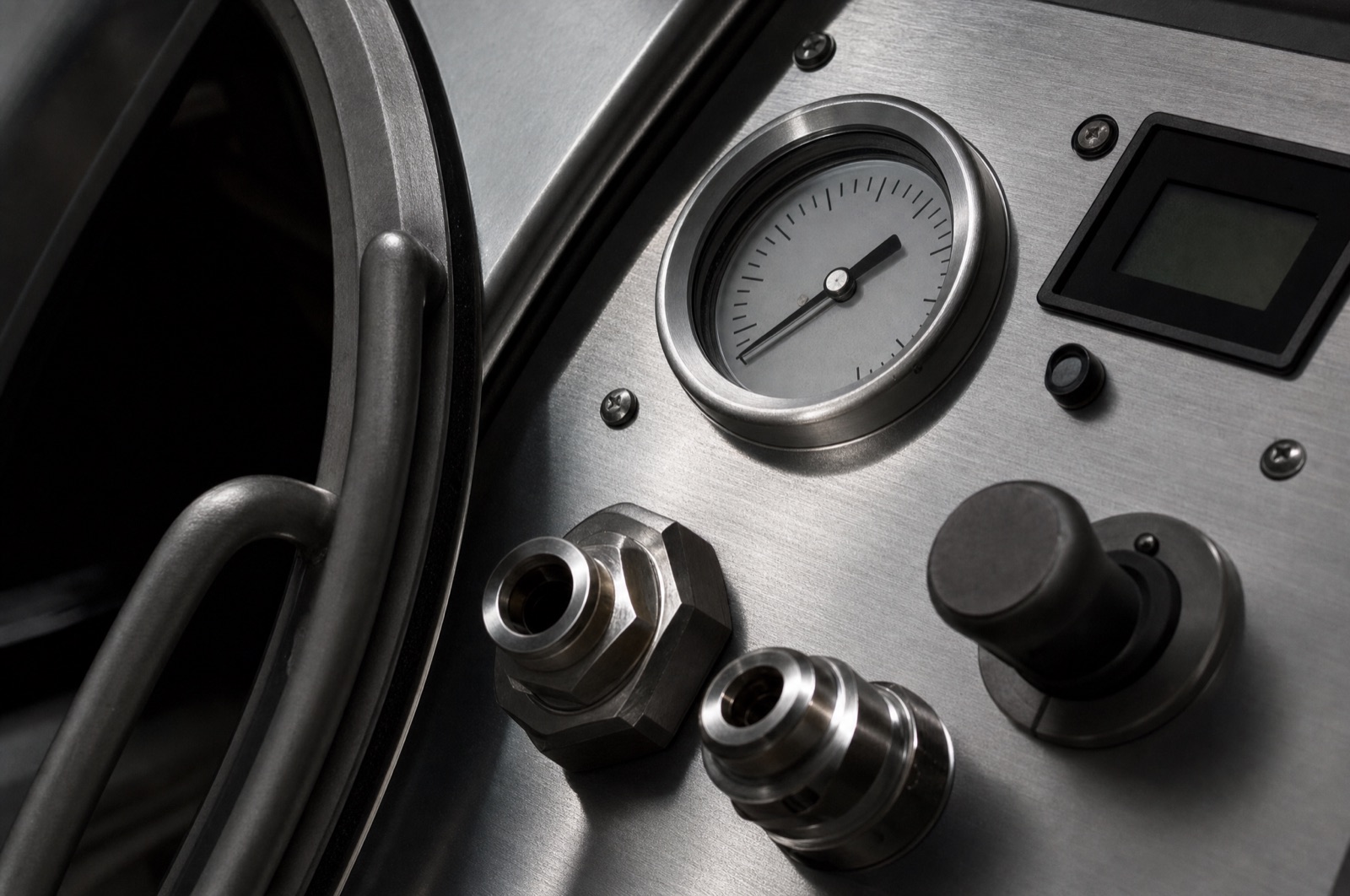
[ Chamber gauge ] Reference imagery; final photography in production
This page covers the device and the rules, not the medicine. It explains what a veterinary hyperbaric chamber is, how it is pressurized, how clinics handle fire risk with an animal inside, which fire code applies and how the FDA treats devices for animals. It uses FDA pages, NFPA documents, veterinary school pages and three peer reviewed papers. We do not say whether hyperbaric oxygen helps any animal with any condition, and we do not rank chambers or makers.
What a veterinary hyperbaric chamber is
A veterinary hyperbaric chamber is a sealed pressure vessel built for an animal patient. Fire codes treat it as its own category. A Minnesota State Fire Marshal interpretation quotes the 2012 edition of NFPA 99, which sorts chambers into three classes: Class A for humans with multiple occupancy, Class B for humans with single occupancy, and Class C for animals with no human occupancy.
A 2021 review in the Journal of Small Animal Practice, Levitan and colleagues on PubMed Central, says Class C chambers designated for veterinary use are the equivalent of Class B human monoplace chambers. In plain terms, a small animal chamber works like a one person hospital chamber, sized for a pet. The authors disclose that they are unpaid consultants for Sechrist, a chamber maker. For the human version of the same distinction, see monoplace vs multiplace chambers.
Small animal chambers and equine chambers
There are two broad sizes. Small animal chambers hold one dog, cat or other small patient. A 2021 study in Frontiers in Veterinary Science describes the unit it used as a veterinary specific monoplace chamber with three viewing windows and live video, made by Hyperbaric Veterinary Medicine of Boca Raton, Florida. A Today's Veterinary Business report from January 2018 says that maker's chambers accommodate patients up to 180 pounds. The Levitan review adds that view ports or clear acrylic walls let staff watch the patient, and that digital displays show oxygen and carbon dioxide levels, humidity and temperature inside the chamber.
Equine chambers are much larger. A 2012 TheHorse.com report says horses are placed in chambers approximately 10 to 12 feet in diameter. A later TheHorse.com article calls the equine unit a large metal chamber. The University of Tennessee College of Veterinary Medicine says it has two active hyperbaric chambers, one for small animals and one for large animals.
How the chamber is pressurized and supplied with oxygen
In the small animal chambers we read about, the whole chamber is filled with oxygen and pressurized. The Frontiers study says that in a monoplace chamber the entire chamber is pressurized. A University of Tennessee service sheet (updated July 2021) says the pressure around the patient is raised by letting oxygen flow into the sealed chamber. The Levitan review says most veterinary clinical uses involve 100% oxygen. In these chambers the animal breathes the chamber gas itself; none of our sources describe a mask or hood for small animals.
The published pressures and times are below. They describe how chambers are run, not whether treatment works.
| Source | Pressure | Time |
|---|---|---|
| Auburn University, 2017 | Maximum of 2 ATA | 30 minutes to 2 hours per session |
| Frontiers study, 2,792 sessions | 2 ATA in 88.5% of sessions; up to 3 ATA | About 15 minutes up, 30 to 75 minutes at pressure, about 15 minutes down |
| Levitan review, 2021 | Common range 1.3 to 2.8 ATA | Commonly 50 to 90 minutes |
| Brisbane study, 230 treatments | Twice normal atmospheric pressure | 45 or 60 minutes |
| Equine, per TheHorse.com | 1 to 2.5 atmospheres | 60 minutes at pressure |
Sources: Auburn University CVM news, Frontiers in Veterinary Science (PMC8686595), Journal of Small Animal Practice (PMC8519146), BVNA summary of JAAHA 54(4) and TheHorse.com, all linked on this page, read 27 October 2026.
The Frontiers study also shows how gas is managed during a session. Staff tracked carbon dioxide with a portable sensor placed in the chamber and countered rising levels by increasing the oxygen flow. The Levitan review says humidity is monitored, and that water trays or wet towels can be used to keep it up. For how pressure units such as ATA relate to each other, see hyperbaric pressure explained.
Ears, sedation and monitoring
A person in a chamber can be told to swallow or clear their ears. An animal cannot. The Frontiers study says recognizing discomfort from barotrauma in veterinary patients is challenging, and that it may show as head shaking or yawning. The Levitan review lists severe middle ear disease among the conditions that complicate treatment, but it does not describe how clinics handle ear pressure.
Sedation is not routine in the sources we read. A British Veterinary Nursing Association summary of a Brisbane study, published in the Journal of the American Animal Hospital Association, says no anxiolytics were prescribed before 230 treatments in cats and dogs. It records 76 minor events, such as head shaking, panting and swallowing, and no major ones. The authors suggested anxiolytics could cut the minor responses. Auburn University described its patients as calm, with some falling asleep during treatment.
Someone watches the whole session. In the Frontiers study, a veterinarian or veterinary technician certified in chamber use monitored every session. That study recorded central nervous system oxygen toxicity, seen as seizures, in 0.7% of sessions; all resolved when pressure was reduced. The University of Tennessee sheet says oxygen toxicity and barotrauma are the two effects staff monitor for during therapy.
Fire safety inside an animal chamber
An animal cannot be dressed in cotton scrubs, and it arrives with a coat of fur. Clinics deal with this through grounding, coat preparation and strict limits on what goes into the chamber. The Levitan review says chambers are grounded to dissipate static and that strict protocols must control the materials permitted inside.
The most detailed rules we found come from a clinic. Veterinary Neurology and Imaging of the Chesapeake, in Hunt Valley, Maryland, publishes a hyperbaric safety review in question and answer form. It says:
- 100% cotton is the approved anti-static material, and other materials must be covered in cotton.
- Alcohol or petroleum based products, including many insect repellent and grooming sprays, must be avoided or removed from the coat before treatment, and patients should be bathed.
- Wiping the coat with a damp cotton towel beforehand reduces static, and hair on the ears and nose standing straight out is a warning sign.
- Electronic, battery operated or wind up devices are not allowed in the chamber, and owner supplied items should be politely refused.
- Metal external fixators must be padded and fully covered in cotton, and cages with metal parts that could scrape and spark should be avoided.
- Two patients must never be treated together where they could touch.
The same clinic's service page says it uses fully grounded platforms to minimize the risk of static shock. This is one clinic's practice, not a national standard. For the human side of the same rules, see what to wear in a hyperbaric chamber and hyperbaric chamber safety.
NFPA 99 and NFPA 150
Two NFPA codes touch veterinary chambers. NFPA 99 is the health care facilities code. It covers human care in general, but its hyperbaric rules reach animal chambers. A 2023 NFPA 150 committee document says NFPA 99 is only applicable to human health care occupants and excludes veterinary care except for hyperbaric chambers. The ICC store listing for the 2021 edition names revisions to the scope to include hyperbaric chambers for veterinary care among that edition's changes.
NFPA 150 is the fire and life safety code for animal housing facilities. The Levitan review says a section on hyperbaric chambers was added to it. The same 2023 committee document adds a medical gas chapter to NFPA 150 for veterinary clinics and other animal facilities, to fill the gap left by NFPA 99. We did not check which editions local fire authorities have adopted. Our NFPA 99 fire safety guide covers the hyperbaric chapter in more detail.
The 2012 equine chamber explosion
The best documented veterinary chamber accident we found involved a horse. On 10 February 2012 a hyperbaric chamber exploded at KESMARC Florida, an equine rehabilitation center in Ocala. Firehouse.com reported that a 29 year old woman and the horse died, a second woman was taken to hospital, and the blast partly collapsed the building. TheHorse.com named the horse as a 6 year old Thoroughbred gelding and said 30 other horses in the building were not harmed.
A week later, ClickOrlando described a sheriff's report. It said the horse kicked off a protective shield inside the oxygen filled chamber and its steel shoe struck the chamber wall, causing a spark. The report also said staff knew of leaking valves and had twice asked for an engineer. The article says it was not clear whether the valves caused the explosion, and that OSHA had opened an investigation. We did not find a final OSHA or fire marshal finding.
How the FDA treats devices for animals
The FDA does not review animal chambers before sale. The FDA Center for Veterinary Medicine page How FDA Regulates Animal Devices (content current as of 6 April 2026) says the FDA does not require submission of a 510(k), PMA or any premarket approval for devices intended for animal use. Makers and distributors of animal devices are not required to register their establishments or list their devices, and they are exempt from post-marketing reporting.
That does not leave the field unregulated. The same page says the FDA can take action if an animal device is misbranded or adulterated, and that the maker or distributor is responsible for making sure the device is safe, effective and properly labeled. It asks veterinarians and owners to report product defects. Chambers for people sit in a different system; our guide to FDA cleared vs FDA registered chambers explains it.
Who runs veterinary chambers
Veterinary schools and private specialty hospitals run them. Auburn University announced its small animal chamber in February 2017, said about 15 technicians and veterinarians were trained to run it, and said referring veterinarians can send patients. Today's Veterinary Business reported in 2018 that Louisiana State University became the third veterinary school with that maker's chamber, after the University of Florida and Auburn, and listed several private hospitals that had installed one. The University of Tennessee runs one small and one large animal chamber and offers 24 hour consultation, per its service sheet.
We found a trademark filing for a Certified Hyperbaric Technologist, Veterinary credential in a web search, but we did not fetch a page from the body that issues it. We also found no Veterinary Hyperbaric Medicine Society page to cite. So we cannot say what training a veterinary chamber operator must hold.
Human and veterinary chambers side by side
The table compares the two settings on the points our sources cover. The human column reflects our existing guides; the veterinary column uses the sources on this page.
| Question | Human chamber | Veterinary chamber |
|---|---|---|
| NFPA 99 class (2012 edition) | Class A (multiple) or Class B (single occupant) | Class C, no human occupancy |
| FDA premarket review | Class II device; ask for a 510(k) number (see our FDA guide) | Not required for devices intended for animal use |
| FDA registration and listing | Covered in our FDA guide | Not required; exempt from post-marketing reporting |
| Typical pressure in the sources | See our pressure guide | Mostly 2 ATA, range 1.3 to 3 ATA |
| Oxygen supply | Covered in our monoplace vs multiplace guide | Small animal: chamber filled with oxygen |
| Ear clearing | Patient can be asked to clear | Cannot be asked; staff watch for head shaking or yawning |
| Static control | Covered in our what to wear guide | Grounded chamber or platform, cotton towels, coat cleaned of alcohol and petroleum products |
Sources: Minnesota State Fire Marshal, FDA CVM, Levitan 2021, Frontiers 2021, University of Tennessee and VNIoC, all linked above, read 27 October 2026.
What to ask a clinic
These questions follow from the gaps in the rules above. With no FDA premarket review for animal devices, the clinic's own answers carry more weight.
- Who made the chamber, and is it built and labeled for veterinary use?
- Who watches my animal during the session, and what training do they hold?
- How is the chamber or platform grounded, and what do you do about static in the coat?
- What must I wash off or avoid before the visit, such as sprays, oils or a collar?
- Do you sedate, and if so, how do you decide?
- What pressure and session length do you plan, and how fast do you compress?
- How do you watch for ear pain or seizures, and what happens if one occurs?
- Which edition of NFPA 99 or NFPA 150 does your fire authority apply, and when was the chamber last inspected?
For the chambers we track for people and what we can verify about each, see the scorecard. It does not cover veterinary units.
What we have not verified
The University of Florida and LSU hyperbaric service pages did not load for us, so we rely on the Frontiers study and trade press for their details. The AVMA news item on the 2012 explosion and the full JAAHA paper on the Brisbane study were blocked, so we used Firehouse.com, ClickOrlando, TheHorse.com and the BVNA summary. We did not read the text of NFPA 99 or NFPA 150 themselves; our statements on scope come from an NFPA committee document, an ICC listing and a Minnesota interpretation. We did not find a final cause from OSHA or the Florida fire marshal for the 2012 explosion. We did not find a veterinary chamber standard from any society, a page for the body behind the veterinary technologist credential, or any state law that licenses veterinary chamber operators. We did not find published prices. We do not know how equine chambers are supplied with gas, or whether horses are sedated, beyond the single news report noting conflicting accounts. If you hold a source that settles any of these, send it and we will check it.
Frequently asked
Does the FDA approve hyperbaric chambers for animals?
No. The FDA Center for Veterinary Medicine says the agency does not require a 510(k), a PMA or any other premarket approval for devices intended for animal use. Makers and distributors of animal devices do not have to register with the FDA or list their devices, and they are exempt from post-marketing reporting. The FDA can still act against an animal device that is misbranded or adulterated, and the maker is responsible for making sure it is safe, effective and properly labeled.
Does NFPA 99 cover veterinary hyperbaric chambers?
Yes, for the hyperbaric part. A 2023 NFPA 150 committee note says NFPA 99 excludes veterinary care except for hyperbaric chambers. The ICC description of the 2021 edition of NFPA 99 lists revisions to the scope to include hyperbaric chambers for veterinary care. A Minnesota fire code interpretation quotes the 2012 edition, which put animal chambers in their own class, Class C, with no human occupancy.
How does a vet stop static in an animal chamber?
The sources we read name several steps. A 2021 review in the Journal of Small Animal Practice says chambers are grounded to dissipate static and that humidity is monitored. A safety page from Veterinary Neurology and Imaging of the Chesapeake, a Maryland clinic, says 100% cotton is the approved material, that alcohol or petroleum based products must be removed from the coat, and that owner items should be kept out of the chamber.
Are animals sedated for hyperbaric treatment?
Not routinely, in the sources we read. In a Brisbane study of 230 treatments in cats and dogs, no anxiolytics were given before treatment, and the authors suggested they could reduce minor responses such as head shaking. Auburn University described its small animal patients as calm, with some falling asleep. Neither source sets a sedation rule, so ask the clinic what it does.
Has a veterinary hyperbaric chamber ever exploded?
Yes. On 10 February 2012 a hyperbaric chamber with a horse inside exploded at KESMARC, an equine rehabilitation center in Ocala, Florida. A worker and the horse died, and a second woman was injured. A sheriff's report described in local news said the horse kicked off a protective shield and its steel shoe struck the chamber wall, causing a spark. The same report noted earlier valve leaks.
What pressure do veterinary chambers use?
Auburn University says its small animal chamber runs at a maximum of 2 ATA. In a 2021 study of 2,792 sessions at a university teaching hospital, most sessions were at 2 ATA, with some up to 3 ATA. A 2021 review gives a common range of 1.3 to 2.8 ATA. For horses, a clinician quoted by TheHorse.com describes raising pressure from 1 to 2.5 atmospheres.

Alex tests the machines himself, in clinics and studios on three continents. Every score comes from the same 27 public criteria, and no manufacturer has a say in them.
Six questions, and we'll match chamber, options, and install to your space and budget.